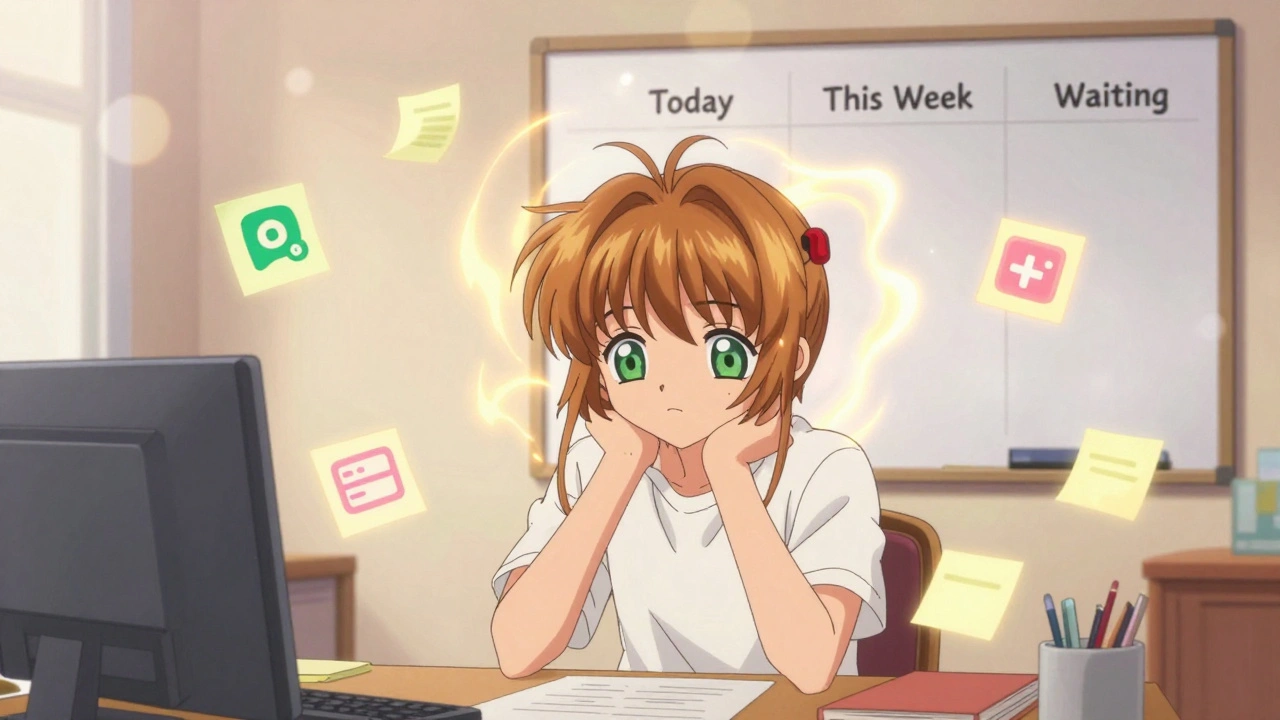
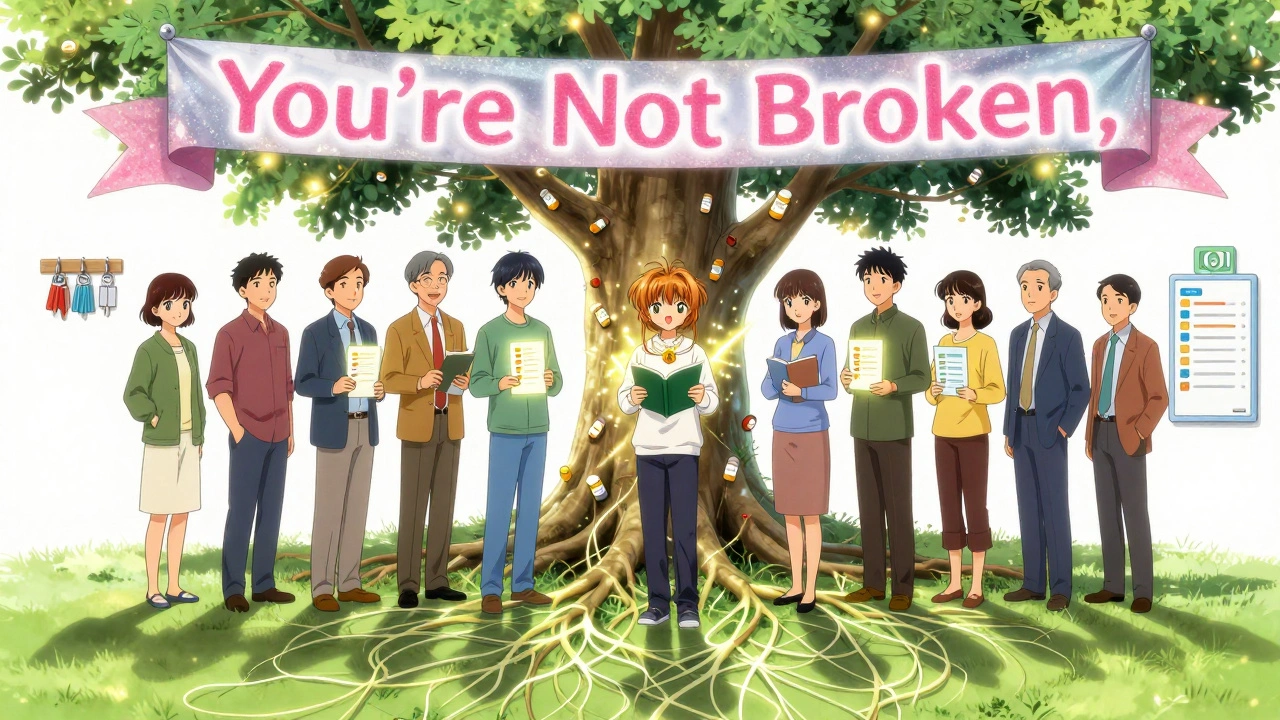
For many adults with ADHD, the struggle isn’t just about forgetting keys or missing deadlines. It’s about feeling like your brain is running on a different operating system than everyone else’s. You might have tried to "just focus" or "get organized," but no matter how hard you try, your mind keeps jumping ahead, leaving tasks half-done and days feeling chaotic. The good news? You’re not broken. ADHD in adults is a real, neurobiological condition-and there are proven ways to manage it that go far beyond willpower.
Medication Isn’t a Quick Fix-It’s a Tool
When people think of ADHD treatment, they often jump straight to pills. But medication isn’t magic. It’s a tool that helps balance brain chemistry so you can actually use the organizational strategies and coaching you’re given. The two main types of ADHD meds for adults are stimulants and non-stimulants.Stimulants like Concerta and Vyvanse work fast-often within 30 to 60 minutes-and help 70 to 80% of adults see noticeable improvements in focus, task initiation, and impulse control. Vyvanse, for example, is a prodrug that slowly converts into dextroamphetamine in the body, giving 10 to 14 hours of steady symptom control without the sharp peaks and crashes of older amphetamines. This makes it one of the most prescribed options today, with nearly 35% of adult ADHD prescriptions in 2022 going to Vyvanse alone.
Non-stimulants like atomoxetine and guanfacine take longer-usually one to two weeks-to kick in, and they’re less effective overall, helping about 50 to 60% of users. But they’re safer for people with heart conditions or anxiety, since they don’t raise blood pressure or heart rate as much. A 2018 FDA review found no increased risk of hypertension with atomoxetine, while stimulants can raise blood pressure in 5 to 10% of users.
But here’s the catch: medication only works if it’s monitored. A 2022 study in JAMA Internal Medicine found that most primary care doctors check blood pressure only twice a year for ADHD patients. That’s not enough. The American Heart Association recommends baseline cardiovascular screening for adults over 40 before starting stimulants, and annual monitoring after that. Some people report their resting heart rate jumping from 65 to 95 bpm on Adderall XR-a red flag that needs immediate attention.
And yes, there are risks. A 2023 study in JAMA Psychiatry found that each extra year of stimulant use slightly increases cardiovascular disease risk-about 4% per year. But here’s what most people don’t hear: the same study found that people on ADHD meds had a 39% lower risk of accidental injury and a 39% lower risk of death overall. The benefits often outweigh the risks-when you’re being watched by a doctor who knows what to look for.
Coaching Turns Awareness Into Action
Medication can quiet the noise, but it won’t teach you how to build a system that works for your brain. That’s where ADHD coaching comes in. Unlike therapy, which explores feelings and past trauma, coaching is practical, future-focused, and action-driven.Good coaches don’t tell you to "get organized." They help you design systems that work with your ADHD brain-not against it. For example, instead of asking you to use a calendar (which you’ll ignore), they might help you set up phone alarms that trigger at the exact moment you’re likely to forget. Or they’ll teach you to use the Eisenhower Matrix to sort tasks by urgency and importance, which cuts through the overwhelm of 20 open tabs and five half-finished projects.
One 2023 survey by the ADHD Coaches Organization found that 81% of adults who used coaching alongside medication saw "significant improvement" in time management. Compare that to just 58% who improved with medication alone. Why? Because coaching addresses the gap between knowing what to do and actually doing it.
Coaches also help with emotional regulation. Many adults with ADHD have spent years feeling ashamed of their forgetfulness or lateness. Coaching helps reframe those experiences-not as moral failures, but as symptoms of a neurological difference. This shift alone can reduce anxiety, which often makes ADHD worse.
You don’t need a fancy coach with a PhD. Many certified ADHD coaches work online for $75 to $150 per session. CHADD, a national nonprofit, offers free coaching workshops across the U.S., including in Bristol and other UK cities through international affiliates. And if you’re in a corporate job, 37% of Fortune 500 companies now offer ADHD accommodations-some even cover coaching as part of employee wellness programs.
Organization Isn’t About Perfect Systems-It’s About Reducing Friction
The biggest myth about ADHD and organization is that you need to be neat. You don’t. You need to be predictable. Your brain doesn’t work well with abstract reminders or vague goals. It works with triggers, routines, and visible cues.Start small. Pick one area-your wallet, your desk, your email inbox-and make it idiot-proof. For example:
- Keep a dedicated spot for your keys, wallet, and phone-right by the door. No exceptions.
- Use a physical checklist on your fridge for morning tasks. Checkboxes give your brain a dopamine hit when you tick them off.
- Set up email filters so all work-related messages go into a folder labeled "ACTION NOW." Anything else goes to "SOMEDAY."
- Use voice memos to capture ideas on the go. Don’t trust your memory. Record it, then transcribe it later.
Tools matter, but only if you use them. A fancy planner won’t help if you never open it. A digital app like Todoist or TickTick works better for many because it sends push notifications. The goal isn’t to be perfect-it’s to reduce the mental energy it takes to start things.
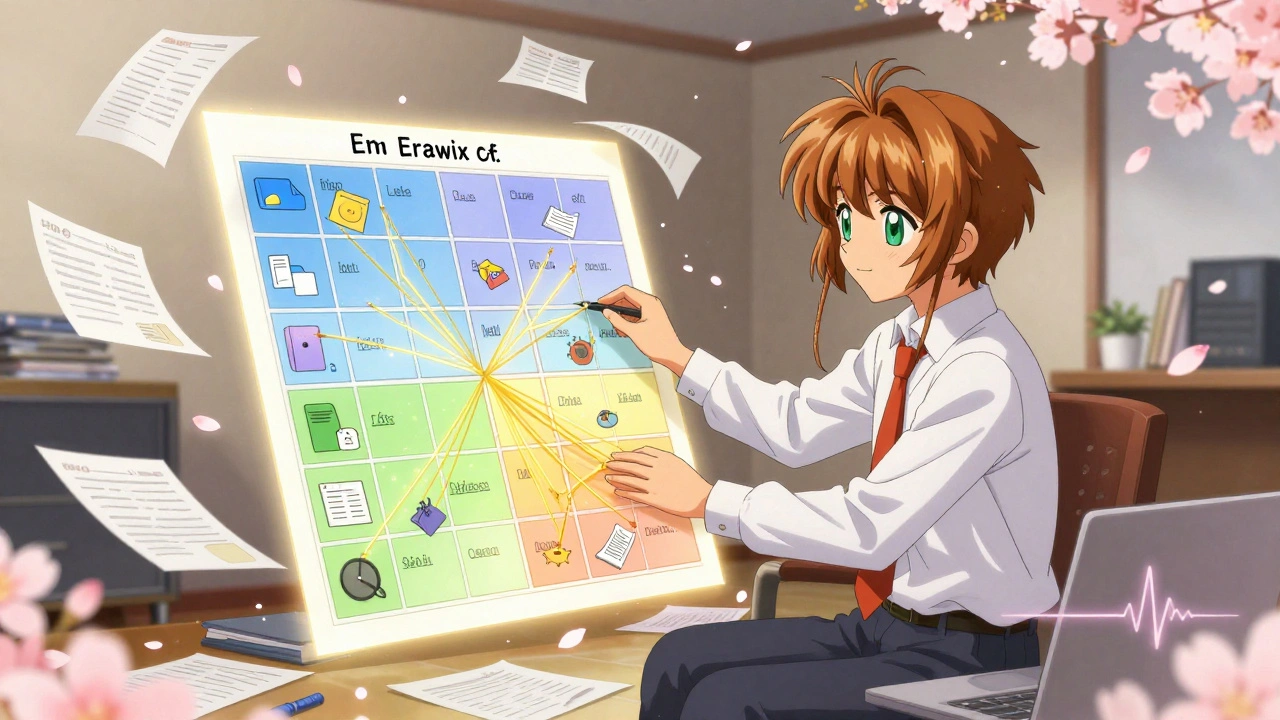
One patient I worked with (a freelance graphic designer) went from completing 30% of her tasks to 85% after three months. How? She stopped trying to plan her week on Sunday nights. Instead, she spent 10 minutes every morning writing one priority on a sticky note and putting it on her monitor. That’s it. No apps. No spreadsheets. Just one visual cue.
Medication Safety: What No One Tells You
There’s a lot of fear around ADHD meds. You hear stories about addiction, heart attacks, or "chemical lobotomies." The truth is more complicated.The FDA reviewed data from over 150,000 adult users in 2011 and found no increased risk of serious cardiovascular events. In fact, the rate was slightly lower than in non-users. But that doesn’t mean you’re safe just because you’re young. A 2023 study showed long-term stimulant use (over five years) correlated with a 23% higher risk of cardiovascular disease-mostly due to high blood pressure and artery stiffness.
That’s why monitoring matters. If your doctor doesn’t check your blood pressure at least once a year, ask for it. If you’re over 50, ask for an ECG before starting stimulants. And if you’re on antidepressants like SSRIs, know that they’re generally safe to combine with ADHD meds-but always tell your prescriber about everything you’re taking.
Also, avoid mixing ADHD meds with alcohol or MAO inhibitors (used for depression). That combo can cause dangerous spikes in blood pressure. And if you’re prescribed a stimulant, don’t share it. Even if you feel fine, someone else could have a bad reaction.
There’s also a new wave of safety research. The National Institute of Mental Health is running a $15 million study called ADHD-AGE, tracking 5,000 adults over 65 to see how meds affect older brains. Early findings suggest low-dose stimulants are well tolerated in older adults-no major heart issues, just careful monitoring.
What Works Together? The Real Formula
The most successful adults with ADHD don’t rely on just one thing. They use a mix:- Medication to calm the neurological noise.
- Coaching to build systems that match their brain’s wiring.
- Organization that’s simple, visible, and automatic.
One man in his late 40s, a small business owner, told me his life changed after he started Vyvanse, hired a coach, and began using a whiteboard on his wall. The whiteboard had three columns: "Today," "This Week," and "Waiting." Every morning, he wrote one thing in each. No more lists. No more apps. Just three things. He said it gave him back his confidence-and his marriage.
Another woman, 32, went from being fired from three jobs in two years to leading a team after she started Concerta, started journaling her focus levels daily, and used a voice-activated assistant to remind her of meetings. She didn’t need to be perfect. She just needed to be consistent.
There’s no single cure. But when you combine these three elements, the results are real. A 2021 study in the Journal of Attention Disorders found that 80% of adults who kept a daily symptom diary (tracking focus, mood, and task completion) were able to fine-tune their meds and routines to match their needs. That’s the power of self-awareness, supported by tools and professionals.
Where to Start Today
You don’t need to fix everything at once. Pick one thing:- If you’re not seeing a doctor about your ADHD symptoms, schedule an appointment. Bring a list of your biggest struggles-what you forget, what you delay, what makes you feel overwhelmed.
- If you’re on meds, ask your doctor: "Have you checked my blood pressure this year?" If not, request it.
- If you’re not using any organization system, pick one thing to make visible. Put your keys in the same spot. Set a daily alarm for your most important task. Write one priority on a sticky note.
- If you’re feeling stuck, search for "ADHD coaching near me" or check CHADD’s website. Many coaches offer free 15-minute consultations.
ADHD doesn’t disappear. But with the right support, it stops controlling your life. You don’t have to be more disciplined. You just need the right tools-and the right people helping you use them.
Can ADHD be managed without medication?
Yes, some adults manage ADHD without medication using coaching, organizational systems, therapy, and lifestyle changes like sleep, exercise, and diet. But for many, especially those with moderate to severe symptoms, medication significantly improves focus and reduces daily stress. The best outcomes usually come from combining medication with coaching and structure.
How do I know if my ADHD medication is working?
You’ll notice changes in your ability to start tasks, stay on track, and control impulses. You might feel less mental fog, complete more work in less time, or stop forgetting appointments. Keep a simple daily log: rate your focus from 1 to 10 and note what you accomplished. After two to four weeks, review it with your doctor. If you’re not seeing improvement, your dose or type may need adjustment.
Is ADHD coaching worth the cost?
If you’ve tried organizing on your own and keep falling back into chaos, yes. Coaching gives you personalized, practical strategies that fit your brain-not generic advice. One study showed 81% of people using coaching with medication improved time management, compared to 58% using meds alone. Many coaches offer sliding scale fees, and some employers cover it as part of wellness programs.
Can ADHD meds cause addiction?
When taken as prescribed under medical supervision, stimulant medications like Vyvanse or Concerta have very low abuse potential. The extended-release formulas are designed to release slowly, reducing the risk of euphoria. A 2017 study found Vyvanse’s abuse liability was five times lower than immediate-release Adderall. Most people who misuse ADHD meds are not diagnosed and take them recreationally. If you’re taking it as directed, addiction is rare.
What’s the best way to track my ADHD symptoms?
Use the Adult ADHD Self-Report Scale (ASRS) checklist-it’s free and validated by the World Health Organization. Fill it out once a week. Also, keep a simple daily log: write down what you planned to do, what you actually did, and how focused you felt (1-10). Over time, patterns emerge. Did you do better after sleep? After a walk? After taking your med? This data helps you and your doctor make smarter decisions.
Are there alternatives to traditional ADHD meds?
Yes. Non-stimulants like atomoxetine are one option. Digital therapeutics like EndeavorRx, an FDA-cleared video game app, help improve attention in adults aged 18-49. Behavioral strategies, mindfulness training, and neurofeedback are also used, though evidence is weaker than for meds and coaching. These are best used as supplements-not replacements-for proven treatments.
Sean McCarthy
December 1, 2025 AT 18:37Medication isn't magic. It's a tool. That's it. Stop acting like pills are the answer. You still have to do the work.
Jaswinder Singh
December 2, 2025 AT 13:13You people in the US act like ADHD is some newfangled invention. We've had this in India for decades. No meds, no coaches, just grit. You think you're special because you have a prescription?
Linda Migdal
December 4, 2025 AT 10:52Let's be clear: the pharmaceutical-industrial complex is exploiting neurodivergence for profit. Vyvanse isn't medicine-it's corporate surveillance disguised as focus. The FDA's 'safety' data is cooked. They don't track long-term epigenetic damage. You're being lab rats with a side of wellness culture.
Tommy Walton
December 5, 2025 AT 05:19ADHD isn't a disorder-it's a higher-dimensional operating system. Most people are stuck in Windows 95. You? You're running macOS on a quantum processor. The 'chaos'? That's just your soul syncing with the multiverse. Meditation won't fix it. Only quantum coherence will.
Louise Girvan
December 5, 2025 AT 13:26They're lying about the heart risks. They always lie. The CDC, the FDA, the 'coaches'-all part of the Big Pharma deep state. Your 'symptom tracker'? It's a backdoor to your neural data. They're building a behavioral database. Don't you see? They want to control your thoughts before you even think them.
soorya Raju
December 6, 2025 AT 22:26Coaching? For 150 bucks? Bro, in India we got a guy named Bittu who sits on the train and yells at people to get their sh*t together. He’s not certified. He’s just angry. And guess what? 90% of us got better. No apps. No whiteboards. Just shame and a chai stall. You Americans overthink everything.
Lucinda Bresnehan
December 8, 2025 AT 18:56I’ve been living with ADHD since I was 8 and I just want to say-thank you for writing this. I used to think I was lazy. Then I got a coach who helped me use voice memos instead of lists. Now I keep my keys in a bowl by the door. It’s not glamorous. But it works. And I’m not broken. I’m just wired different. That’s all.
Kshitij Shah
December 9, 2025 AT 00:13Wow. So we’re supposed to believe that a sticky note on a monitor is the secret to life? Meanwhile, in the real world, people are getting promoted for actually finishing things. Maybe your brain just needs to stop being a toddler with a smartphone.
James Steele
December 10, 2025 AT 05:17The empirical validity of non-stimulant pharmacotherapies remains statistically insignificant when contextualized within the neurochemical heterogeneity of adult ADHD phenotypes. Furthermore, the epistemological framework underpinning ADHD coaching is predicated on a behavioralist paradigm that fundamentally misrepresents executive dysfunction as a matter of procedural compliance rather than neurocognitive dissonance.
Nnaemeka Kingsley
December 10, 2025 AT 15:24Hey man, I’m from Nigeria and I never took meds. I just started writing down one thing I gotta do each day. Sometimes I forget. But I keep trying. You don’t need fancy tools. Just start. One step. That’s all. You got this.
Courtney Co
December 12, 2025 AT 06:22Wait, so you're saying I should trust a doctor who’s probably just trying to get me hooked? And what if my coach is secretly working for the government? I mean, why do they always say 'you're not broken'? That sounds like gaslighting. I think I'm being watched. My phone keeps glitching after I take Vyvanse. I'm not crazy. I'm just aware.
Priyam Tomar
December 12, 2025 AT 18:3481% improvement with coaching? That's not science, that's a marketing brochure. Real data shows 62% of people quit coaching within 3 months. And who funds these studies? The same companies selling the apps and the meds. Wake up. You're being sold a dream wrapped in a checklist.
Jack Arscott
December 14, 2025 AT 17:06Thank you for this. 🙏 I started using Todoist after reading this. Just one task a day. No pressure. It’s not perfect. But for the first time, I feel like I’m not failing. Just learning.