Alcohol & Medication Risk Estimator
Input your beverage details to see how many standard drinks you are consuming and the associated metabolic load. Then select your medication type to view specific clinical risks.
Analysis Results
Clinical Risk Assessment
Select a medication class and click "Analyze Consumption" to view specific interaction risks.
Ready to Analyze
Fill in the fields above to calculate your standard drink count and specific medication interaction risks.
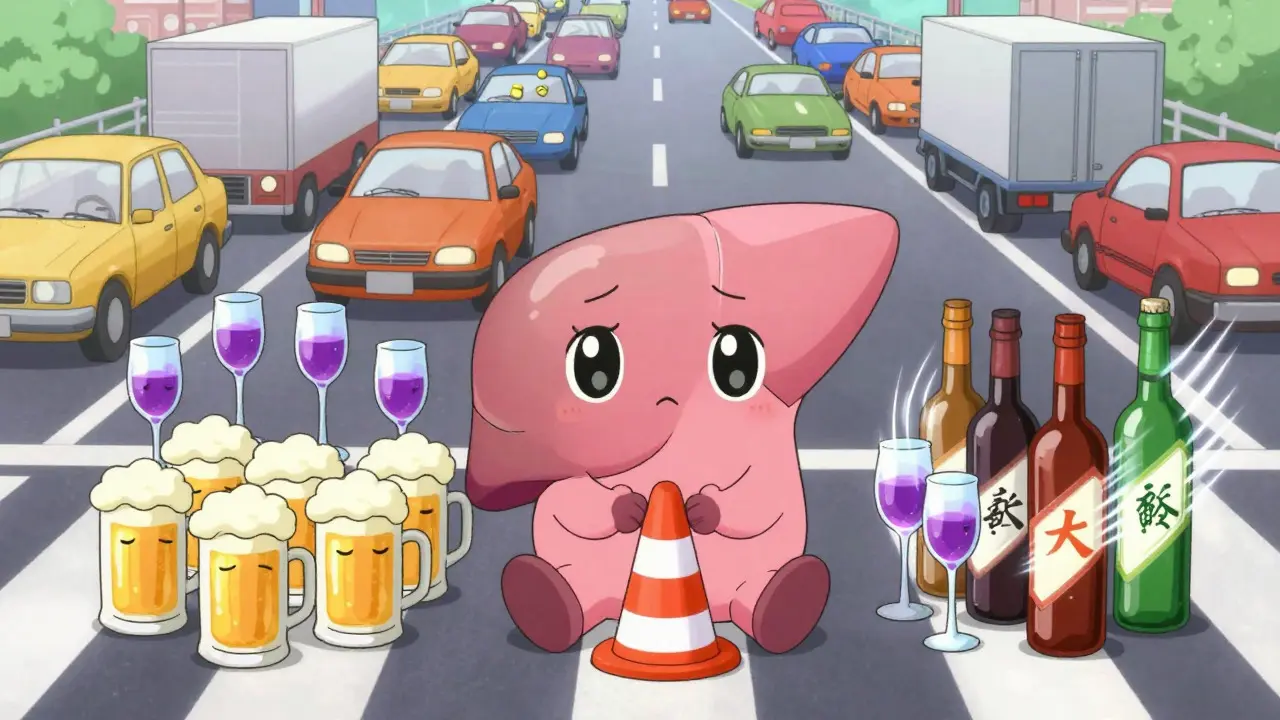
You might think that sipping a glass of red wine is safer than downing a shot of whiskey when you're on prescription meds. It’s a common belief, but it’s largely a myth. The real danger isn't the type of bottle in your hand; it’s how much pure alcohol gets into your bloodstream and how fast. Whether it’s a pint of lager, a glass of pinot, or a double vodka, your liver processes them all through the same crowded highway, often causing traffic jams with your medication.
Here’s the hard truth: standard drink equivalence is the only metric that matters for safety. One standard drink contains roughly 14 grams of pure ethanol. That equals 12 ounces of beer (5% ABV), 5 ounces of wine (12% ABV), or 1.5 ounces of spirits (40% ABV). If you ignore these ratios, you’re guessing at your risk level. This guide breaks down why each beverage carries specific pitfalls, from the speed of absorption to hidden compounds that clash with drugs.
The Liver’s Bottleneck: Why Type Matters Less Than Dose
Your liver uses a group of enzymes called cytochrome P450 to break down both alcohol and most medications. When you drink, ethanol competes for these enzymes. Think of it like a single-lane bridge where cars (medications) and trucks (alcohol) are trying to cross at the same time. The result? Your medication levels can spike or drop unpredictably, leading to either too little effect or toxic overdose.
Research from the National Institute on Alcohol Abuse and Alcoholism (NIAAA) indicates that about 40% of adults regularly consume alcohol while taking prescriptions that could interact adversely. The primary mechanism isn’t chemical warfare between the drink and the pill; it’s metabolic competition. Since 90% of alcohol metabolism happens in the liver via alcohol dehydrogenase (ADH) and aldehyde dehydrogenase (ALDH) pathways, any increase in ethanol load directly slows down how quickly your body clears your meds.
| Beverage Type | Typical ABV | Volume per Standard Drink | Pure Ethanol (grams) | Absorption Speed Factor |
|---|---|---|---|---|
| Beer | 4-7% | 12 oz (355 ml) | ~14g | Slower (lower concentration) |
| Wine | 9-16% | 5 oz (150 ml) | ~14g | Moderate |
| Spirits | 35-50% | 1.5 oz (44 ml) | ~14g | Fastest (high concentration) |
Dr. Mark Willenbring, former NIAAA Division Director, notes that a blood alcohol concentration (BAC) of 0.05% from wine has identical pharmacological effects as the same BAC from beer or spirits when interacting with medications. The source doesn't change the math; it changes the timeline.
Spirits: The Speed Trap
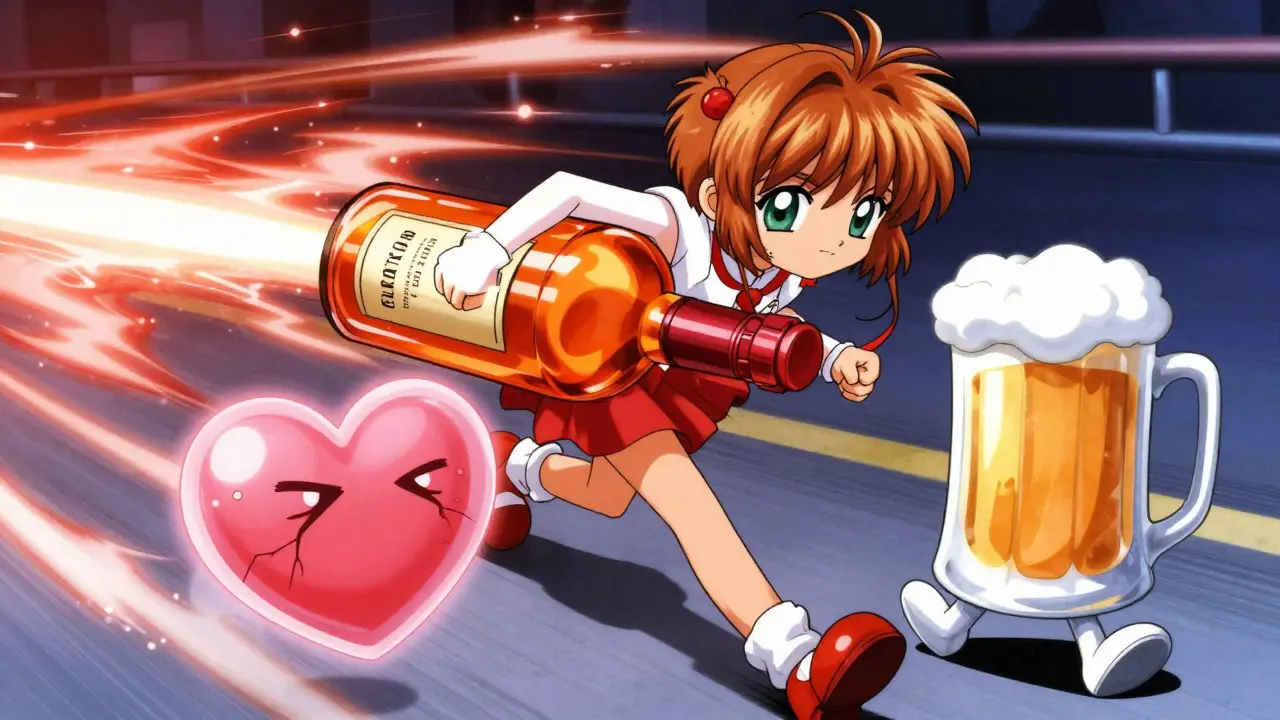
Spirits like vodka, whiskey, rum, and gin carry the highest immediate risk not because they contain more poison per sip, but because we drink them faster. A 1.5-ounce shot delivers the same ethanol as a full 12-ounce beer, but you likely finish the shot in seconds versus minutes for the beer. This rapid intake causes a sharper spike in BAC, which exacerbates interactions with central nervous system (CNS) depressants like benzodiazepines and opioids.
Emergency department data shows that 68% of alcohol-medication overdose cases involve spirits. Clinical trials indicate that rapid ethanol administration produces 40% greater interaction severity with benzodiazepines compared to slower oral doses. If you take Xanax or Valium, adding even one quick shot of whiskey can amplify sedative effects by 300-500%, according to the Illinois Poison Center. The risk isn't just drowsiness; it’s respiratory depression, a life-threatening condition where breathing slows significantly.
Furthermore, carbonated mixers often used with spirits (like tonic water or soda) increase gastric emptying rate by 25%. This means the alcohol hits your bloodstream faster, accelerating the onset of negative interactions. If you must drink spirits, avoid carbonated mixers and pace yourself strictly-one drink per hour is the clinical benchmark for safe processing.
Wine: The Hidden Compound Conflict
Wine gets a reputation for being "healthier" due to antioxidants like resveratrol and polyphenols. While these compounds have benefits in isolation, they create specific friction with certain medications. Red wine, in particular, contains antiplatelet agents that thin the blood slightly. For patients on anticoagulants like warfarin, this can be problematic.
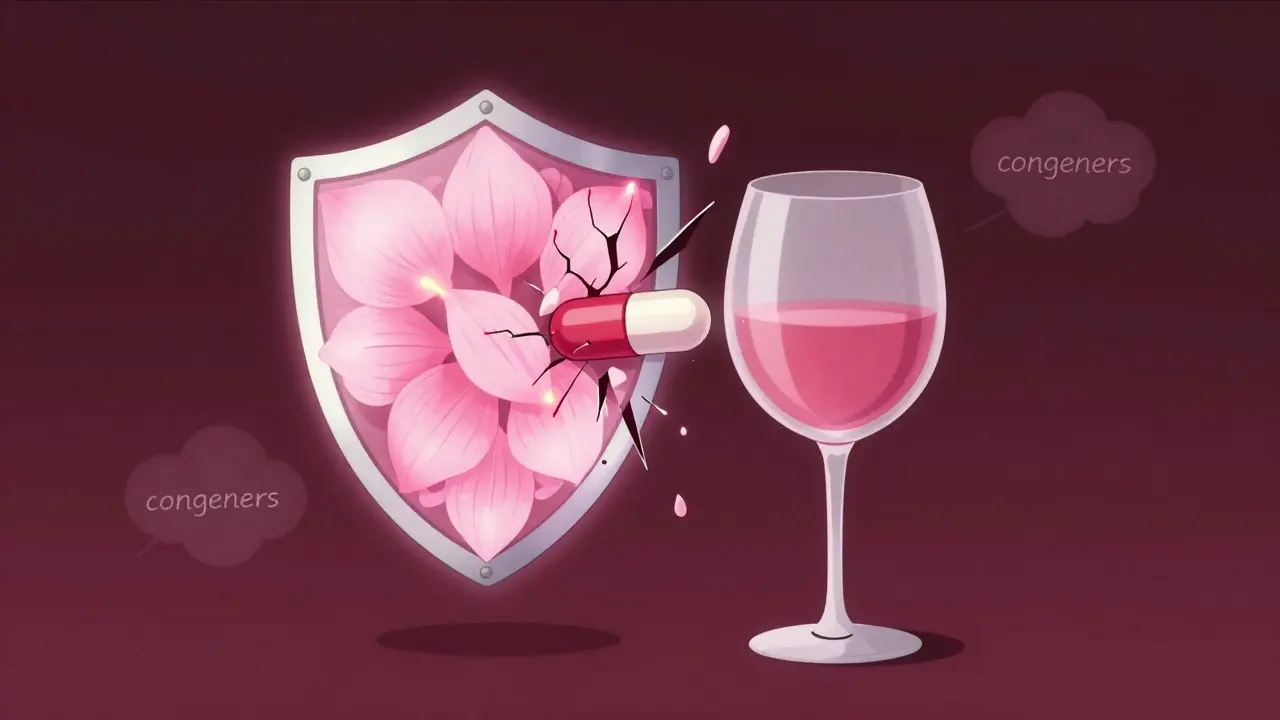
A Mayo Clinic study found that red wine increased bleeding risk with warfarin by 15% compared to equivalent ethanol doses from spirits. This isn't because wine is stronger; it’s because of the extra bioactive compounds. Additionally, darker wines contain congeners-impurities formed during fermentation. Dr. Sarah Johnson of Johns Hopkins notes that these congeners may exacerbate nausea and vomiting when combined with certain antibiotics, potentially leading to missed doses if you feel sick after drinking.
The most notorious wine-drug interaction involves metronidazole (Flagyl), an antibiotic commonly prescribed for bacterial infections. Even small amounts of alcohol trigger a disulfiram-like reaction: flushing, palpitations, and violent vomiting. This happens regardless of whether the alcohol comes from wine, beer, or spirits, but wine’s lower volume makes it easier to underestimate the dose. Many users report severe reactions after just half a glass, unaware that the tannins and acidity don't neutralize the ethanol's impact on their gut lining.
Beer: The Volume Illusion
Beer is the most misunderstood beverage in medication safety. Because it has a low alcohol by volume (ABV) of around 5%, people assume it’s harmless. They aren’t wrong about the concentration, but they’re wrong about the total dose. To get one standard drink, you need to drink 12 ounces. Most people don’t stop at one. CDC data shows beer accounts for 52% of total ethanol consumption in the U.S., leading to 47% of unintentional alcohol-medication interactions due to cumulative dose effects.
The danger with beer is the "creeping dose." You might start with one IPA with dinner, then another after dessert, thinking you’ve only had "a couple." In reality, two IPAs equal two standard drinks, doubling your liver’s workload. This is particularly risky for those taking NSAIDs like ibuprofen or naproxen. Beer-related interactions most commonly involve stomach issues; 63% of users reporting adverse events cited unexpected stomach bleeding or ulcers after combining beer with painkillers. The liquid volume irritates the gastric lining, while the ethanol increases acid production, creating a perfect storm for gastrointestinal damage.
Also, non-alcoholic beer (0.5% ABV) still poses risks. Only 18% of adults correctly identify that even trace amounts of alcohol can interact with sensitive medications like metronidazole or disulfiram. If your doctor says "no alcohol," they mean no alcohol, including the 0.5% variety.
High-Risk Medications: What to Avoid
Not all medications react equally to alcohol. Some are benign, while others are dangerous. Here are the critical categories where abstinence is the safest bet:
- CNS Depressants (Benzodiazepines, Opioids): Highest fatality risk. Alcohol amplifies sedation and suppresses breathing. Even one drink can be fatal in combination with high-dose opioids.
- Acetaminophen (Paracetamol/Tylenol): All alcohol types equally potentiate liver toxicity. Just two standard drinks increase liver damage risk by 300%. This applies to beer, wine, and spirits identically.
- Antibiotics (Metronidazole, Tinidazole): Causes severe disulfiram-like reactions (vomiting, flushing). Complete abstinence required for the duration of treatment plus 72 hours.
- Anticoagulants (Warfarin): Wine and spirits can alter INR levels unpredictably. Consistency is key, but variability leads to clotting or bleeding risks.
- Statins: Long-term heavy drinking increases muscle breakdown risk (rhabdomyolysis) when combined with statins. Moderate use is generally debated, but caution is advised.
For these classes, the American Pharmacists Association states unequivocally that "the type of alcohol matters less than the total ethanol dose and timing relative to medication administration." However, given the absorption differences, spirits require stricter pacing than beer or wine.
Practical Safety Guidelines
If you are on medication and want to minimize risk, follow these evidence-based steps. These aren't just suggestions; they are clinical recommendations backed by pharmacokinetic studies.
- Count Standard Drinks, Not Glasses: Use the 14-gram rule. 12 oz beer = 5 oz wine = 1.5 oz spirits. If you drink more than that, you are exceeding the "one standard drink" limit.
- Space Out Consumption: Allow at least one hour per standard drink for your liver to process the ethanol before considering another. This prevents peak BAC spikes.
- Avoid Carbonated Mixers: If mixing spirits, use non-carbonated mixers to slow gastric emptying and reduce the speed of alcohol absorption.
- Eat Before Drinking: Food slows absorption. Never drink on an empty stomach, especially if taking gastric irritants like NSAIDs.
- Check Your Specific Meds: Use a reliable tool like the FDA’s labeling guidance or a pharmacist-reviewed app. Don’t rely on general advice; some drugs have unique quirks.
- Tell Your Pharmacist Everything: Mention your typical alcohol intake. Studies show only 23% of patients receive specific counseling about alcohol-beverage distinctions during prescription. Ask directly: "Does my med interact with wine specifically?"
Mobile applications now provide real-time interaction warnings with up to 94% accuracy based on user-inputted beverage quantities. Leveraging technology can bridge the gap between medical knowledge and daily habits. If you’re unsure, err on the side of caution. The cost of a hospital admission for a preventable interaction averages $1.2 billion annually across major systems, with spirits-related incidents costing 27% more per case due to severity.
Frequently Asked Questions
Is red wine safer than other alcohols with medication?
No. While red wine contains antioxidants, its ethanol content interacts with medications exactly like beer or spirits. In fact, for patients on blood thinners like warfarin, red wine may increase bleeding risk by 15% due to additional antiplatelet compounds. The type of beverage does not negate the risk of ethanol.
How many beers is equivalent to one shot of whiskey?
One standard shot of whiskey (1.5 oz at 40% ABV) is equivalent to one 12-oz beer (5% ABV) or one 5-oz glass of wine (12% ABV). All three contain approximately 14 grams of pure alcohol. However, the whiskey is absorbed faster, leading to higher peak blood alcohol levels.
Can I drink non-alcoholic beer while on metronidazole?
It is generally recommended to avoid it. Non-alcoholic beer typically contains 0.5% ABV. While the amount is small, metronidazole triggers a disulfiram-like reaction even with trace amounts of alcohol. Symptoms like flushing and vomiting can occur. Wait until 72 hours after your last dose of metronidazole before consuming any alcoholic beverage, including non-alcoholic versions.
Why do spirits cause more overdose cases than beer?
Spirits are consumed faster than beer or wine. A shot is finished in seconds, while a beer takes minutes. This rapid intake causes a sharp spike in blood alcohol concentration (BAC), which intensifies interactions with sedatives like benzodiazepines. Emergency data shows 68% of alcohol-medication overdose cases involve spirits primarily due to this speed factor.
Does alcohol affect how long my medication stays in my system?
Yes. Alcohol competes with medications for the same liver enzymes (cytochrome P450). This competition can slow down the metabolism of your drug, keeping it in your system longer than intended. This can lead to increased side effects or toxicity. Conversely, chronic heavy drinking can induce these enzymes, making some medications clear too fast and become ineffective.