Colchicine-Macrolide Interaction Checker
Colchicine Interaction Checker
Select an antibiotic to check for safe combination with colchicine. Based on CYP3A4 and P-gp inhibition mechanisms.
Colchicine is a simple, cheap drug. It’s been used for centuries to treat gout. Today, it’s also prescribed for pericarditis and after heart attacks. But here’s the problem: if you take it with certain antibiotics-like clarithromycin or erythromycin-you could end up in the hospital, or worse. This isn’t rare. It happens often enough that the FDA put a black box warning on colchicine labels. And the reason? A dangerous mix of two biological systems: P-glycoprotein (P-gp) and CYP3A4.
How Colchicine Works (and Why It’s So Dangerous)
Colchicine doesn’t just reduce inflammation. It stops cells from moving. That’s why it works for gout-by blocking white blood cells from rushing into inflamed joints. But that same mechanism can shut down your bone marrow, your muscles, even your kidneys. The line between healing and harm is razor-thin. Toxic levels start at just 3.3 ng/mL in people with kidney problems. A normal dose is 0.6 mg. That’s not much.
What makes colchicine so tricky is how your body handles it. Only about 30-50% of each pill actually gets into your bloodstream. The rest gets broken down or pushed out before it can do anything. Two systems do this job: CYP3A4, an enzyme in your liver and gut that breaks down drugs, and P-gp, a transporter that kicks drugs out of cells. Colchicine is a passenger on both. It gets metabolized by CYP3A4 and shoved out by P-gp. So if either system slows down, colchicine piles up.
Macrolides: Not All Antibiotics Are Equal
Macrolides are a family of antibiotics. They include clarithromycin, erythromycin, and azithromycin. They look similar. They treat similar infections. But their effect on colchicine? Totally different.
Clarithromycin is the worst offender. It’s a strong double blocker. It shuts down CYP3A4 and P-gp at the same time. Studies show it can quadruple colchicine levels in your blood. That’s not a guess. That’s measured in real patients. In one 2019 case series, 12 people on standard colchicine doses got clarithromycin for pneumonia. Three died. The rest needed ICU care for rhabdomyolysis, low blood counts, and organ failure.
Erythromycin is less dangerous, but still risky. It’s a moderate CYP3A4 inhibitor and a weak P-gp blocker. It still pushes colchicine levels up enough to cause trouble, especially in older people or those with kidney disease.
Azithromycin? Safe. It barely touches CYP3A4 or P-gp. If you need an antibiotic while on colchicine, azithromycin is the only macrolide you should consider. A 2022 study of over 12,000 patients found azithromycin didn’t raise toxicity risk at all. Clarithromycin? Risk went up 2.3 times.
The Science Behind the Danger
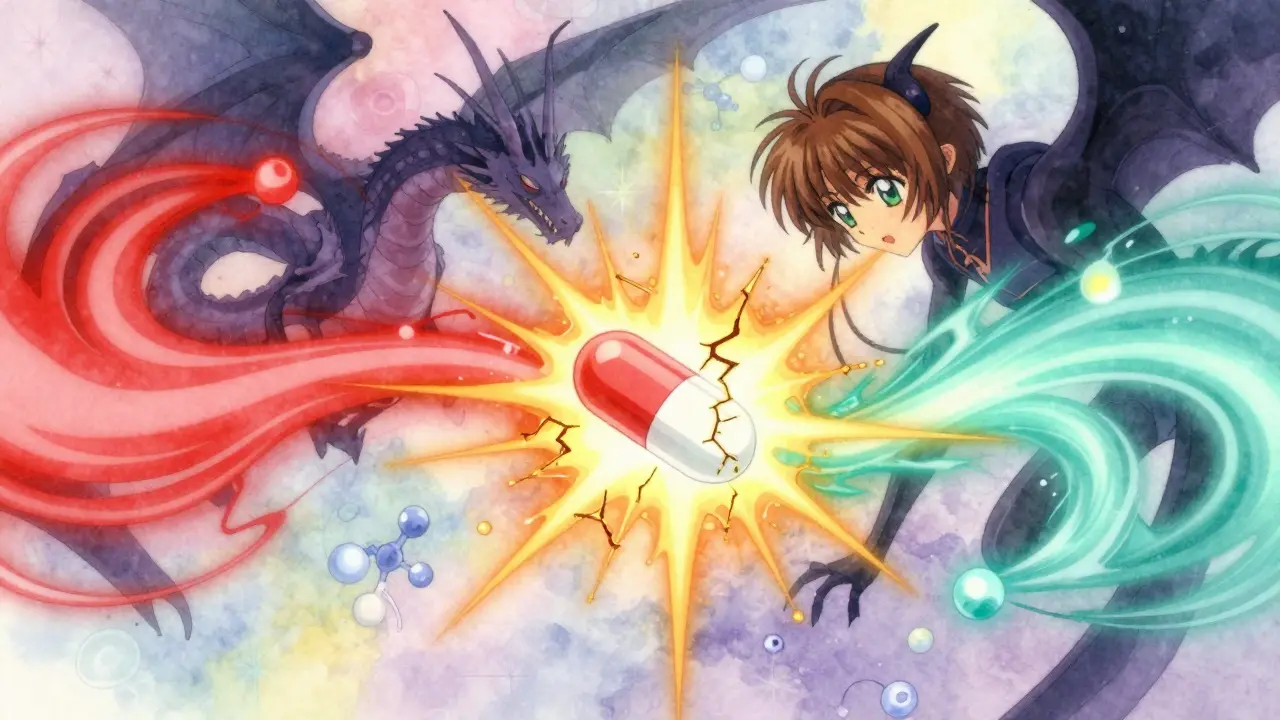
It’s not just one pathway. It’s the combo. Think of it like a leaky faucet and a clogged drain. CYP3A4 is the faucet-you turn it down, less colchicine gets broken down. P-gp is the drain-you block it, colchicine can’t leave your cells. Together, they turn a safe dose into a poison.
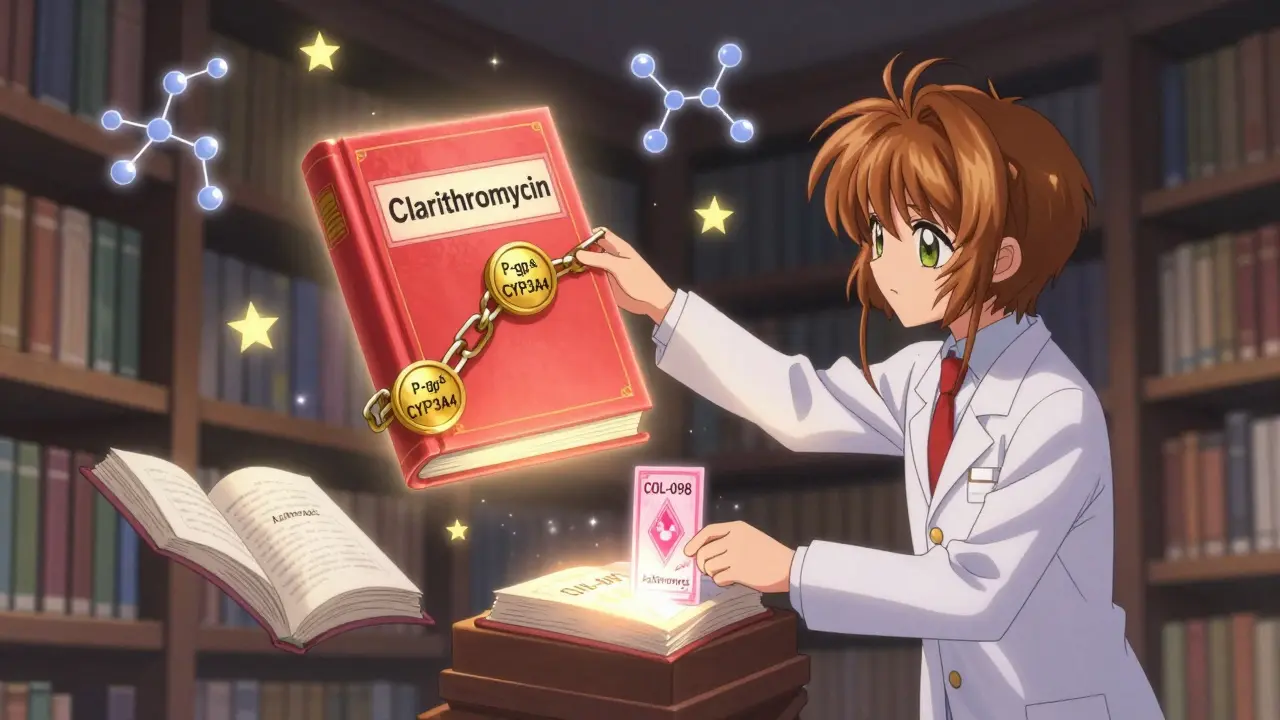
Some experts argue that CYP3A4 inhibition alone isn’t enough to cause toxicity. They point to drugs like voriconazole (a strong CYP3A4 blocker) that don’t always raise colchicine levels. But here’s the catch: most drugs that block CYP3A4 also block P-gp. Clarithromycin, verapamil, ketoconazole, itraconazole-they all do both. That’s why the interaction is so consistent. The 2011 Takeda patent even says: “Agents that inhibit CYP3A4 typically also inhibit P-gp.”
And it’s not just antibiotics. Other common drugs can do the same thing: diltiazem, verapamil, amiodarone, cyclosporine, even some antifungals. But macrolides are the most common trigger because they’re prescribed so often-over 55 million times a year in the U.S. alone.

Real-World Consequences
The FDA’s adverse event database has 147 confirmed cases of colchicine toxicity linked to macrolides between 2015 and 2020. Two-thirds involved clarithromycin. Most patients were over 65. Many had kidney issues. Some were taking colchicine for heart disease-something many doctors didn’t realize was the reason they were on it.
Emergency doctors see this more than rheumatologists. Why? Because when a 70-year-old with heart disease gets pneumonia, they’re sent to the ER. The ER doc prescribes clarithromycin. The patient’s cardiologist didn’t flag the colchicine. The pharmacist didn’t catch it. The EHR didn’t warn them. That’s the gap.
A 2023 survey of 245 doctors found 68% had seen at least one case. In emergency departments, it was 82%. Most said the system failed them-not the patient. Electronic alerts are often buried. Patients forget to mention they’re taking colchicine. Some even buy it over the counter for joint pain.
What Should You Do?
If you’re on colchicine and need an antibiotic, don’t guess. Ask.
- Is this infection serious enough to need an antibiotic at all?
- If yes, is azithromycin an option? It works for many respiratory infections.
- If you must take clarithromycin or erythromycin, your colchicine dose must drop by at least 50%. Some guidelines say stop it entirely.
- Don’t assume your doctor knows you’re on colchicine. Bring a list of all your meds-including supplements. Some herbal products like St. John’s wort or grapefruit juice also interfere with CYP3A4.
For patients on colchicine for heart disease, the American College of Cardiology says: avoid strong inhibitors. If you can’t avoid them, monitor for muscle pain, weakness, nausea, or unusual bruising. Check kidney function. If you’re hospitalized, ask for a colchicine blood level test. Only 37% of U.S. hospitals offer it-but if you’re at risk, push for it.
What’s Changing?
Good news: systems are getting smarter. Epic’s EHR now has a tiered alert system for colchicine interactions. In one study, it cut dangerous prescriptions by 63%. That’s huge.
Research is also moving forward. Takeda is testing a new version of colchicine-COL-098-that doesn’t interact with P-gp. Early trials show a 92% drop in interaction risk with clarithromycin. That could be a game-changer.
And genetics might help. A 2023 study found that two gene variants-CYP3A5*3/*3 and ABCB1 3435C>T-predicted 78% of colchicine toxicity cases. In the future, a simple genetic test could tell you if you’re at high risk before you even start the drug.
Bottom Line
Colchicine saves lives. But it can kill you if you pair it with the wrong antibiotic. The risk isn’t theoretical. It’s documented, measured, and deadly. Clarithromycin and colchicine? Don’t mix. Erythromycin? Proceed with extreme caution. Azithromycin? Safe. Always check. Always ask. Your life might depend on it.
Can I take colchicine with azithromycin?
Yes. Azithromycin does not significantly inhibit CYP3A4 or P-gp, so it does not raise colchicine levels. It is the safest macrolide to use with colchicine. Multiple studies, including a 2022 cohort of over 12,000 patients, show no increase in toxicity risk when these two are taken together.
What happens if I accidentally take clarithromycin with colchicine?
Stop the clarithromycin immediately and contact your doctor. Symptoms of colchicine toxicity include severe diarrhea, vomiting, muscle pain or weakness, numbness, low blood cell counts, and confusion. If you’re over 65 or have kidney problems, the risk is much higher. Go to the ER if you feel unwell-delaying care can be fatal.
Is there a blood test for colchicine levels?
Yes, but it’s not widely available. Only about 37% of U.S. hospitals can test for colchicine levels in blood. The therapeutic range is below 3.3 ng/mL, but ideally under 2.5 ng/mL if you’re on interacting drugs. If you’re at high risk, ask your doctor to arrange testing-especially if you’re hospitalized or have kidney disease.
Why does the FDA warn about colchicine but not other similar drugs?
Colchicine has an extremely narrow safety window. The difference between a therapeutic dose and a toxic one is small. Other drugs with similar metabolism (like statins) are safer because their therapeutic range is wider. Colchicine also has multiple interaction points-CYP3A4, P-gp, and enterohepatic recycling-making it uniquely vulnerable to drug combinations.
Can I use over-the-counter colchicine safely with antibiotics?
No. Even low-dose colchicine sold without a prescription can be dangerous when combined with macrolides like clarithromycin. Many people take it for joint pain without realizing they’re on a high-risk drug. The same interaction rules apply. Always check with a pharmacist or doctor before mixing any colchicine with antibiotics.
Are there alternatives to colchicine for gout or heart inflammation?
Yes, but they’re more expensive. For gout, NSAIDs like naproxen or corticosteroids are options. For heart inflammation, canakinumab is effective but costs over $198,000 per year. Colchicine remains the most affordable option, so the goal isn’t to stop using it-it’s to use it safely. Avoiding dangerous drug combinations is the key.
roger dalomba
December 25, 2025 AT 20:53So let me get this straight - we’re still surprised that mixing a poison with a drug that slows down its exit is bad? 🤡
Brittany Fuhs
December 27, 2025 AT 19:23It's truly appalling how lax our medical system has become. Patients are left to self-diagnose and self-medicate with over-the-counter colchicine while doctors prescribe clarithromycin like it's aspirin. This isn't just negligence - it's cultural decay.
Peter sullen
December 28, 2025 AT 22:42It is imperative to recognize that the pharmacokinetic interplay between P-glycoprotein and CYP3A4 constitutes a critical axis in drug safety profiling. The synergistic inhibition of both efflux and metabolic pathways results in non-linear pharmacodynamic escalation, thereby precipitating life-threatening myelosuppression and rhabdomyolysis. This is not an incidental finding - it is a predictable, preventable catastrophe.
Moreover, the absence of standardized EHR-driven clinical decision support systems across 63% of U.S. hospitals represents a systemic failure in pharmacovigilance infrastructure.
Steven Destiny
December 29, 2025 AT 12:41Stop being passive and start demanding better! If your doctor prescribes clarithromycin while you're on colchicine, walk out. Demand azithromycin. If they refuse, find a new doctor. Your life isn't a gamble - it's your right to be safe.
Fabio Raphael
December 31, 2025 AT 03:17This is such an important post. I’ve seen elderly patients come in with muscle weakness after a pneumonia script and never realize they were on colchicine for heart inflammation. It’s heartbreaking. Why isn’t this flagged at the pharmacy level too?
Amy Lesleighter (Wales)
January 1, 2026 AT 14:53people just dont know how dangerous this stuff is. i took colchicine for my knee for months, never knew it could kill me if i got a cold and got an antibiotic. dumb.
Rajni Jain
January 2, 2026 AT 06:48Thank you for sharing this. I’m from India and we see so many people buying colchicine without prescription. I’ll share this with my family and friends. Safety first ❤️
Natasha Sandra
January 4, 2026 AT 02:22OMG I had this happen to my uncle 😭 he got clarithromycin and ended up in ICU. I didn’t even know colchicine was a thing. So glad I found this. Sharing everywhere 🙏
Erwin Asilom
January 5, 2026 AT 09:33While azithromycin is the preferred alternative, clinicians must still exercise caution in patients with renal impairment, even with ostensibly 'safe' combinations. The margin of safety remains narrower than many assume.
Sumler Luu
January 6, 2026 AT 22:50My mom’s on colchicine for pericarditis. I’m going to print this out and take it to her cardiologist. She doesn’t even know what CYP3A4 is - but she knows not to mix meds without asking.
sakshi nagpal
January 8, 2026 AT 05:57This is why we need better global health literacy. In developing countries, patients often self-medicate with antibiotics and over-the-counter drugs without understanding interactions. Education must begin at the community level.
Sandeep Jain
January 8, 2026 AT 14:33my cousin died last year from this. no one told him. no one asked if he was on colchicine. just another statistic.
Sophia Daniels
January 9, 2026 AT 09:07Wow. So the FDA had to slap a black box on this because Americans can’t read? 🤦♀️ We’re letting people buy poison like it’s ibuprofen, then blaming the system when they die. Fix the people, not the alerts.
Also - 68% of doctors have seen this? That’s not a gap. That’s a goddamn epidemic. And you’re still using clarithromycin? Are you trying to win a Darwin Award?