Online Pharmacy Safety Checker
Pharmacy Verification Quiz
Answer these questions about an online pharmacy you're considering. This tool will help you assess potential risks.
Imagine buying your life-saving medication from a website that looks professional, offers a great price, and ships quickly. You take the pill, but nothing happens. Or worse, you feel sick. This isn't just a hypothetical nightmare; it is a daily reality for millions of people worldwide. Counterfeit medications are no longer a fringe problem found only in unregulated markets. They have infiltrated global supply chains, social media marketplaces, and even legitimate-looking online pharmacies. In 2025 alone, law enforcement agencies seized over 50 million doses of fake medicines during coordinated international operations. The stakes have never been higher.
The World Health Organization (WHO) defines falsified medical products as those that deliberately misrepresent their identity, composition, or source with the intent to deceive consumers for financial gain. These aren't just misspelled labels; they often contain toxic substances, insufficient active ingredients, or absolutely no medicine at all. According to recent data, approximately 10% of the global pharmaceutical market consists of substandard or falsified products, a figure that spikes to over 30% in some regions. Understanding how to identify these threats is not just about saving money; it is about protecting your life.
The Hidden Dangers of Fake Medicines
Why do counterfeiters risk everything to sell fake pills? The answer is simple: profit. Criminal organizations target high-demand products like oncology drugs, biologics, antibiotics, and pain relievers. The Pharmaceutical Security Institute reported 6,424 incidents of pharmaceutical counterfeiting in 2024, affecting over 2,400 distinct medicines across 136 countries. But the cost isn't measured in dollars; it's measured in health outcomes.
Counterfeit antimalarial drugs in Africa result in more than 120,000 deaths annually. In the United States, the U.S. Pharmacopeia documented 1,247 adverse events linked to suspected counterfeit medications in 2025 alone. A study published in The American Journal of Tropical Medicine and Hygiene found that nearly half of all counterfeit medicines detected in the legitimate supply chain contained insufficient active ingredients. This means patients with chronic conditions might think they are being treated when they are actually deteriorating silently.
The danger goes beyond ineffectiveness. Many fake pills contain dangerous contaminants. The Drug Enforcement Administration (DEA) warns that counterfeit pills often contain fentanyl or other lethal substances. In 2025, seven out of ten seized fake pills contained potentially lethal doses of fentanyl. Even common over-the-counter remedies can be laced with harmful chemicals if sourced from unverified vendors.
Red Flags: How to Spot Counterfeit Packaging
Criminal networks are getting smarter. Dr. Margaret A. Hamburg, former FDA Commissioner, noted in a 2025 report that counterfeit operations now employ advanced manufacturing techniques, making fakes increasingly difficult to distinguish from genuine products. However, there are still telltale signs if you know what to look for.
- Spelling and Grammar Errors: Legitimate pharmaceutical companies invest heavily in quality control. If the label has typos, poor grammar, or inconsistent font sizes, put it back on the shelf. Trustpilot reviews indicate that 78% of negative reviews for online pharmacies mention inconsistent labeling or poor-quality printing.
- Packaging Quality: Check for tamper-evident seals. Are they broken? Is the box flimsy? Pfizer’s security team advises checking for holograms and serialization features. If the packaging feels cheap or looks slightly off compared to previous purchases, be suspicious.
- Pill Appearance: Inspect the medication itself. Does the color, shape, or texture differ from what you remember? Unusual odors are another major red flag. One Reddit user shared how a family member nearly died after receiving counterfeit insulin because the vial felt lighter than usual-a subtle clue that saved them.
- Price Too Good to Be True: If an online pharmacy offers a 50% discount on brand-name drugs without a valid prescription, it is likely a scam. The WHO recommends avoiding products with unusually low prices.
The Online Pharmacy Trap
The internet is the primary distribution channel for counterfeit medications. The FDA reports that 85% of drugs sold from websites claiming to be "Canadian" actually originate from other countries, often with lax regulatory oversight. A 2025 survey by the National Consumers League found that 62% of consumers who purchased medications online couldn't verify the pharmacy's legitimacy. Worse, 41% admitted to buying from sites that didn't require prescriptions.
Buying medication without a prescription is illegal and dangerous. It bypasses the safety checks that healthcare providers perform to ensure the drug is appropriate for your condition. The DEA reports that 97% of websites selling prescription drugs operate illegally. The Partnership for Safe Medicines identified 11,000 illegal online pharmacy websites shut down in 2025 alone.
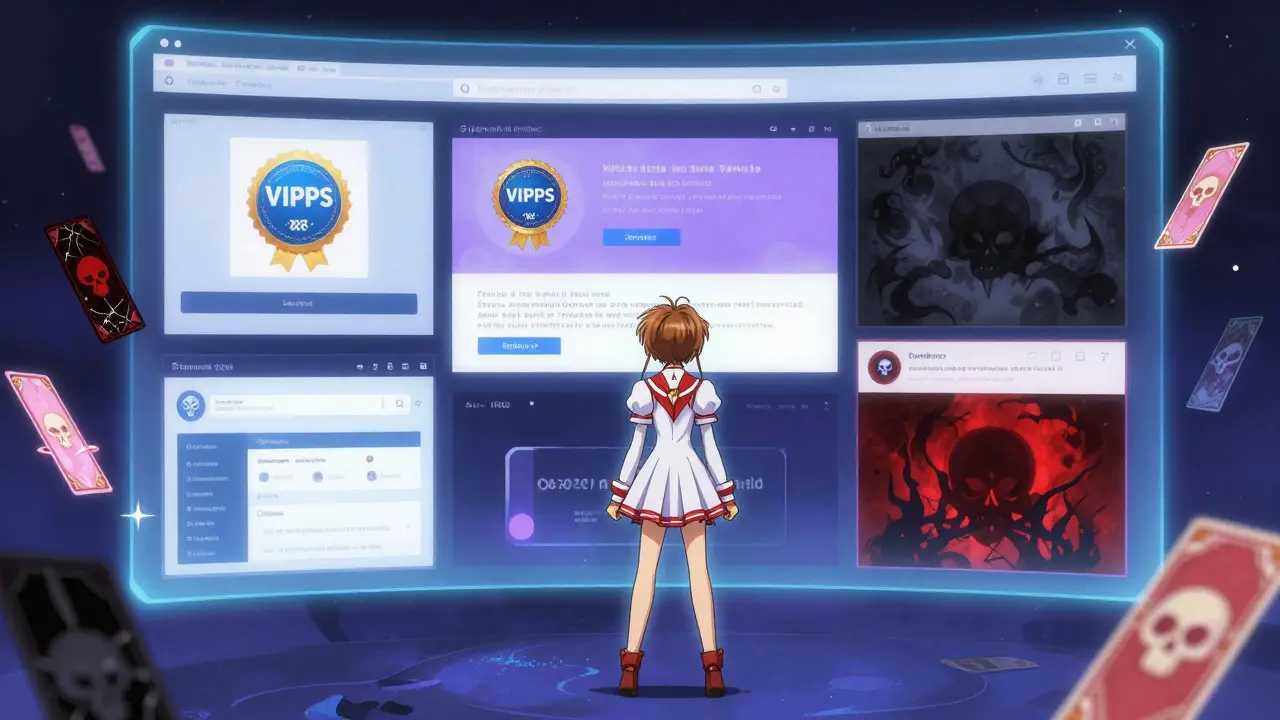
To stay safe, always verify that an online pharmacy displays a VIPPS (Verified Internet Pharmacy Practice Sites) seal. Ensure the pharmacy is located in your country and requires a valid prescription from a licensed healthcare provider. Use tools like the National Association of Boards of Pharmacy (NABP) to check licensing status. Never purchase medications from social media marketplaces or encrypted messaging apps, where criminal networks coordinate sales using cryptocurrency.
Technological Solutions and Verification Tools
As counterfeiting becomes more sophisticated, so does detection technology. The Global Counterfeit Drug Detection Device Market was valued at USD 1.742 billion in 2025 and is projected to reach USD 2.293 billion by 2030. Spectroscopy devices lead advancements, allowing field verification of drug composition. Portable detection devices are gaining popularity among regulators and pharmacies.
For consumers, several digital tools can help verify authenticity:
- FDA’s BeSafeRx Program: Provides guidelines for verifying online pharmacies and reporting suspicious products.
- National Drug Code (NDC) Verification: Check the NDC number on your medication against the FDA’s database to confirm its legitimacy.
- MedSafety App: Recommended by the WHO, this app allows users to report and verify suspicious medical products.
- Manufacturer Websites: Compare your packaging against official images available on the drug manufacturer’s site. Look for unique identifiers and anti-tampering devices required by directives like the EU’s Falsified Medicines Directive.
In the United States, the Drug Supply Chain Security Act (DSCSA) requires full electronic tracing of prescription drugs by November 2025. This system aims to create a transparent supply chain, making it harder for counterfeit products to enter legitimate channels. Similarly, the European Medicines Agency has implemented safety features including unique identifiers and anti-tampering devices on all medicinal products.
| Feature | Legitimate Online Pharmacy | Illegal/Counterfeit Source |
|---|---|---|
| Prescription Requirement | Requires valid prescription from licensed provider | No prescription needed or uses fake doctor notes |
| Location Transparency | Physical address and phone number listed | No physical address or uses P.O. Box only |
| Verification Seal | Displays VIPPS or equivalent verified seal | No seal or uses fake certification logos |
| Pricing | Competitive but realistic prices | Drastically lower prices (e.g., 50-80% off) |
| Contact Information | Licensed pharmacist available for consultation | Only email contact or automated responses |
Global Impact and Regional Risks
The threat of counterfeit medicines is not evenly distributed. Low- and middle-income countries face the highest risks. The WHO estimates that at least 1 in 10 medicines in these regions are substandard or falsified, affecting up to two billion people. In Nigeria, counterfeit medicines account for an estimated 40% of available products. Users on local forums describe "miracle cures" for chronic conditions that provide temporary relief before causing severe complications.
However, developed nations are not immune. While the U.S. maintains a closed drug distribution system with counterfeit prevalence below 1% for offline purchases, online risks remain high. Asia-Pacific is the fastest-growing market for both counterfeit production and detection technologies. China reported a 22% increase in fake drugs in 2023. Interpol’s Operation Pangea XVI in 2025 involved police from 90 countries, resulting in 769 arrests and the dismantling of 123 criminal groups. Sixty-eight percent of seized counterfeit medicines in 2025 originated from Asia.
Economic losses are staggering. Countries spend an estimated US$ 30.5 billion annually on substandard and falsified medical products. Legitimate pharmaceutical companies lose approximately $200 billion yearly to counterfeiting. This drain on resources hinders innovation and raises costs for everyone.
Emerging Threats: 3D Printing and Dark Web
As technology evolves, so do the methods of criminals. Emerging technologies like 3D printing could further complicate detection efforts. Preliminary reports in August 2025 documented criminal networks using desktop manufacturing equipment to produce convincing counterfeit packaging. These printers can replicate complex designs, including holograms and textures, making visual inspection less reliable.
The dark web remains a haven for illicit pharmaceutical trade. The WHO’s Global Surveillance and Monitoring System (GSMS) now incorporates dark web monitoring capabilities. LifeRaft Labs reported a sharp increase in counterfeit medicine incidents in 2025, including multiple high-profile factory raids. Criminal networks use encrypted messaging apps and cryptocurrency to coordinate operations, making tracking and prosecution difficult.
Biologics and specialty drugs are becoming new targets. The IFPMA warns that criminal networks are increasingly capable of replicating complex packaging for these high-value medications. This shift poses significant risks for patients with cancer, autoimmune diseases, and other serious conditions who rely on precise dosages and sterile formulations.
Action Plan: Staying Safe in 2026
Protecting yourself from counterfeit medications requires vigilance and proactive steps. Here is a practical checklist to follow every time you purchase medication:
- Buy from Licensed Pharmacies: Always purchase from brick-and-mortar stores or verified online pharmacies with physical addresses.
- Verify Prescriptions: Never buy prescription drugs without a valid prescription from a licensed healthcare provider.
- Check Packaging: Inspect for tamper-evident seals, spelling errors, and unusual colors or textures. Compare with manufacturer images.
- Use Verification Tools: Utilize FDA’s BeSafeRx, NDC databases, and MedSafety app to confirm product legitimacy.
- Report Suspicious Products: If you suspect a medication is counterfeit, report it immediately to your national health authority or via the MedSafety app.
- Avoid Social Media Sales: Do not purchase medications from Facebook, Instagram, WhatsApp, or Telegram sellers.
- Be Skeptical of Prices: If the price seems too good to be true, it probably is. Stick to reputable sources.
Education is your best defense. Share this information with family and friends, especially elderly relatives who may be vulnerable to online scams. By staying informed and vigilant, we can reduce the demand for counterfeit medicines and protect our communities from harm.
How can I tell if my online pharmacy is legitimate?
Look for a VIPPS (Verified Internet Pharmacy Practice Sites) seal, a physical address, and a requirement for a valid prescription. Verify the pharmacy’s license through the National Association of Boards of Pharmacy (NABP). Avoid sites that offer drugs without prescriptions or have drastically lower prices than competitors.
What are the most common signs of counterfeit medication packaging?
Common signs include spelling errors, poor print quality, missing tamper-evident seals, incorrect pill color or shape, and unusual odors. Always compare the packaging with official images from the manufacturer’s website.
Are counterfeit medicines only a problem in developing countries?
No. While low- and middle-income countries face higher rates (up to 30%), counterfeit medicines are a global issue. In the U.S., online purchases carry significant risks, with 97% of websites selling prescription drugs operating illegally. Criminal networks operate globally, targeting high-demand drugs everywhere.
Can 3D printing make counterfeit drugs harder to detect?
Yes. Recent reports indicate that criminal networks are using 3D printers to replicate complex packaging features like holograms and textures. This makes visual inspection less reliable, increasing the need for technological verification tools like spectroscopy devices and digital authentication codes.
What should I do if I suspect I’ve taken a counterfeit medication?
Stop taking the medication immediately and consult a healthcare provider. Report the incident to your national health authority or use the WHO’s MedSafety app. Keep the packaging and any remaining pills for analysis. Early reporting helps authorities track and dismantle criminal networks.