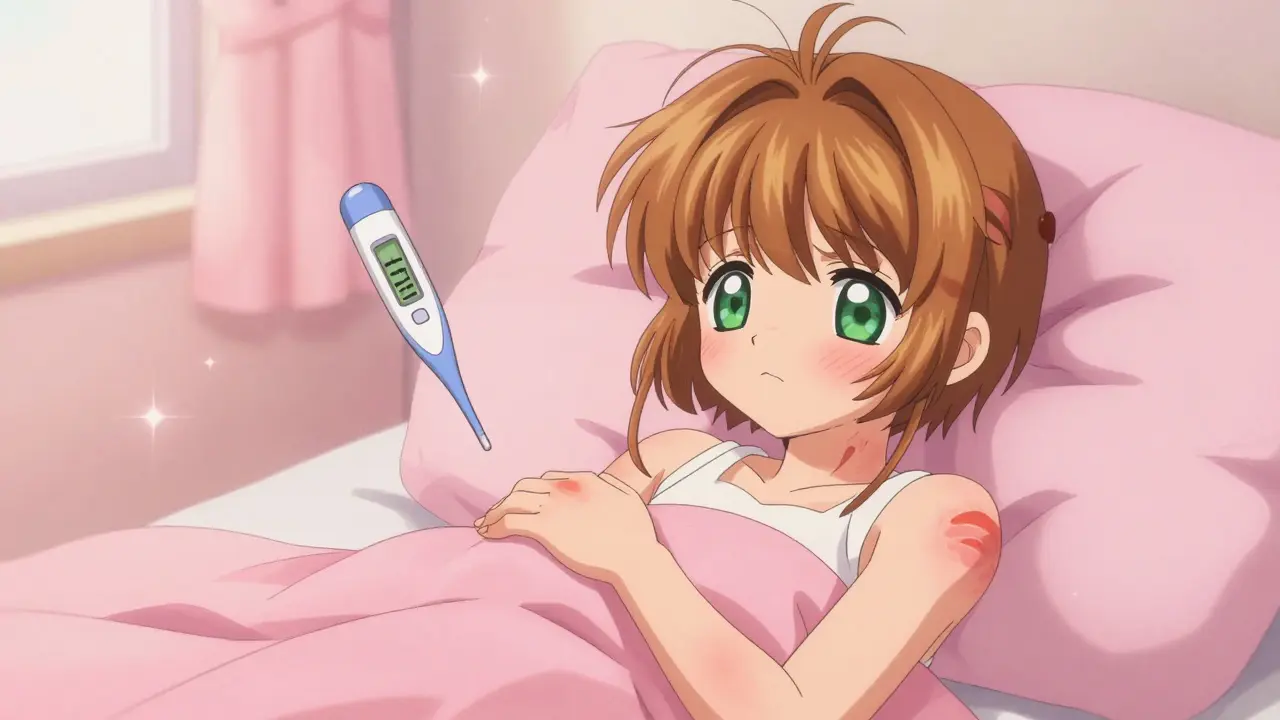
DRESS Syndrome Risk Assessment (RegiSCAR)
Check the boxes that apply to your situation to estimate the score.
Assessment Result
Select symptoms above to calculate your RegiSCAR score.
Imagine starting a new medication for a common condition like gout or seizures. Weeks pass, and you feel fine. Then, suddenly, your skin breaks out in a rash, your temperature spikes, and you feel exhausted. You visit the doctor, who prescribes antihistamines. But the symptoms worsen. Your liver enzymes skyrocket. This isn't just an allergy. It might be DRESS syndrome, a rare but life-threatening reaction that kills about 10% of those affected if not caught early.
DRESS stands for Drug Reaction with Eosinophilia and Systemic Symptoms. Doctors also call it Drug-Induced Hypersensitivity Syndrome (DIHS). It is not a simple rash. It is a complex immune system meltdown triggered by specific drugs. Unlike a typical allergic reaction that happens within minutes, DRESS takes time to build up. The delay makes it tricky to spot. By the time organs start failing, the damage can be severe. Understanding what DRESS is, who gets it, and how to treat it can save lives.
What Exactly Is DRESS Syndrome?
DRESS syndrome is a type of severe cutaneous adverse reaction (SCAR). SCARs are serious skin reactions caused by medications. DRESS is distinct because it involves multiple body systems, not just the skin. First described in 1950 as phenytoin hypersensitivity, it was formally named DRESS in 1996. Today, we know it affects roughly 1 in 1,000 people taking high-risk drugs. In Asia, where certain medications like carbamazepine are used more frequently, rates can be higher.
The core problem is an overactive immune response. When you take a triggering drug, your immune system mistakes it for a threat. It launches a full-scale attack. This attack causes inflammation throughout the body. Key signs include a widespread rash, high fever, swollen lymph nodes, and abnormal blood counts. Specifically, your eosinophil count-a type of white blood cell-rises significantly. That’s why "eosinophilia" is in the name.
Organ damage is the most dangerous part. The liver is the most commonly affected organ, seen in nearly 78% of cases. Kidneys, lungs, heart, and pancreas can also suffer. Without treatment, this multi-organ failure leads to death in about 10% of cases. Early recognition is the single most important factor in survival.
Who Is at Risk? High-Risk Drugs and Genetics
Not everyone who takes medication will develop DRESS. Certain drugs carry much higher risks. Anticonvulsants (seizure medications) account for about 24% of cases. Allopurinol, used for gout, causes 28% of cases. Antibiotics make up another 20%. Other culprits include sulfonamides and some cancer immunotherapy drugs.
| Drug Class | Specific Examples | Risk Percentage |
|---|---|---|
| Gout Medication | Allopurinol | 28% |
| Anticonvulsants | Carbamazepine, Phenytoin, Lamotrigine | 24% |
| Antibiotics | Sulfonamides, Vancomycin | 20% |
| Others | NSAIDs, Immune Checkpoint Inhibitors | Variable |
Genetics play a huge role. Some people have genetic markers that make them far more likely to react badly to specific drugs. For example, the HLA-B*58:01 allele strongly predicts allopurinol-induced DRESS. In Taiwan, mandatory screening for this gene before prescribing allopurinol has reduced DRESS cases by 80%. Similarly, the HLA-A*31:01 allele is linked to carbamazepine reactions. If you have these genetic markers, doctors should avoid these drugs entirely. Pre-prescription screening is becoming standard in many regions to prevent tragedy.
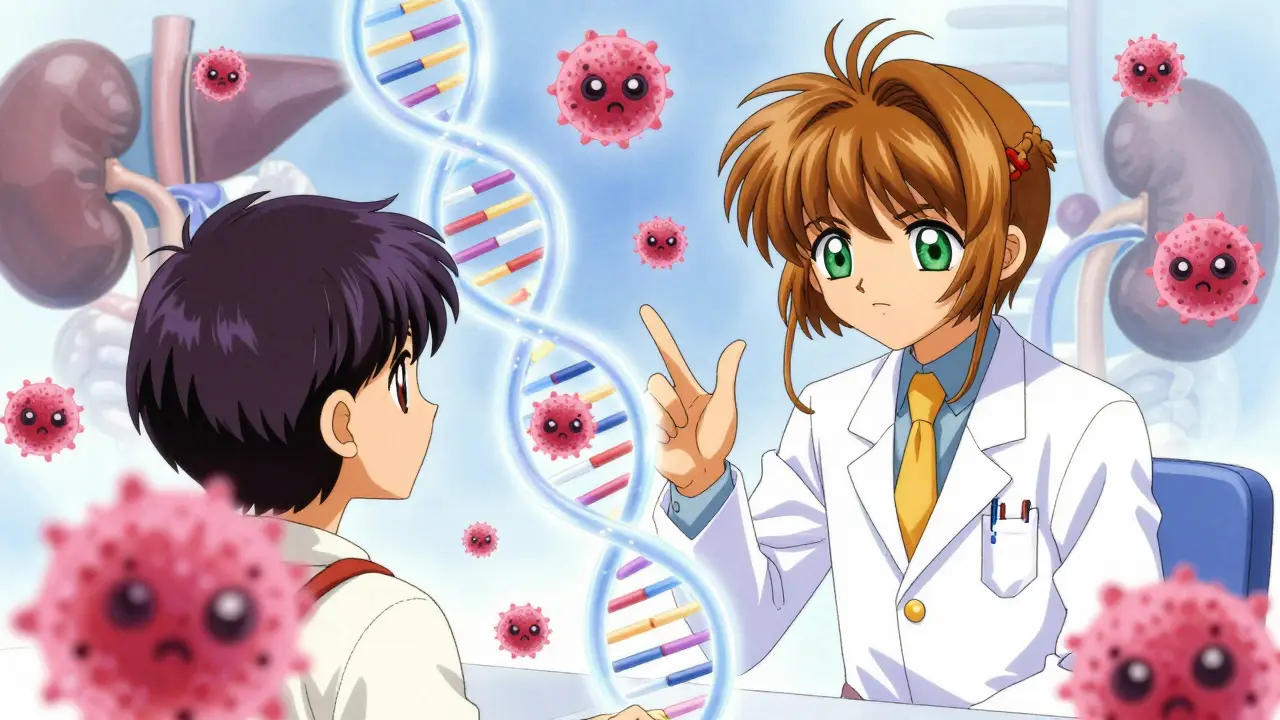
Recognizing the Signs: Symptoms and Timeline
DRESS does not happen overnight. There is a long latency period. Symptoms usually appear 2 to 8 weeks after starting the offending drug. This delay often leads to misdiagnosis. Patients and doctors may assume it is a viral infection or a mild allergy. By the time the connection to the drug is made, significant damage may have occurred.
Here are the classic symptoms to watch for:
- Widespread Rash: Present in 95% of cases. It often starts on the face and upper body, spreading to cover 80-90% of the skin. It looks like flat red spots or slightly raised bumps.
- High Fever: Temperatures exceed 38.5°C (101.3°F) in 98% of patients.
- Facial Swelling: Edema around the eyes and lips occurs in about two-thirds of cases.
- Swollen Lymph Nodes: Found in 75% of patients, often in the neck or armpits.
- Blood Abnormalities: Elevated eosinophils (>1,500 cells/μL) and atypical lymphocytes are key diagnostic clues.
Internal organ involvement is silent until tests reveal it. Liver enzyme levels (ALT) often soar above 300 IU/L. Kidney function may decline. If you experience fever and rash weeks after starting a new medication, do not ignore it. Seek immediate medical attention.
Diagnosing DRESS: The RegiSCAR Criteria
Doctors use the RegiSCAR scoring system to diagnose DRESS. Developed in 2007, it is the gold standard. It helps distinguish DRESS from other conditions like Stevens-Johnson Syndrome (SJS) or viral infections. SJS presents with blistering and skin detachment, while DRESS features swelling and systemic inflammation. AGEP (another severe reaction) appears faster, within days, and involves pustules.
To confirm DRESS, clinicians look for:
- Hospitalization required due to severity.
- Reaction suspected to be drug-related.
- Acute skin rash with biopsy showing eosinophils.
- Fever over 38°C.
- Involvement of internal organs (liver, kidney, lung).
- Blood abnormalities (eosinophilia, atypical lymphocytes).
- Prolonged course (symptoms persist after stopping the drug).
- Exclusion of other causes (like viruses).
A score of 5 or higher confirms DRESS. Viral reactivation, especially of HHV-6, EBV, or CMV, is common in DRESS and supports the diagnosis. Recent updates to RegiSCAR now include viral markers to improve accuracy. Misdiagnosis rates remain high-up to 40%-because primary care doctors often lack exposure to this rare condition. If you suspect DRESS, ask for a referral to a dermatologist or specialist familiar with SCARs.

Treatment and Management Strategies
Time is critical. The first step is always to stop the offending drug immediately. Do not wait. Every hour counts. Once the drug is removed, the focus shifts to supporting the body and reducing inflammation.
Systemic Corticosteroids are the mainstay of treatment. Prednisone is typically started at high doses (1 mg/kg/day) and tapered slowly over 3 to 6 months. Stopping steroids too quickly can cause a relapse. Studies show that starting steroids within 72 hours of diagnosis improves outcomes significantly. However, there is debate about whether steroids alone are enough. Some experts advocate for additional therapies in severe cases.
Supportive Care is vital. Patients often need hospitalization, sometimes in the ICU. Monitoring liver and kidney function daily is essential. Intravenous fluids help maintain hydration. Wound care manages skin breakdown. Pain management ensures comfort.
Alternative Therapies are being explored for steroid-resistant cases. Intravenous Immunoglobulin (IVIG) and mycophenolate mofetil are options. These treatments modulate the immune system without the side effects of long-term steroids. Clinical trials are ongoing to determine the best protocols.
Long-Term Outlook and Prevention
Recovery from DRESS is slow. Even after symptoms resolve, fatigue and skin changes can last for months. Some patients develop chronic autoimmune issues. Permanent organ damage, such as renal impairment, is possible if diagnosis was delayed. Follow-up care is crucial. Regular blood tests monitor for late complications.
Prevention is the best strategy. Genetic testing for HLA alleles before prescribing high-risk drugs can eliminate many cases. Pharmacovigilance programs track adverse reactions to identify new triggers. Patient education empowers individuals to recognize early signs. Carry a card listing your drug allergies and past DRESS episode. Inform every healthcare provider you see.
Research is advancing rapidly. New biomarkers aim to predict who is at risk before symptoms start. Global registries collect data to refine treatment guidelines. With increased awareness and better screening tools, the incidence of DRESS is expected to drop significantly in the coming years.
How long does it take for DRESS symptoms to appear?
DRESS symptoms typically appear 2 to 8 weeks after starting the triggering medication. This long latency period distinguishes it from acute allergic reactions, which occur within minutes or hours.
Is DRESS syndrome fatal?
Yes, DRESS has a mortality rate of approximately 10%. Death usually results from multi-organ failure, particularly liver or kidney damage. Early diagnosis and treatment drastically improve survival chances.
Can I get DRESS from antibiotics?
Yes, antibiotics account for about 20% of DRESS cases. Sulfonamides and vancomycin are known triggers. Always inform your doctor if you have had severe drug reactions in the past.
What is the difference between DRESS and Stevens-Johnson Syndrome?
DRESS involves widespread inflammation, fever, and organ damage with a slower onset (weeks). Stevens-Johnson Syndrome (SJS) causes blistering and skin detachment with a rapid onset (days). SJS has a higher mortality rate (25-35%) compared to DRESS (10%).
Does genetic testing help prevent DRESS?
Yes, testing for HLA-B*58:01 before prescribing allopurinol and HLA-A*31:01 before carbamazepine can reduce DRESS risk by up to 80% in susceptible populations. Screening is recommended in high-risk groups.