The U.S. pharmaceutical supply chain handles over 5 billion prescription drug transactions every year. That’s a massive flow of medicine - and a huge target for counterfeiters. Fake pills, stolen batches, contaminated products - they all slip in if there’s no way to prove a drug’s origin. Since November 27, 2024, the DSCSA track-and-trace system has been the final line of defense. It doesn’t just track drugs. It verifies them, one package at a time.
What the DSCSA Actually Does
The Drug Supply Chain Security Act (DSCSA) isn’t a suggestion. It’s a federal law that forces every player in the drug supply chain - manufacturers, wholesalers, repackagers, and pharmacies - to use electronic systems to track prescription drugs from the factory to the patient. Before DSCSA, each state had its own rules. Some had traceability laws. Others didn’t. That patchwork made it easy for bad actors to exploit gaps. DSCSA replaced all of that with one national standard. The goal? Stop counterfeit drugs before they reach your medicine cabinet. The FDA estimates that DSCSA will reduce counterfeit drug incidents by 95% once fully operational. That’s not a guess. It’s based on data from countries like the EU, which saw a similar drop after launching their own track-and-trace system. Every prescription drug package now has a unique identifier. That’s not just the National Drug Code (NDC). It’s also a serial number, lot number, and expiration date - all in a machine-readable 2D barcode and human-readable text. This isn’t optional. Every bottle, box, and vial must carry it. And every time the drug changes hands, the next party must scan it and verify its legitimacy.The Three Pieces of the Puzzle: TI, TH, TS
DSCSA doesn’t just require a barcode. It demands three key pieces of data with every transfer:- Transaction Information (TI): What’s being shipped? NDC, serial number, quantity, date, and the names of the sender and receiver.
- Transaction History (TH): Where has this package been? Every prior transaction back to the manufacturer.
- Transaction Statement (TS): A legal certification that the transaction is legitimate and compliant.
How It Stops Counterfeit Drugs in Real Time
Here’s how it works in practice. A pharmacy receives a shipment of insulin. The scanner reads the barcode. The system checks the serial number against the manufacturer’s database. Is it valid? Is it on the approved list? Is the lot number correct? If the serial number doesn’t match - or worse, if it’s been used before - the system flags it as a suspect product. That’s not just a warning. It’s a legal trigger. The pharmacy must immediately quarantine the product and report it to the FDA. They can’t just put it on the shelf and hope for the best. In 2022, a regional distributor got a warning letter from the FDA for failing to do exactly that. They had received a batch of fake blood pressure pills. They didn’t report it. Patients could have been harmed. The system also catches stolen drugs. If a wholesaler’s warehouse is robbed and someone tries to resell the stolen pills, the serial numbers won’t match the original shipment records. The system knows. And it stops the sale.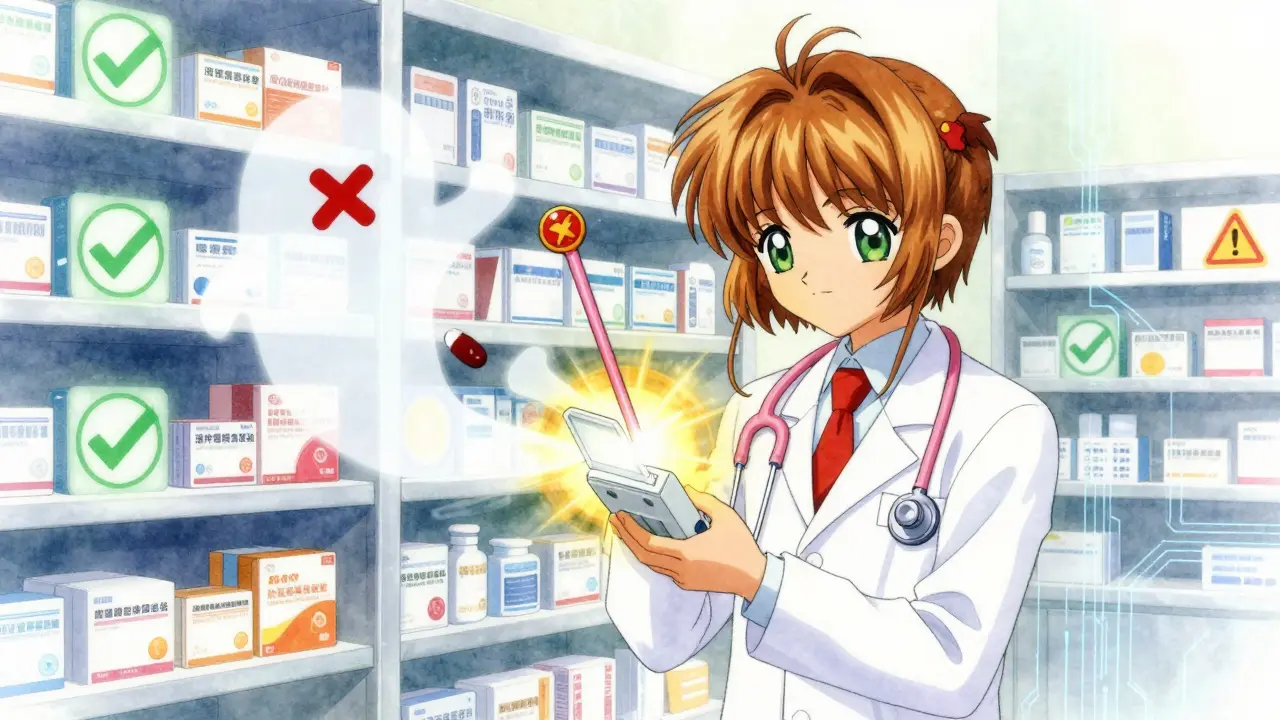
Who’s Compliant - And Who’s Struggling
By mid-2023, 98% of manufacturers and 95% of wholesale distributors had full serialization systems in place. They had the money, the tech teams, and the incentive. The real challenge? Independent pharmacies. A 2023 survey by the National Community Pharmacists Association found that 68% of independent pharmacies called DSCSA compliance their top technology challenge. Why? Cost. Upgrading software, buying scanners, training staff - it can run $185,000 per pharmacy. Chain pharmacies like CVS and Walgreens spent over $100 million each on compliance. But small pharmacies? Many are still using legacy systems that can’t talk to modern track-and-trace platforms. The result? Only 72% of pharmacies were fully compliant by the November 2024 deadline. That’s a problem. Because if one pharmacy in a chain is outdated, the whole system is vulnerable. A counterfeit drug can slip through if the verification step is skipped.The Tech Behind the System
DSCSA doesn’t rely on one vendor. It uses open standards - primarily GS1 for barcodes and EPCIS for data sharing. GS1 ensures every serial number is unique and follows global rules. EPCIS is the language that lets different software systems talk to each other. If Company A uses TraceLink and Company B uses SAP, they still need to exchange data cleanly. That’s where things get messy. Many companies built their own systems without fully following EPCIS. That led to data mismatches. A serial number might be recorded as “ABC123” in one system and “abc123” in another. Case sensitivity. Extra spaces. Different date formats. These tiny errors caused delays. Pharmacists waited 2-3 extra days to verify shipments. That’s not just frustrating - it’s dangerous if a patient needs medication urgently. The biggest players - TraceLink, SAP, Oracle - now dominate the market. Together, they control over 70% of the track-and-trace software space. But even they had to adapt. Many updated their platforms in 2023 to fix interoperability issues. The FDA gave a one-year stabilization period to let these fixes roll out without penalties. That window closed in November 2024.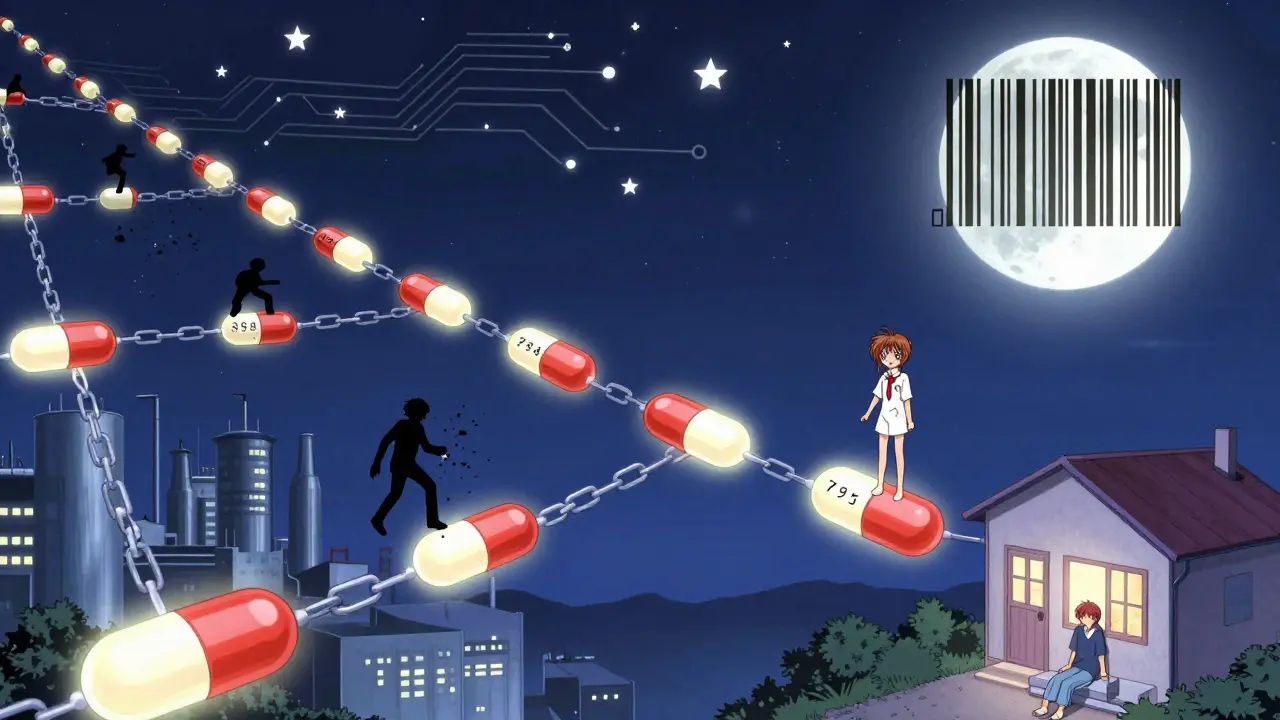
Mahammad Muradov
December 19, 2025 AT 04:03The DSCSA is a necessary evil. I've seen how sloppy some distributors are-paper logs, handwritten NDCs, no verification. This system finally forces accountability. No more 'oops, we missed the serial.' If you're a pharmacy and you can't scan, you shouldn't be dispensing. Period.
It's not perfect, but it's the first time the feds actually made the supply chain answerable. The EU did this years ago. We're late, but better late than never.
And yes, small pharmacies are struggling. But that's not a reason to weaken the law. It's a reason to fund them. Federal grants. Tax credits. Something. We don't let hospitals operate without EMRs. Why should pharmacies be any different?
Connie Zehner
December 19, 2025 AT 08:35OMG I just found out my insulin has a barcode?? 😱 I thought it was just a vial with a label!!
So like... if my pharmacy doesn't scan it, does that mean I could get a fake? 😭 I'm so scared now. My aunt died from fake blood pressure pills last year. This is terrifying but also kinda amazing??
Can I scan it myself with my phone?? I wanna check my meds every time I take them. I'm gonna start a blog about it. #DSCSASavesLives 💉🔍
mark shortus
December 19, 2025 AT 22:28YOOOOO. This is the most important thing that’s happened to American healthcare since the invention of the pill.
99.98% accuracy? McKesson? CVS? That’s not just compliance-that’s a revolution. And yet, some people are still whining about ‘cost’ like it’s 1999.
Let me be clear: if your pharmacy can’t verify a drug, they’re not just incompetent-they’re endangering lives. And if you’re one of those ‘small business owners’ crying about $185k? Get a loan. Get a grant. Get a damn scanner. Your neighbors’ kids are counting on you.
Also-‘EPCIS’? Who wrote this? I’m printing this out and framing it. This is art.
PS: I typed this on a typewriter. I’m still right.
Elaine Douglass
December 21, 2025 AT 12:37I work at a community pharmacy and this system has changed everything
Used to be we'd get a shipment and just put it on the shelf if the box looked right
Now we scan every single thing and wait for the green light
It takes longer but I sleep better at night
One time we caught a fake diabetes med and called the FDA
They came the next day
My boss cried
I cried
That's the kind of thing you don't forget
Allison Pannabekcer
December 21, 2025 AT 21:42It's easy to say 'everyone should comply' but let's not forget that many independent pharmacies are run by one or two people who are also the bookkeepers, the pharmacists, the delivery drivers, and the IT support.
They didn't choose this burden. The system was designed by big pharma and tech giants who had teams of engineers. Small shops got a deadline and a bill.
That's not fairness. That's systemic pressure.
But I still believe in the goal. Maybe we need a national subsidy fund. Maybe we need open-source EPCIS tools. Maybe we need to let small pharmacies use a simplified version of the system while they scale up.
We can protect patients and still care for the people who serve them.
It's not either/or. It's both.
Sarah McQuillan
December 23, 2025 AT 10:44Wait so now the government is putting barcodes on my pills? Like... tracking me?
Who's really behind this? Is it Big Pharma? The FDA? The WHO? Are they building a database of who takes what medicine?
I read that the EU system was used to ration insulin during the pandemic. Are we heading there?
And why are we trusting these companies like TraceLink and SAP? What if they get hacked? What if they sell my data?
I'm not anti-tech. I'm anti-surveillance.
And don't tell me 'it's for safety.' I've seen what 'safety' means when the government gets involved.
My grandfather was in WWII. He didn't need a barcode to know his medicine was real.
Kitt Eliz
December 23, 2025 AT 23:45YESSSSS! DSCSA is the MVP of pharma security 🙌
GS1 + EPCIS = GLOBAL STANDARD 🌍✨
And yes, the interoperability issues were a nightmare-serial numbers with lowercase letters? Spaces? Case sensitivity? 🤦♀️
But guess what? The big players fixed it. TraceLink, SAP, Oracle-they stepped up. Now we’ve got real-time verification, reduced diversion, and zero tolerance for fakes.
Small pharmacies? They need help, not hand-wringing. Let’s fund them. Let’s train them. Let’s make them part of the solution.
This isn’t just tech-it’s public health infrastructure. And we’re building it RIGHT. 🚀💊 #PharmaTechRevolution
Aboobakar Muhammedali
December 24, 2025 AT 05:53My cousin works at a small pharmacy in rural Nebraska
She told me they got a shipment last week and the scanner kept flashing red
Turned out the serial number was duplicated from a batch that got stolen in Ohio
They quarantined it
Called the FDA
Two days later the whole lot was pulled
That’s the system working
Not perfect
But real
And that’s enough for me
Laura Hamill
December 24, 2025 AT 05:55So you’re telling me the government is putting trackers on my pills so they can know what I’m taking?
And you call that safety?
What’s next? QR codes on aspirin that report to the NSA?
They said 95% reduction in counterfeits. But what about the 5% they missed? What if they’re the ones making the fakes?
I don’t trust this. I don’t trust them.
My grandma took her pills for 40 years without a barcode. She’s still alive.
And now they want me to scan mine?
Pass.