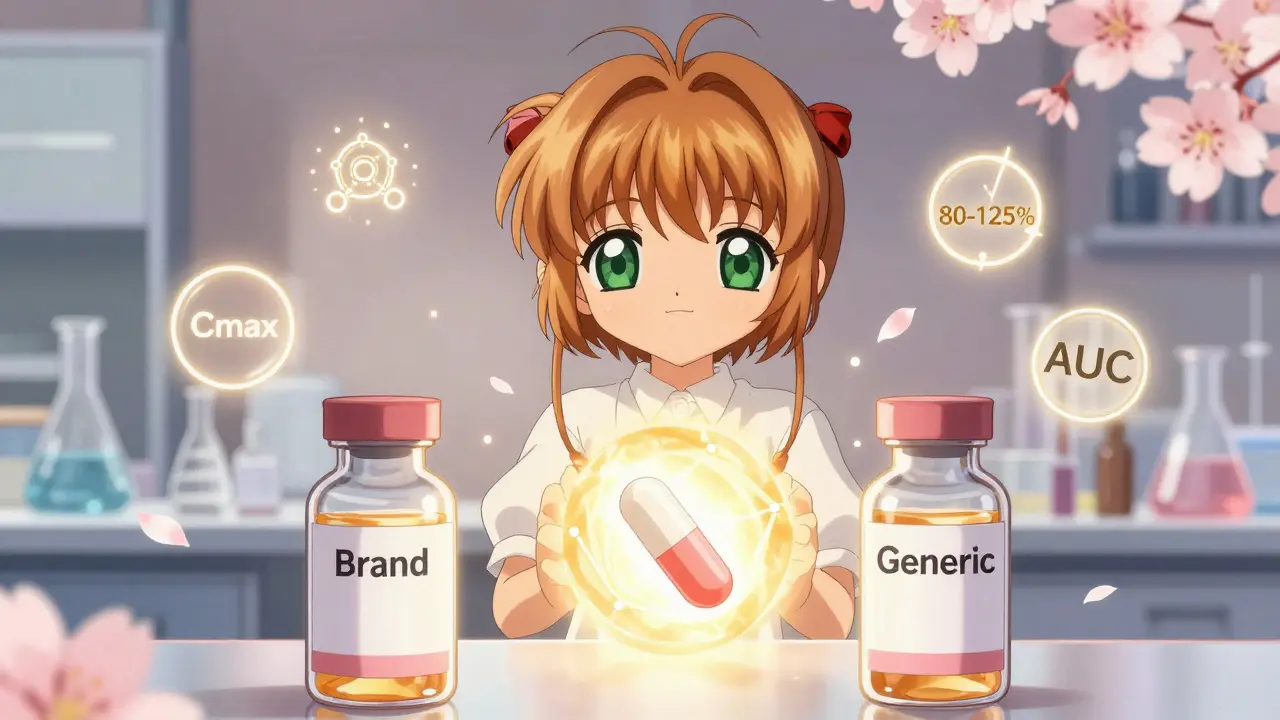
When you pick up a prescription and see a generic label, you might wonder: is this really the same as the brand-name drug? The answer isn’t just yes - it’s backed by strict science, detailed testing, and a regulatory system designed to make sure every pill, capsule, or injection works exactly as intended. The FDA doesn’t just approve generics because they’re cheaper. They approve them because they’ve proven to be just as safe and effective - down to the last milligram.
What Makes a Generic Drug Officially Equivalent?
The FDA doesn’t call a drug "generic" unless it meets two core standards: pharmaceutical equivalence and bioequivalence. These aren’t vague guidelines. They’re hard numbers, tested in labs and clinical studies.
Pharmaceutical equivalence means the generic has the same active ingredient, strength, dosage form (like tablet or injection), and route of administration (oral, topical, etc.) as the brand-name version. It also has to be used for the same medical conditions. The label has to say the same thing. That’s non-negotiable.
But here’s where people get confused: the generic doesn’t have to look the same. It can be a different color, shape, or size. It might use different fillers or coatings - those are inactive ingredients, and the FDA allows minor differences there. What matters is what the body absorbs. That’s where bioequivalence comes in.
Bioequivalence means the generic drug enters your bloodstream at the same rate and to the same extent as the brand-name version. The FDA requires that the 90% confidence interval for two key measurements - Cmax (peak concentration) and AUC (total exposure over time) - must fall between 80% and 125% of the brand-name drug’s values. This isn’t a guess. It’s calculated from clinical studies done in healthy volunteers, usually 24 to 36 people. If the numbers don’t land in that range, the drug doesn’t get approved.
The Science Behind the Testing
For most small-molecule drugs - think blood pressure pills, antibiotics, or antidepressants - the standard test is a single-dose pharmacokinetic study. Volunteers take the brand-name drug on one day and the generic on another, with a washout period in between. Blood samples are taken over several hours to track how quickly the drug appears in the bloodstream and how long it stays there.
But not all drugs are simple. Complex products like inhalers, long-acting injectables, topical creams, or transdermal patches can’t be measured just by blood levels. For these, the FDA has developed over 2,143 product-specific guidances as of 2023. These documents lay out exactly what tests are needed - whether it’s particle size analysis for inhalers, viscosity measurements for creams, or structural imaging for injectables. This is called "Q3 sameness" - meaning the generic must match the reference drug in quality, performance, and characteristics, not just chemical composition.
For example, a generic asthma inhaler must deliver the same amount of medication to the lungs in the same particle size distribution. A generic topical cream must penetrate the skin at the same rate. These aren’t theoretical requirements. They’re validated through lab instruments, controlled environmental testing, and sometimes even human skin or lung models.
Manufacturing: Same Rules, Same Standards
Many people assume generics are made in lower-quality factories. That’s not true. The FDA requires all drug manufacturers - whether making brand-name or generic drugs - to follow Current Good Manufacturing Practices (cGMP), written into federal law under 21 CFR Parts 210 and 211.
That means every step, from receiving raw materials to packaging the final product, is documented, monitored, and controlled. Raw ingredients are tested for purity. Equipment is cleaned and calibrated. Production lines are checked for consistency. Every batch is sampled and tested for identity, strength, purity, and potency before it leaves the facility. These aren’t optional checks. They’re mandatory for every single lot.
And here’s something surprising: about half of all generic drugs in the U.S. are made by the same companies that produce brand-name drugs. In many cases, they’re made in the exact same factory - just on a different production line. The FDA inspects over 3,500 manufacturing sites globally each year. That includes facilities in the U.S., India, China, and beyond. No country gets a pass.

The Approval Process: More Than Just Paperwork
Getting a generic drug approved isn’t quick, and it’s not easy. Companies submit an Abbreviated New Drug Application (ANDA). It’s called "abbreviated" because they don’t have to repeat the full clinical trials the original drug went through. But they still have to prove equivalence through chemistry, manufacturing, and bioequivalence data.
The FDA’s Office of Generic Drugs reviews each application. The standard review time is 10 months. But many applications get rejected or sent back for more data. In 2022 alone, the FDA issued 478 complete response letters - meaning the application wasn’t approved as submitted. Only 892 original ANDAs were approved that year. That’s a high bar.
Each application includes stability testing: how the drug holds up over time under different conditions. Manufacturers must show the drug remains effective and safe for its labeled shelf life - usually 12 to 24 months. That means testing at high heat (40°C) and humidity (75% RH) for six months, plus real-time studies at room temperature for over a year. If the drug degrades too fast or changes chemically, it’s rejected.
Why Generics Save Billions - And Why They’re Still Safe
Generic drugs made up over 90% of all prescriptions filled in the U.S. in 2023. But they only cost about 23% of the total spent on prescription drugs. In 2022, they saved the healthcare system an estimated $37 billion. That’s not a rounding error. That’s real money - money that keeps medications affordable for millions of people.
And despite the cost savings, the quality hasn’t slipped. Dr. Janet Woodcock, former head of the FDA’s drug center, said in 2022: "FDA-approved generic drugs have the same high quality, strength, purity and stability as brand-name drugs." The American Medical Association has backed that statement since 2010.
Consumer Reports surveyed 1,200 U.S. adults in 2022. Eighty-nine percent said they were satisfied with their generic medications. Sixty-two percent said they actively choose generics to save money.

When Things Go Wrong - And How the FDA Handles It
No system is perfect. There have been cases where patients switching between different generic versions of the same drug - like levothyroxine for thyroid conditions - experienced small changes in blood levels. A 2021 study in JAMA found that 12.3% of patients had thyroid hormone fluctuations after switching generics. That’s rare, but it happens.
These cases usually involve drugs with a narrow therapeutic index - where even a small change in blood level can make a difference. The FDA knows this. That’s why they’ve created special guidance for these drugs and encourage doctors to stick with the same generic manufacturer when possible.
On Reddit’s r/pharmacy community, a 2023 thread with over 1,400 responses showed 83% of users reported no difference between brand and generic. The 17% who did notice changes mostly mentioned seizure medications or blood thinners - again, drugs where precision matters most.
The FDA’s response has been to improve oversight. Under GDUFA III (the latest user fee program), they’ve increased funding for complex generic research to $15.7 million and expanded their Pre-ANDA program. In 2022, they held 1,243 meetings with manufacturers before applications were even submitted - helping companies avoid costly rejections.
What You Can Do
If you’re prescribed a generic drug, you can trust it. The FDA’s system is one of the most rigorous in the world. But if you notice a change in how you feel after switching generics - especially with heart, thyroid, or seizure medications - talk to your doctor. Keep track of the manufacturer name on the bottle. If you’re on a stable dose and suddenly feel off, it might be worth asking if your pharmacy switched to a different generic version.
Don’t avoid generics out of fear. Use them to save money. But stay aware. Your body knows when something’s different - and you’re the best person to notice it.
Uzoamaka Nwankpa
January 4, 2026 AT 01:03The FDA doesn’t care about you. They care about profits. You think those tests are real? The labs are owned by the same corporations that make the brand names. It’s all a shell game.
Joseph Snow
January 5, 2026 AT 00:45Let’s be clear: if the bioequivalence range is 80–125%, that’s a 45% variance. That’s not equivalence. That’s a gamble with your life. And they call this science?
Abhishek Mondal
January 5, 2026 AT 14:34Pharmaceutical equivalence? Please. The inactive ingredients-microcrystalline cellulose, magnesium stearate, FD&C dyes-are not inert. They alter absorption kinetics, gut microbiota, and even epigenetic expression. You’re not getting the same drug-you’re getting a pharmacologically distinct variant with a different biological signature.
The FDA’s 80–125% window is a statistical mirage. It assumes normal distribution, ignores inter-individual variability, and treats humans as lab rats with identical metabolic profiles. In reality, a CYP2D6 poor metabolizer may experience therapeutic failure with one generic and toxicity with another-despite both being ‘bioequivalent.’
And let’s not forget: the ANDA process doesn’t require post-marketing pharmacovigilance studies. No long-term outcomes. No real-world data. Just a 24-person study in healthy young adults, usually undergrads paid $50 to swallow pills.
Meanwhile, the same companies that produce generics also own the brand-name patents. The ‘competition’ is a corporate illusion. The FDA’s inspections? A theater. They visit once every five years. The rest is paperwork.
And yes-I’ve seen patients on levothyroxine go from euthyroid to myxedema coma after a pharmacy switch. The manufacturer changed. The pill looked the same. The label said ‘equivalent.’ The body knew better.
This isn’t regulation. It’s regulatory capture.
The solution? Mandate single-source generics. Ban pharmacy substitution without prescriber consent. Require full disclosure of all excipients. And stop pretending this is about patient safety-it’s about cost-shifting.
Don’t trust the system. Trust your symptoms.
Oluwapelumi Yakubu
January 6, 2026 AT 03:40Man, I love how y’all act like generics are some shady back-alley operation. Back home in Nigeria, we don’t even have access to brand-name meds half the time. The generics we get? They’re the only reason my aunt’s blood pressure is under control. And she’s been on the same one for five years without a hitch.
Yeah, maybe some batches vary-but that’s true everywhere. Even brand names change suppliers. The difference? We don’t have the luxury to pick and choose. We take what works. And guess what? It works.
Stop being so privileged. Not everyone can afford to be skeptical. Some of us are just grateful to breathe.
Terri Gladden
January 6, 2026 AT 03:45Okay but like… I switched to a generic for my antidepressant and suddenly I felt like a zombie for two weeks?? And my pharmacist didn’t even tell me they changed the maker?? Like?? How is that okay??
en Max
January 7, 2026 AT 02:15While the FDA’s bioequivalence criteria are statistically defensible, the underlying assumption of homogeneity in human pharmacokinetics remains a fundamental epistemological flaw. The population-based confidence interval obscures individual variability, which, in drugs with narrow therapeutic indices, may constitute a clinically significant deviation. Furthermore, the absence of mandatory post-marketing pharmacodynamic surveillance undermines the precautionary principle in pharmaceutical regulation.
It is not merely a matter of efficacy; it is a matter of ontological consistency in therapeutic outcomes. The patient is not a data point. The body is not a variable in a regression model.
Chris Cantey
January 7, 2026 AT 17:16So let me get this straight. You’re telling me that a pill made in India, under a different name, with different fillers, in a factory inspected once every five years, is the same as a pill made in New Jersey? And you’re okay with that?
It’s not about money. It’s about control. They want you to believe the system is fair. But the system is designed to make you compliant.
I’ve seen people die because their generic blood thinner wasn’t ‘close enough.’ Close enough isn’t good enough when your life is on the line.
melissa cucic
January 8, 2026 AT 00:03Thank you for this detailed breakdown. I’ve worked in hospital pharmacy for 18 years, and I can confirm: the vast majority of generics are indistinguishable in clinical effect. The rare cases of variability almost always involve narrow-therapeutic-index drugs-and even then, it’s usually due to patient non-adherence or pharmacy substitution without provider notification.
The FDA’s standards are among the most rigorous globally. And yes-many generics are made in the same facilities as brands. I’ve toured plants in New Jersey, Indiana, and even Mumbai. The cGMP compliance is identical.
What’s more concerning is the misinformation. Patients avoid generics out of fear, not evidence. That’s the real cost to public health.
saurabh singh
January 8, 2026 AT 00:17Bro, in India we make 40% of the world’s generics. You think we’re cutting corners? We’ve got labs with HPLC machines better than some U.S. universities. The FDA sends inspectors here every year. They don’t sleep. We don’t sleep. We’re not just making pills-we’re saving lives across Africa, Latin America, and yes, even America.
My cousin’s dad was on a $500/month brand-name drug. Switched to the Indian generic. Same pill. $3/month. Still alive. Still working. Still laughing.
Don’t fear the generic. Fear the system that makes you think it’s dangerous.
Akshaya Gandra _ Student - EastCaryMS
January 9, 2026 AT 16:03wait so if the generic is 80-125% of the brand name… what if its 80%? does that mean i get half the effect??
Enrique González
January 11, 2026 AT 05:38My dad’s been on the same generic statin for 12 years. Never had an issue. Never even knew it was generic until I checked the bottle. He’s 78, runs marathons, eats steak. The system works.
Stop making this complicated. It’s medicine. Not a conspiracy.
Jason Stafford
January 11, 2026 AT 07:34They’re lying. The FDA gets funding from Big Pharma. The tests are rigged. The volunteers are paid actors. The blood samples are swapped. The whole thing is a multi-billion dollar scam to keep you dependent on pills while they profit from your fear.
And don’t even get me started on the fillers. Did you know some generics use talc? TALC. The same stuff that causes ovarian cancer? They put it in your heart pills. You’re not taking medicine. You’re taking poison with a label.
Aaron Mercado
January 12, 2026 AT 11:51People are dying because of this. I know someone who had a seizure after switching generics. The pharmacist didn’t tell her. The doctor didn’t check. The FDA didn’t care. This isn’t healthcare. It’s corporate negligence dressed up as science.
And now you want me to trust a system that lets this happen? No. I won’t. Not anymore.
Jennifer Glass
January 13, 2026 AT 11:59Interesting. I’ve always wondered how they test inhalers. I never thought about particle size distribution being critical. That’s actually kind of fascinating. I’d love to read more about the Q3 sameness standards-do you know where I can find those guidances?
melissa cucic
January 14, 2026 AT 18:54For the FDA’s product-specific guidances, check their website under "Generic Drugs" → "Product-Specific Guidance". There’s a searchable database. Also, the GDUFA III documents have expanded requirements for complex generics. The agency has been very transparent lately-especially after the levothyroxine controversy.