
Hemochromatosis isn’t just about having too much iron in your blood-it’s about your body absorbing it when it shouldn’t. This genetic condition quietly builds up iron in your liver, heart, pancreas, and joints over decades, often without symptoms until damage is done. Left untreated, it can lead to cirrhosis, diabetes, heart failure, and even liver cancer. The good news? It’s one of the few genetic diseases that can be fully managed-if caught early.
What Causes Iron to Build Up?
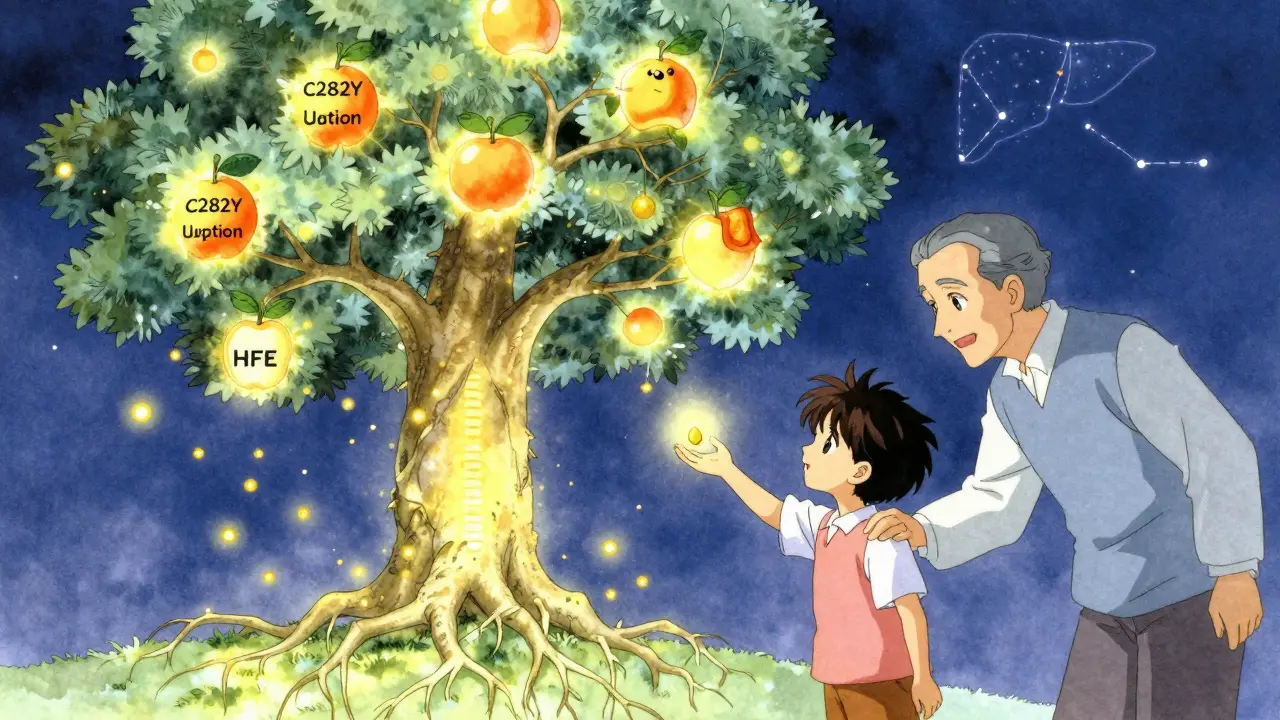
Most people with hemochromatosis inherit two copies of a mutated HFE gene, usually the C282Y variant. This mutation messes up a hormone called hepcidin, which normally tells your gut to stop absorbing iron when you’ve had enough. Without it, your body keeps pulling iron from food-even when your stores are full. Over time, that extra iron settles in your organs, like rust in pipes.
Men are five to ten times more likely to show symptoms than women, simply because women lose iron through monthly periods and childbirth. By the time men hit their 40s or 50s, their iron levels can be dangerously high. Women often don’t show signs until after menopause.
It’s most common in people of Northern European descent. In Ireland, Scotland, and Wales, about 1 in 83 people carry the gene mutation. In the U.S., roughly 1 in 200 people of Caucasian background have two copies of the faulty gene. Yet, only 10-15% of them are ever diagnosed.
How Do You Know If You Have It?
The early signs are easy to ignore. Fatigue? Everyone gets tired. Joint pain? Must be aging. Loss of libido? Stress. But when these symptoms show up together-especially in someone with a family history-it’s a red flag.
Doctors look for three key blood markers:
- Transferrin saturation above 45%
- Serum ferritin over 300 ng/mL in men or 200 ng/mL in women
- HFE gene test confirming C282Y homozygosity
Many patients go years with elevated liver enzymes, misdiagnosed as fatty liver or hepatitis. A simple blood test can catch it early. The problem? Most primary care doctors don’t routinely check transferrin saturation, even when patients report fatigue or joint pain. Only 12% of them do.
When ferritin hits 1,000 ng/mL or higher, the risk of liver scarring jumps to 50-75%. At that point, treatment can still help-but it can’t undo the damage already done.
Phlebotomy: The Simple, Proven Treatment
The standard treatment for hemochromatosis is the same as donating blood: therapeutic phlebotomy. Every week, about 450-500 mL of blood is removed-roughly the same as a regular donation. Each unit removes about 200-250 mg of iron. That’s how you drain the excess.
The process has two phases:
- Induction: Weekly phlebotomies until ferritin drops to 50-100 ng/mL. This can take 12 to 18 months and up to 60 sessions for someone with severe overload.
- Maintenance: Once iron levels are normal, you switch to fewer sessions-usually every 2 to 4 months-to keep ferritin in the safe range.
It’s cheap, effective, and covered by most insurance. Each session costs $0-$50. Compare that to iron-chelating drugs like deferasirox, which cost $25,000-$35,000 a year and come with side effects like nausea, kidney stress, and rashes.
One patient in Bristol, diagnosed at 52 after years of unexplained joint pain, needed 62 phlebotomies over 15 months. His ferritin started at 2,850 ng/mL. Today, it’s steady at 85 ng/mL. He says, “I feel like I got my life back.”

What Happens If You Don’t Treat It?
Iron doesn’t just sit there. It attacks organs.
- Liver: Iron builds up in liver cells, causing inflammation, fibrosis, and eventually cirrhosis. Once cirrhosis sets in, the risk of liver cancer rises sharply.
- Pancreas: Iron damages insulin-producing cells, leading to diabetes in about 25% of untreated cases.
- Heart: Iron deposits can cause arrhythmias or heart failure, especially in younger patients with aggressive forms.
- Joints: The metacarpophalangeal joints (knuckles) are often the first to hurt. Many patients think it’s arthritis.
- Endocrine system: Low testosterone, loss of libido, and erectile dysfunction are common in men. Women may have irregular periods.
- _skin: A bronze or grayish tint appears as iron stains the skin.
Survival rates tell the story: if you’re diagnosed before ferritin hits 1,000 ng/mL, your 10-year survival is 95%. If you’re diagnosed after cirrhosis develops, it drops to 60%.
Why Do So Many People Stay Undiagnosed?
Patients report seeing 3 to 5 doctors over 5 to 7 years before getting the right diagnosis. Symptoms are vague. Doctors don’t think of hemochromatosis. Blood tests aren’t ordered.
One Reddit user wrote: “My GP said I was depressed. My rheumatologist said it was osteoarthritis. My endocrinologist blamed my thyroid.” It took a liver specialist to ask about family history and order the iron panel.
Family screening is the most effective way to find cases. If one person is diagnosed, all first-degree relatives-parents, siblings, children-should get tested. The Hemochromatosis Foundation says 70% of new diagnoses come from family screening, not random symptoms.
What About New Treatments?
Phlebotomy works-but it’s not perfect. Some people have poor veins. Others get tired of weekly visits. That’s why researchers are testing new drugs.
A drug called PTG-300, a hepcidin mimetic, is in Phase 2 trials. It tricks the body into thinking it has enough iron, so it stops absorbing more. In early studies, it cut transferrin saturation by 53% in 12 weeks. It’s not available yet, but it could one day replace phlebotomy for some patients.
Another advance is MRI with R2* technology. It can now measure liver iron without a biopsy. Ten years ago, you had to get a needle stuck into your liver to know how much iron was there. Now, it’s a simple scan.
Scientists are also working on polygenic risk scores-using 27 genetic markers beyond HFE to predict who’s most likely to develop severe iron overload. This could help target screening more precisely.
What You Can Do
If you have unexplained fatigue, joint pain, or a family history of liver disease, diabetes, or heart problems, ask your doctor for:
- Transferrin saturation
- Serum ferritin
- HFE gene testing
Don’t wait for symptoms to get worse. The earlier you treat it, the better your outcome.
If you’re diagnosed:
- Stick with phlebotomy-even when you feel fine.
- Avoid iron supplements, vitamin C (it boosts iron absorption), and raw shellfish (risk of infection).
- Limit alcohol. It speeds up liver damage.
- Get regular checkups for liver function, blood sugar, and heart health.
Hemochromatosis isn’t a death sentence. It’s a condition you can live with-perfectly normally-if you treat it. Thousands of people in the UK and US are doing it right now. They’re working, traveling, raising families. They just had to get the right diagnosis first.
Can hemochromatosis be cured?
No, hemochromatosis can’t be cured because it’s genetic. But it can be completely managed. With regular phlebotomy, iron levels stay in the safe range, organs stop getting damaged, and life expectancy returns to normal. Most people live full, healthy lives once treatment starts.
Is phlebotomy safe?
Yes, it’s very safe when done properly. Each session removes the same amount of blood as a regular donation. Side effects are rare and mild-maybe dizziness or bruising. People with severe anemia or advanced heart disease may need adjustments, but most tolerate it well. It’s far safer than long-term iron-chelating drugs.
Can I donate blood if I have hemochromatosis?
In the UK and many other countries, therapeutic phlebotomy patients can’t donate to the blood bank because their blood is treated as medical waste. However, some clinics allow patients to donate under therapeutic protocols if they meet specific criteria. Always check with your local blood service or hemochromatosis clinic. In the U.S., some states allow it under special programs.
Do I need to avoid all iron-rich foods?
No. You don’t need to avoid red meat, spinach, or beans. The problem isn’t dietary iron-it’s your body absorbing too much of it. But you should avoid iron supplements, fortified cereals, and vitamin C with meals, since vitamin C increases iron absorption. Raw shellfish should also be avoided due to risk of Vibrio infection, which can be deadly in people with high iron.
How often do I need blood tests after starting treatment?
During the induction phase, you’ll need blood tests every 4-6 weeks to track ferritin and hemoglobin. Once you’re in maintenance, tests every 3-6 months are enough. Your doctor will adjust your phlebotomy schedule based on those results. Never skip them-even if you feel fine. Iron can creep back up silently.
Can my children inherit hemochromatosis?
Yes. If you have two faulty HFE genes (C282Y homozygous), each child has a 50% chance of inheriting one faulty gene and a 50% chance of inheriting none. They won’t develop the disease unless they inherit two faulty genes-one from each parent. But if they inherit one, they’re carriers and can pass it on. Testing children isn’t usually recommended until adulthood, unless symptoms appear earlier.
Final Thoughts
Hemochromatosis is silent until it’s too late. But it doesn’t have to be. A simple blood test, done early, can prevent years of pain, organ damage, and even early death. The treatment is straightforward, affordable, and effective. The biggest obstacle isn’t medicine-it’s awareness.
If you’ve been told you’re just tired, or your joints are aging, or your liver enzymes are high for no reason-ask for iron tests. It could change your life.
Jake Nunez
January 11, 2026 AT 07:33My dad was diagnosed at 58 after years of being told he was just 'getting old.' He went from barely climbing stairs to hiking mountains in a year after starting phlebotomy. No magic pills, just blood draws. It’s wild how something so simple can turn your life around.
Still can’t believe doctors don’t test for this when someone walks in with fatigue and joint pain. It’s like they’re trained to ignore the obvious.
Christine Milne
January 12, 2026 AT 06:15It is an incontestable fact that the medical establishment’s failure to prioritize hemochromatosis screening constitutes a systemic dereliction of duty, particularly in populations of Northern European descent where the genetic prevalence is statistically significant. The notion that this condition remains underdiagnosed is not a matter of coincidence-it is a direct consequence of institutional negligence and a lack of standardized protocols in primary care. One must question the epistemological foundations of contemporary medical education when such a treatable, prevalent, and genetically deterministic disorder is routinely overlooked.
Bradford Beardall
January 12, 2026 AT 12:28Just had my first phlebotomy last week after getting diagnosed last month. I’ve been tired since college and thought it was just stress. Turns out my ferritin was over 2,500. The process is way easier than I expected-just sit back, watch Netflix, get a snack afterward. No needles in the arm for me though, I’m not a fan. But I’ll do it every month if it means I don’t end up with cirrhosis.
Also, I found out my sister has the gene too. She’s getting tested this week. Family screening is the real MVP here.
McCarthy Halverson
January 12, 2026 AT 20:39Phlebotomy works. Do it. Avoid vitamin C with meals. Don’t drink alcohol. Get tested if your family has liver or diabetes issues. Simple.
Doctors skip the test. You have to ask. Don’t wait.
Michael Marchio
January 14, 2026 AT 06:30Let me tell you something. Most people who get diagnosed with hemochromatosis are already past the point of no return because they listened to some generic advice from a doctor who didn’t bother to look deeper. I’ve seen it too many times. Fatigue? Oh, you’re just stressed. Joint pain? Must be arthritis. Liver enzymes up? Probably fatty liver from eating too much pizza. Come on. That’s not medicine, that’s laziness wrapped in a white coat.
And don’t even get me started on how the pharmaceutical industry pushes expensive chelation drugs when the solution is literally just donating blood. It’s a $30 billion industry built on ignoring a $50 fix. The fact that this isn’t headline news is proof that healthcare is broken. You want to save lives? Start by testing transferrin saturation on anyone over 30 with a family history. Not after they’re in liver failure. Before.
Jake Kelly
January 14, 2026 AT 11:57Just wanted to say thanks for posting this. I’ve been meaning to get tested for years after my uncle passed from liver cancer linked to hemochromatosis. I finally booked my blood work this week. Feels good to take action instead of just worrying.
Hope everyone reading this does the same. Early detection really is everything.
Ashlee Montgomery
January 15, 2026 AT 18:53It’s strange how we treat genetic conditions like they’re moral failures. You didn’t choose to inherit the HFE mutation. You didn’t choose to absorb iron like a sponge. But society acts like if you just ate less steak or took better care of yourself, you wouldn’t be sick. The truth is, your body is doing exactly what it was programmed to do. The system failed you, not you failing the system.
Phlebotomy isn’t a punishment. It’s a recalibration. A way to live in harmony with your biology. And the fact that it’s free, safe, and effective makes it one of the most beautiful interventions in modern medicine. We should be shouting it from the rooftops, not whispering it in specialist offices.
neeraj maor
January 16, 2026 AT 11:01Let me tell you what they don’t want you to know. Hemochromatosis isn’t genetic-it’s a bioweapon. The HFE mutation was engineered in the 1970s by Big Pharma to create lifelong dependency on phlebotomy and later, iron-chelating drugs. The fact that it’s more common in Northern Europeans? That’s because the test subjects were selected from specific ethnic groups for controlled population studies. The blood banks won’t take your blood because they’re hoarding it. The government doesn’t screen because they profit from the chronic care model. They want you sick, dependent, and paying for it forever. Ask yourself: why does the FDA approve a $30,000/year drug when a $50 blood draw works better? Coincidence? I think not.