
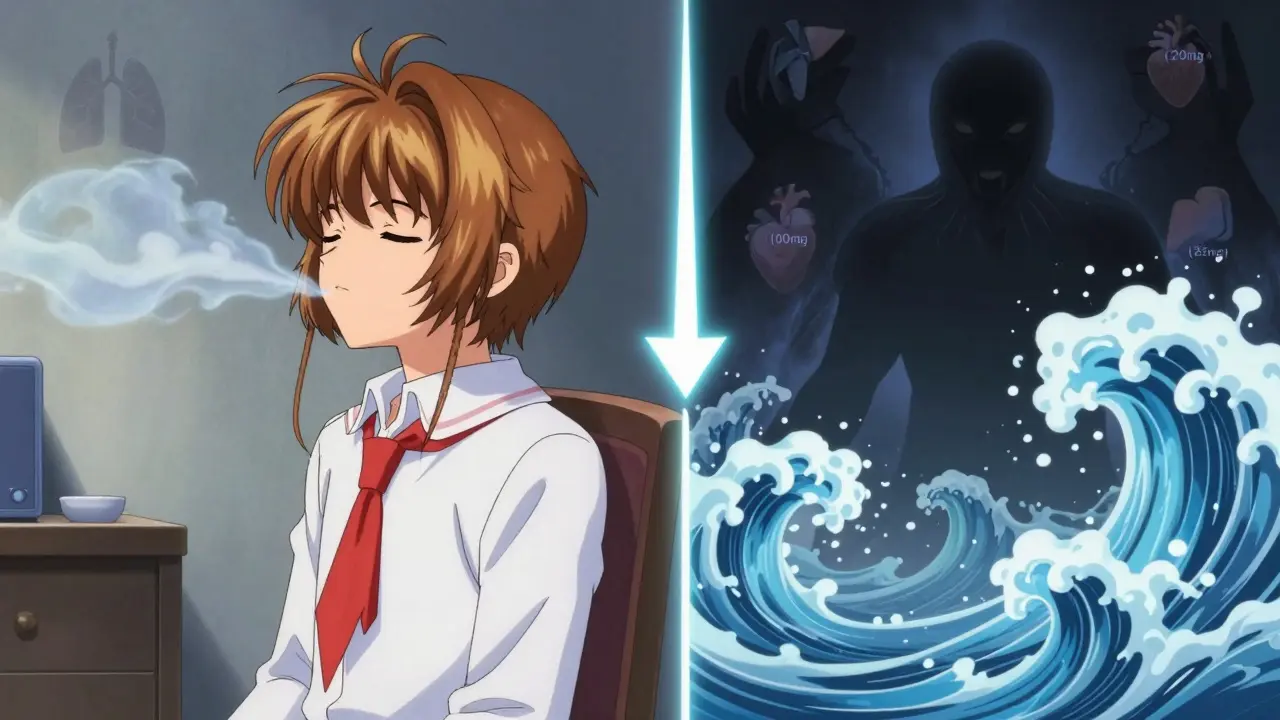
When you stop taking a medication-even for a few days-and then start again, your body doesn’t remember how to handle the same dose. That’s not a myth. It’s a deadly reality. People who’ve taken opioids, benzodiazepines, or other sedatives for months or years often think, "I used to take this much, so it should be fine now." But after even a short break, your tolerance drops fast. Your lungs, your brain, your heart-they’ve forgotten how to cope. And that’s when overdose happens. Not because you’re using too much on purpose. But because your body can’t handle what it used to.
Why Your Body Can’t Handle the Same Dose Anymore
Tolerance isn’t just about getting used to a drug. It’s your body adapting so it doesn’t shut down. When you take a medication like methadone, oxycodone, or even a benzodiazepine like diazepam, your nervous system adjusts. Over time, you need more to feel the same effect. But when you stop, that adaptation doesn’t last. Within days, your body forgets how to manage the drug. Your breathing slows down more easily. Your blood pressure drops. Your brain loses its ability to stay alert.
Studies show that after just three to five days without opioids, tolerance drops by up to 70%. That means if you used to take 80mg of methadone daily, and you stop for a week, your body now reacts like you’ve never taken it before. Taking 80mg again isn’t a relapse-it’s a suicide attempt. The same applies to benzodiazepines. A single dose of lorazepam that once calmed you can now stop your breathing.
And it’s not just opioids. Antidepressants like paroxetine or venlafaxine can cause serotonin syndrome if restarted too soon after stopping, especially if you’ve taken another medication in between. MAOIs? Those require a full 14-day washout before switching to any other antidepressant. Your liver doesn’t remember how to break down the old drug. And if you mix it with something new? You’re playing Russian roulette with your brain chemistry.
The Most Dangerous Moments
The highest risk isn’t during the first day back. It’s within 72 hours after leaving a hospital, jail, or treatment center. That’s when people get discharged with a prescription for their old dose-and no warning. The Washington State Department of Health found that 62% of fatal opioid overdoses happen in that window. Why? Because tolerance plummets fast in those settings. Your body was detoxed. Your system reset. But your brain still craves the same amount.
Reddit threads like r/opiates are full of stories from people who took their old dose after a week off. One user wrote: "I took 40mg of oxycodone after 10 days clean. I woke up in the ER. My roommate had to give me naloxone." Another said: "I thought I was fine. I’d done this before. I didn’t know my body had forgotten how to breathe."
And it’s worse with fentanyl. Even a tiny amount-micrograms-can kill if you’re not tolerant. Many people don’t even know they’re taking it. Pills bought on the street? They’re often laced. A dose that used to feel "normal" can now be lethal.
How to Restart Safely: The Step-by-Step Plan
There’s no "just start again". Restarting safely means treating yourself like a new patient. Here’s how:
- Don’t restart alone. Always do this under medical supervision. Even if you feel fine. Even if you’ve been clean for months. Your doctor needs to know your history, your last dose, and how long you were off.
- Start at 25-50% of your old dose. For opioids, that’s the standard. If you used to take 100mg of methadone, start with 25mg. For benzodiazepines, start with 25% and increase slowly over days. For antidepressants, follow specific washout periods-no exceptions.
- Wait 24-48 hours before increasing. Don’t rush. Your body needs time to adjust. If you feel dizzy, sleepy, or your breathing feels shallow, STOP. Don’t take more. Call your doctor.
- Use naloxone. If you’re restarting opioids, have naloxone on hand. Keep it with someone you trust. Teach them how to use it. Naloxone reverses opioid overdoses. It’s not a cure, but it buys you time. The Washington State guidelines say this is non-negotiable.
- Avoid mixing drugs. Alcohol, sleep aids, muscle relaxers, even some cough syrups-they all amplify the sedative effect. One study found that 83% of fatal restart overdoses involved at least one other depressant.
- Monitor yourself. Check your breathing. If it’s below 12 breaths per minute, you’re in danger. Your pupils should not be pinpoints. If you can’t stay awake or answer simple questions, get help immediately.
- Track your dose. Write it down. Use a pill organizer. Don’t guess. Don’t rely on memory. Your brain is still relearning how to handle this.
What Your Doctor Should Do
A responsible provider won’t just hand you a prescription. They’ll ask: "Why are you restarting?" "How long were you off?" "Have you used anything else in the meantime?" They’ll check your liver enzymes, your respiratory rate, and your mental state. They’ll review your full medication history-not just what you’re taking now.
They should also use the 2024 American Society of Addiction Medicine Tolerance Loss Assessment Guidelines. This tool scores your risk based on:
- How long you were off (days or weeks)
- Your previous daily dose
- Your age, weight, and kidney/liver function
- Whether you have other health conditions like COPD or sleep apnea
- If you’ve had a previous overdose
That score tells them how low to start. No guesswork. No assumptions.
What to Do If You’re Not Seeing a Doctor
If you’re trying to restart without medical help-whether you can’t afford it, don’t have access, or feel ashamed-here’s what you must do:
- Never take more than 25% of your old dose on day one.
- Wait at least 48 hours before taking another increase.
- Have someone with you for the first 72 hours. Someone who knows what to do if you stop breathing.
- Keep naloxone nearby. Buy it online if you have to. It’s legal in all 50 states. It’s free in many pharmacies with a prescription.
- Test your pills with fentanyl strips if they’re not prescribed. Street drugs are unpredictable.
- Don’t drink. Don’t use other drugs. Not even one drink. One pill. One hit.
There’s no shame in starting small. It’s not weakness. It’s survival.

The Bigger Picture: Why This Isn’t Just About You
This isn’t rare. The U.S. Department of Health and Human Services spent $157.5 million in 2023 just to fix this problem. Hospitals that use formal restart protocols have 87% fewer overdose deaths than those that don’t. The CDC now calls standardized restart procedures one of the top three ways to stop overdoses.
And it’s getting better. In 2023, 78% of U.S. hospitals had official restart guidelines. That’s up from 32% in 2015. Insurance now covers naloxone and supervised restarts. But rural areas? Only 32% have them. If you’re in a small town, you might have to push harder. Bring the guidelines. Print them. Ask for them.
And if you’ve ever been in treatment, jail, or hospital care-know this: your life doesn’t depend on how much you used to take. It depends on how little you start with now.
What’s Next? New Tools to Save Lives
Research is moving fast. Johns Hopkins found that giving extended-release naltrexone before restarting opioids cuts overdose risk by 73% in the first 30 days. Wearable monitors that detect low breathing and auto-administer naloxone? They’re in Phase 3 trials. Pharmacogenetic tests that tell you how fast your body breaks down drugs? They’re coming.
But none of that helps if you don’t start low. No technology replaces the simple rule: When you come back, start smaller than you think you need to.
How long does it take to lose tolerance after stopping medication?
Tolerance loss happens fast. For short-acting opioids like heroin or oxycodone, it can begin within 24 hours and drop sharply by day 3. Methadone tolerance falls over 3-5 days. Benzodiazepines like diazepam lose tolerance in 5-7 days. For antidepressants like MAOIs, tolerance isn’t the issue-your liver’s ability to metabolize drugs is. You need a full 14-day washout before switching to another antidepressant.
Can I restart my old dose if I feel fine after a few days?
No. Feeling fine doesn’t mean your body can handle the dose. Tolerance isn’t about how you feel-it’s about how your lungs, heart, and brain respond to the drug. You might feel alert and clear-headed, but your breathing could still be dangerously slow. That’s why overdose often happens silently. Always start at 25-50% of your old dose, even if you feel ready.
Is naloxone really necessary if I’m restarting a non-opioid?
If you’re restarting a non-opioid like a benzodiazepine or antidepressant, naloxone won’t help. But if you’ve ever used opioids-even once in the past-keep naloxone on hand. Many people don’t realize they’ve been exposed to fentanyl in pills or powders. And if you’re mixing medications, opioids might be involved without your knowledge. Better safe than sorry.
What if I can’t get to a doctor to restart my medication?
If you can’t access medical care, start at 25% of your previous dose. Wait 48 hours. If you feel okay, increase by 10-15% every 2 days. Never double up. Use naloxone. Have someone with you. Test any street drugs with fentanyl strips. Contact a harm reduction center-they often provide free supplies and guidance. Your life is worth more than pride or fear.
Why do some people die even after restarting at a low dose?
Because they didn’t wait long enough between doses. Or they mixed it with alcohol or other sedatives. Or they took more than one type of medication without knowing how they interact. Even a "low" dose can kill if taken too fast, too often, or with other depressants. Restarting safely isn’t just about the number-it’s about timing, monitoring, and avoiding all other substances.
There’s no rush. No prize for getting back to your old dose fast. The only goal is to stay alive. Start low. Wait. Watch. Listen to your body. And if you’re unsure? Don’t guess. Call someone who knows.
Aisling Maguire
March 1, 2026 AT 20:46Just wanted to say this post saved my life. I thought I could just jump back into my old oxycodone dose after a week off-turns out I nearly didn’t wake up. Started at 25% like it said, and honestly? Felt like a whole new person. No rush. No ego. Just breathing.
bill cook
March 1, 2026 AT 22:49Yeah but what if your doctor is just a gatekeeper who won’t help unless you cry? I’ve been clean for 6 months and they still act like I’m gonna OD on purpose. Like I’m the problem, not the system.
Byron Duvall
March 2, 2026 AT 07:49They say start at 25% but who’s to say the 25% isn’t still laced? They’re lying. The whole medical system is just another way to control us. They don’t care if you live-they care if you stay compliant. I’ve seen the reports. The FDA doesn’t even test street pills for fentanyl. They just push the same script. You think naloxone’s the answer? Nah. It’s just a Band-Aid on a bullet wound.
Eimear Gilroy
March 4, 2026 AT 03:16So if tolerance drops 70% in 3-5 days, does that mean someone who’s been off for 10 days should start at 30%? Or is 25% still the safest floor? I’m trying to figure out the math here without a doctor.
Ajay Krishna
March 5, 2026 AT 19:42This is one of the most compassionate, clear-headed pieces I’ve read in years. I’ve worked in harm reduction for 12 years, and this sums it up perfectly. Start low. Wait. Breathe. Have someone with you. No shame. No rush. The body doesn’t care about pride-it only cares about survival. I wish every clinic handed this out on discharge.
Gigi Valdez
March 7, 2026 AT 08:11The scientific basis presented here is sound. The cited studies, particularly from Washington State and the ASAM guidelines, are well-documented. However, I would caution against generalizing this protocol to all populations without considering pharmacokinetic variability due to age, hepatic metabolism, and polypharmacy. A one-size-fits-all 25% reduction may still be excessive in some cases.
Sneha Mahapatra
March 8, 2026 AT 21:57I read this and cried. Not because I’m scared-I’m not. But because I know how many people are out there right now, alone, staring at their old pill bottle, thinking, "I used to handle this fine." And they don’t know. They don’t know their body forgot how to keep them alive. This isn’t just advice. It’s a lifeline. Thank you for writing this.
Katherine Farmer
March 9, 2026 AT 09:08Oh please. This is just another virtue-signaling piece from the harm reduction cult. You’re not "saving lives" by enabling people to go back to opioids. You’re just prolonging the inevitable. The real solution? Stop using. Period. No "25%" nonsense. No naloxone babysitting. Just quit. If you can’t, then maybe you’re not ready for recovery-you’re just addicted to the drama.
Full Scale Webmaster
March 10, 2026 AT 12:11Let me break this down real quick because I’ve been through this 3 times and I’m not just some guy on Reddit-I’ve got real experience. First, the 70% tolerance drop? Yeah, that’s real, but it’s not linear. It’s like your body’s on a rollercoaster with no brakes. You think you’re fine at 25%? You’re not. You’re just in the calm before the storm. Then day 3 hits. That’s when your liver says, "Oh wait, we’re doing this again?" and your kidneys go, "Nope, not today." And then you’re on the floor, wondering why your vision is blurry and why your roommate is yelling. Naloxone? Sure. But what if they don’t have it? What if they’re asleep? What if it’s 3 a.m. and you’re alone? I’ve been there. And I’m telling you-don’t just read this. Print it. Tape it to your fridge. Have your mom memorize the steps. Because when it happens, you won’t be thinking straight. You’ll be breathing at 8 per minute and wondering why your phone won’t dial 911. So don’t just start low. Start lower than you think. And then wait. And then wait again. And then wait some more. And if you feel even a little weird? STOP. Call someone. Don’t wait. Don’t hope. Don’t pray. Just act. Your body isn’t lying to you. It’s just forgotten how to lie for you anymore.
Brandie Bradshaw
March 11, 2026 AT 21:43Why is there so much emphasis on opioids? What about benzodiazepines? People forget that alprazolam withdrawal can be fatal too-and restarting without tapering is just as dangerous. I had a friend who restarted at 1mg after a month off. She was fine… until she wasn’t. She stopped breathing at 2 a.m. No naloxone. No one there. That’s not "tolerance loss." That’s negligence. And it’s happening every day. We need protocols for ALL sedatives-not just the ones that make headlines.
Angel Wolfe
March 12, 2026 AT 15:08Sophia Rafiq
March 14, 2026 AT 00:51Bro this hit different. I restarted methadone after 3 weeks off. Started at 15mg. Felt like a ghost. But I lived. Naloxone in my pocket. My sister watching Netflix with me. No drama. Just slow. Just safe. This post? 10/10. Would reread if I had to restart again.