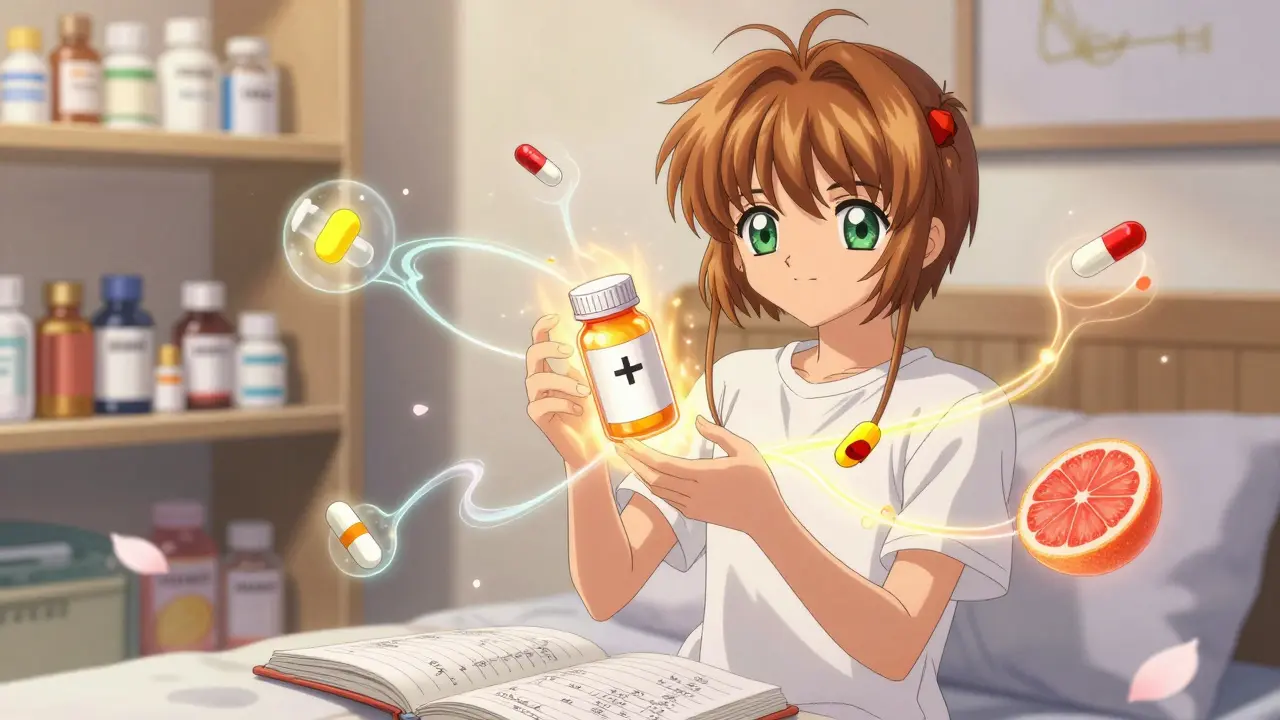
Starting a new medication can feel like a step forward-until you realize it might clash with something else you’re already taking. Drug interactions aren’t rare surprises; they’re common, often preventable risks that can turn a simple treatment into a dangerous situation. In fact, drug interactions affect 3 to 5% of all outpatient prescriptions, and that number jumps to nearly 30% if you’re taking five or more medications. If you’re over 65, your odds are even higher: over 40% of older adults in the U.S. take five or more drugs, and nearly a third of them are on at least one high-risk combination. This isn’t just a statistic-it’s a real, daily challenge for millions of people.
What Exactly Is a Drug Interaction?
A drug interaction happens when one medication changes how another works in your body. It’s not always obvious. Sometimes it makes a drug less effective. Other times, it turns a safe dose into a toxic one. There are two main types:
- Pharmacokinetic: This affects how your body processes the drug-how it’s absorbed, broken down, or removed. The most common culprit? The CYP3A4 liver enzyme. It handles about half of all clinically significant interactions. For example, grapefruit juice can block CYP3A4 and cause statins like simvastatin to build up to dangerous levels.
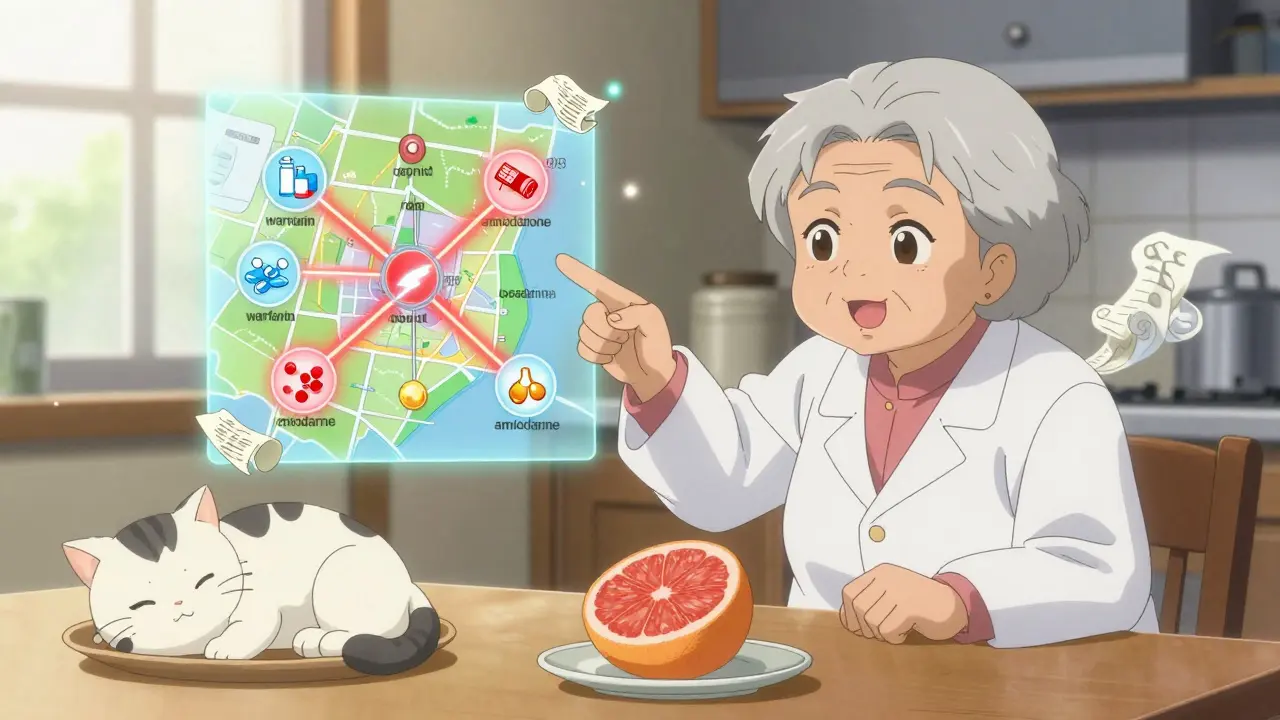
- Pharmacodynamic: This is when two drugs amplify or cancel out each other’s effects. Think of combining blood thinners like warfarin and amiodarone, which can spike your bleeding risk. Or mixing opioids with sedatives like promethazine, which can slow your breathing to a dangerous level.
Some interactions are well-known and heavily documented. The HIV Drug-Drug Interaction Guide lists 147 high-risk pairings, with 72% tied to CYP3A4. Warfarin and amiodarone? A classic. When amiodarone is added, doctors must cut warfarin doses by 30-50% right away. Calcium channel blockers like amlodipine and diltiazem? They limit simvastatin to 20 mg and 10 mg per day, respectively. Go higher, and you risk muscle damage that can lead to kidney failure.
Who’s at Highest Risk?
You don’t have to be elderly to be at risk, but age is a major factor. People over 65 are the most vulnerable-not just because they take more drugs, but because their bodies process them differently. Liver and kidney function decline with age, making it harder to clear medications. If your kidney function (eGFR) is below 30 mL/min or your liver is damaged, your risk of harmful interactions jumps 2.5 to 4 times.
Another big risk factor? Polypharmacy. Taking five or more medications doesn’t just increase the number of possible interactions-it multiplies the chances of one slipping through. Studies show that 28.3% of adults over 65 are on at least one high-risk combo. And it’s not just prescription drugs. Supplements like St. John’s Wort can slash cyclosporine levels by 40-60%, leading to organ rejection in transplant patients. Yet, 68% of patients never tell their doctor about supplements they’re taking.
Even over-the-counter painkillers can be risky. Mixing ibuprofen with blood pressure meds can reduce their effectiveness. Antacids with calcium can block absorption of thyroid meds or antibiotics like ciprofloxacin. These aren’t edge cases-they’re everyday mistakes.
How to Check for Interactions Before You Start
Don’t wait for a warning. Take control before you even take your first pill. Here’s what to do:
- Make a full list of everything you take: prescriptions, OTC meds, vitamins, herbal supplements, even recreational substances. Include dosages and how often you take them.
- Bring it to every appointment. Don’t rely on memory. A 2022 study found that 32% of patients misunderstand basic instructions like “take on an empty stomach.” If you say you take it “in the morning,” clarify: “1 hour before food” or “2 hours after”?
- Ask your pharmacist. Pharmacists catch 40-60% more potential interactions than doctors alone. They’re trained to spot these patterns. If your pharmacy offers a medication review, take it. Many do for free.
- Use reliable tools. The Liverpool HIV Interaction Scale and the FDA’s Drug Interaction Database are trusted resources. Avoid random websites-some give outdated or misleading advice.
For example, if you’re starting a new statin and already take amlodipine, your doctor should cap simvastatin at 20 mg/day-or switch you to pravastatin, which doesn’t interact. That’s not guesswork-it’s standard practice.
What to Do After Starting a New Medication
Starting a new drug isn’t the end of the process-it’s the beginning of close monitoring. Here’s what you need to do next:
- Watch for early signs. Dizziness, unexplained bruising, muscle pain, extreme fatigue, or confusion can signal a problem. Don’t brush them off as “just getting older.”
- Get lab tests on time. If you’re on warfarin and start amiodarone, your INR (blood clotting level) should be checked within 3-5 days, then weekly for four weeks. Missing this window can be deadly.
- Follow up within 7 days. Your prescriber should schedule a check-in. If they don’t, call them. You’re not being pushy-you’re protecting your health.
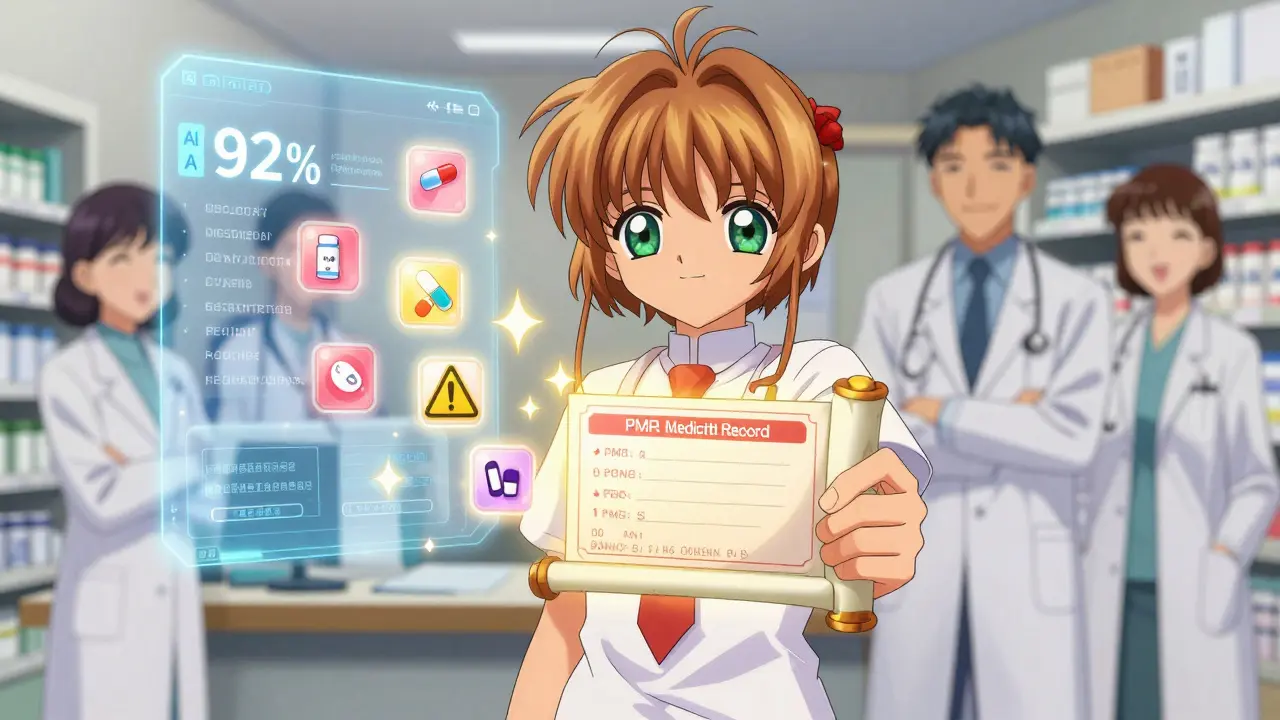
- Update your Personal Medication Record (PMR). A good PMR includes: medication name, dose, reason for use, timing, substances to avoid, and possible side effects. Keep it on your phone or in your wallet. Update it every time you start, stop, or change a drug.
At Mayo Clinic, pharmacist-led medication reviews during hospital transitions cut readmissions by 22%. That’s because they caught interactions doctors missed. You can do the same at home.
Why Alerts Often Fail (And What to Do About It)
You’d think electronic health records would catch every dangerous combo. But here’s the truth: doctors override 90-95% of drug interaction alerts. Why? Alert fatigue. Too many warnings, too many false alarms. A 2023 JAMA study found that only high-severity alerts-those requiring dose cuts or outright contraindications-got 75% compliance.
So don’t rely on your EHR to protect you. Be your own advocate. If your doctor says, “This combo is fine,” ask: “What’s the risk? What signs should I watch for? What’s the backup plan if this doesn’t work?”
And if you’re told, “It’s just a minor interaction,” push back. The term “minor” is misleading. A 2022 BMJ study found that current systems miss 15-20% of high-risk interactions. What’s labeled “minor” today might be flagged as major tomorrow.
What You Can Do Right Now
Managing interactions isn’t about memorizing every possible combo. It’s about building smart habits:
- Keep a live list of all your meds and update it weekly.
- Never start a new drug without asking: “Could this interact with anything I’m already taking?”
- Use one pharmacy if possible. It helps them track everything in one place.
- Ask about non-drug options. Sometimes, lifestyle changes-like exercise, diet, or stress management-can replace a medication. Studies show 12-18% of interactions can be avoided this way.
- Speak up about supplements. St. John’s Wort, garlic pills, ginkgo, fish oil-they all interact. Tell your provider.
And if you’re on blood thinners, statins, antivirals, or antidepressants? Be extra careful. These are the most common sources of dangerous interactions.
What’s Changing in 2026
The rules are getting stricter. The ICH M12 Guideline, adopted in May 2024, is now the global standard. Every new drug must now be tested for interactions with CYP enzymes and transporters before approval. That’s a big step forward.
Also, by 2025, all certified electronic health records in the U.S. must include standardized DDI severity grading: contraindicated, major, moderate, minor. No more vague warnings. You’ll know exactly how serious a combo is.
And AI tools are getting smarter. IBM Watson’s 2023 trial predicted severe interactions with 92.4% accuracy. These aren’t sci-fi-they’re coming to your doctor’s office soon.
But technology alone won’t fix this. The biggest barrier isn’t lack of data-it’s lack of communication. Between doctors. Between pharmacies. Between you and your care team.
Final Takeaway: You’re the Key
No algorithm, no alert, no doctor can protect you better than you can. Drug interactions are preventable-but only if you’re involved. Keep your list updated. Ask questions. Speak up about supplements. Don’t assume your doctor knows everything you’re taking. And if something feels off after starting a new med? Call. Don’t wait.
One simple habit-reviewing your meds every time you see a provider-could save you from a hospital stay, a stroke, or worse. You don’t need to be an expert. You just need to be informed. And proactive.
Amber Gray
March 21, 2026 AT 17:20Danielle Arnold
March 23, 2026 AT 03:42James Moreau
March 23, 2026 AT 13:40J. Murphy
March 24, 2026 AT 03:58Jesse Hall
March 25, 2026 AT 22:40Donna Fogelsong
March 27, 2026 AT 05:24Sean Bechtelheimer
March 27, 2026 AT 09:14Seth Eugenne
March 27, 2026 AT 21:50rebecca klady
March 28, 2026 AT 14:35Namrata Goyal
March 29, 2026 AT 21:00Alex Arcilla
March 30, 2026 AT 18:40Brandon Shatley
March 31, 2026 AT 20:28Blessing Ogboso
April 1, 2026 AT 15:06Jefferson Moratin
April 3, 2026 AT 07:13