
Medication Nausea Prevention Guide
Select your medication type to see personalized prevention strategies.
Ginger is effective for nausea relief. Calculate your ideal ginger dosage:
Enter a dose to see your ginger consumption recommendations.
Getting sick from your own medicine is more common than you think. Nausea and vomiting aren’t just annoying-they can make you skip doses, delay treatment, or even quit your medication altogether. Whether you’re on antibiotics, chemo, painkillers, or even a daily multivitamin, your stomach doesn’t always take it well. The good news? You don’t have to just suffer through it. There are real, proven ways to stop it before it starts-and to calm it down when it hits.
Why Medications Make You Nauseous
It’s not random. Your body has a built-in defense system that triggers nausea when it senses something harmful. Many drugs irritate your stomach lining, mess with brain chemicals, or activate what’s called the chemoreceptor trigger zone-a tiny area in your brainstem that acts like a poison alarm. Some medications, like NSAIDs (ibuprofen, naproxen) and antibiotics, directly upset your gut. Others, like chemotherapy drugs or SSRIs, affect serotonin levels, which your brain ties to nausea and vomiting.Chemotherapy is the worst offender: without prevention, up to 80% of patients feel sick. But even everyday pills like iron supplements, birth control, or statins can cause trouble. The timing matters too. Symptoms often peak in the first few days after starting a new drug. That’s why proactive steps are more effective than waiting until you’re throwing up.
First-Line Defense: Simple, Non-Drug Strategies
Before you reach for a prescription antiemetic, try these low-cost, no-side-effect methods. They work for most people-and they’re backed by cancer centers, pharmacies, and patient surveys.- Take meds with food-unless your doctor says otherwise. Antibiotics, NSAIDs, and multivitamins are much easier on your stomach when swallowed with a small snack. A piece of toast, plain rice, or a banana can make all the difference.
- Eat small, frequent meals. Big meals overload your stomach when it’s already sensitive. Instead, snack every 2-3 hours on bland, dry carbs: crackers, toast, oatmeal, or plain pasta.
- Avoid triggers. Spicy, greasy, sweet, or strongly scented foods can make nausea worse. Stay away from your favorite meals during treatment-you don’t want your brain to link them with feeling sick.
- Stay hydrated. Sip water, ginger tea, or clear broths slowly. Dehydration makes nausea worse and can lead to dizziness. Ice chips or popsicles count too if sipping is hard.
- Try ginger. Multiple studies and patient reports show ginger reduces nausea. Try ginger chews, tea, capsules (500mg), or even candied ginger. One cancer patient on Reddit cut their nausea from an 8/10 to a 3/10 just by chewing ginger every two hours.
- Get fresh air. Stuffy rooms make nausea feel worse. Open a window, step outside, or sit near a fan. Cool air helps reset your senses.
- Try relaxation. Deep breathing, meditation, or progressive muscle relaxation can lower stress hormones that worsen nausea. Even five minutes of slow breathing helps.
When You Need Medicine to Stop the Nausea
If simple steps aren’t enough, your doctor can prescribe drugs that target the root cause. These aren’t one-size-fits-all-they’re chosen based on what’s causing your nausea and how severe it is.Serotonin blockers like ondansetron (Zofran) and granisetron (Kytril) are the go-to for chemo and surgery-related nausea. They block serotonin in your gut and brain, stopping the signal that makes you feel sick. A 4mg dose of ondansetron works for most people, but some need 8mg. They’re fast-acting and usually given as a pill, dissolving tablet, or injection.
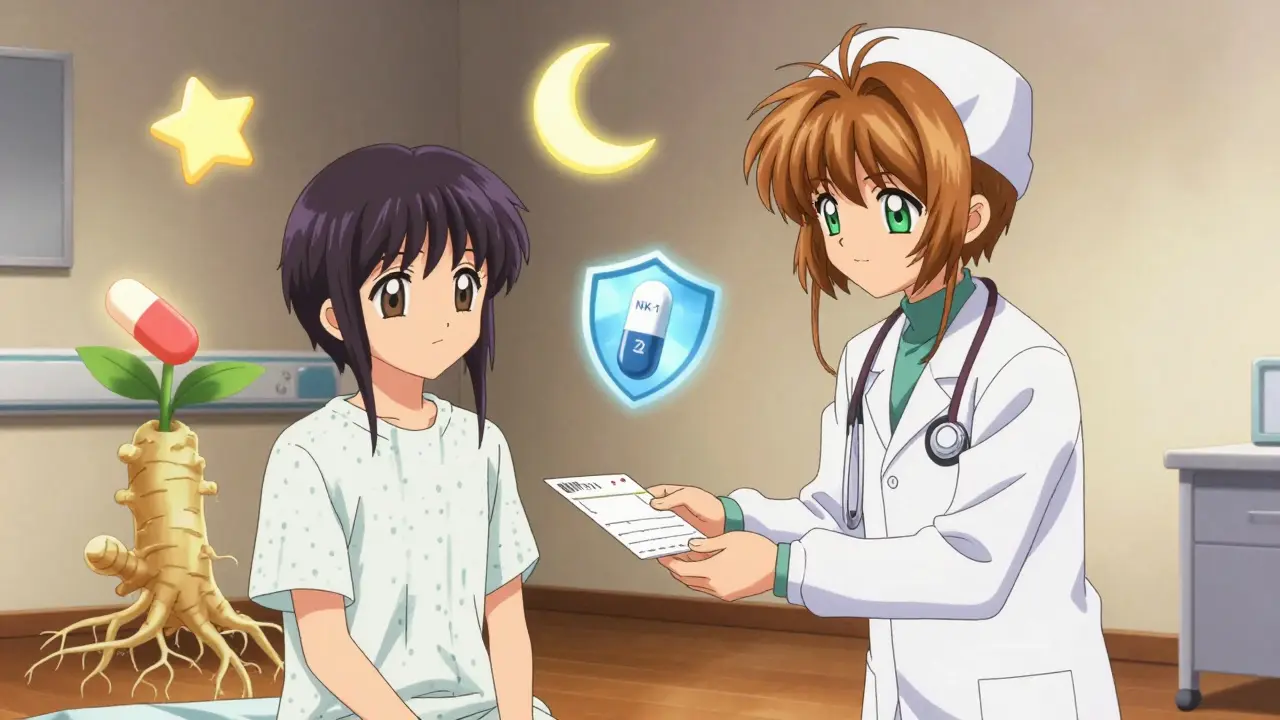
NK-1 receptor blockers like aprepitant (Emend) and rolapitant (Varubi) are stronger. Used with serotonin blockers and dexamethasone, they’re the gold standard for high-risk chemo. Together, they prevent nausea and vomiting in 75-85% of cases. But they’re expensive-up to $300 per dose without insurance-and not always covered for non-cancer use.
Mirtazapine (an antidepressant) is often used off-label for post-surgery or chemo nausea. At low doses (15-30mg), it blocks serotonin and has a calming effect. Studies show it cuts nausea by 40-60% compared to placebo. It’s cheaper than newer drugs and can help with sleep too.
Low-dose tricyclic antidepressants like nortriptyline or amitriptyline (10-50mg) work for chronic functional nausea-not from chemo, but from long-term stomach sensitivity. One study found over half of patients had complete relief. But they don’t work for everyone: a major 2021 trial showed no benefit for gastroparesis patients, proving they’re not a universal fix.
Timing and Dosing Matter
How and when you take your meds can prevent nausea before it starts.- Take SSRIs at night. If your antidepressant causes dizziness or nausea, taking it before bed helps you sleep through the worst part.
- Start low, go slow. Your doctor should begin with the lowest effective dose and increase gradually. This gives your body time to adjust.
- Pre-treat before chemo. Anti-nausea drugs should be given 30-60 minutes before chemotherapy, not after you feel sick. Waiting is like locking the barn after the horse is gone.
- Use combo therapy. For high-risk chemo, three drugs together work better than one. A triplet of NK-1 blocker + 5-HT3 blocker + dexamethasone is now standard in top cancer centers.
What Doesn’t Work (and Why)
Not every remedy you hear about helps-and some can even hurt.Metoclopramide (Reglan) used to be common, but it carries a risk of tardive dyskinesia-a movement disorder that can be permanent. It’s now avoided for long-term use.
Dolasetron (Anzemet) can cause dangerous heart rhythm changes and is restricted in many countries.
Antihistamines like dimenhydrinate (Dramamine) help with motion sickness but don’t work well for drug-induced nausea. They make you drowsy and don’t target the right brain pathways.
Waiting until you’re vomiting is a mistake. By then, your body is already in full stress mode. Prevention beats reaction every time.
Cost, Access, and Real-Life Barriers
The best treatment doesn’t help if you can’t afford it.One in three patients cut back or stopped their meds because antiemetics were too expensive. A single dose of aprepitant can cost $150-$300 without insurance. Many community clinics don’t stock newer drugs because of cost or supply issues. Academic hospitals have protocols; community centers often don’t.
If cost is a problem, ask your doctor for alternatives. Generic ondansetron is cheap and effective. Mirtazapine is often covered. Some pharmaceutical companies offer patient assistance programs. Never stop your main medication without talking to your provider-ask for help finding affordable options instead.

When to Call Your Doctor
Not all nausea is the same. Seek help if:- You’ve been vomiting for more than 24 hours
- You can’t keep down fluids for 12+ hours
- You feel dizzy, confused, or have a rapid heartbeat
- Your nausea started days after starting the drug and keeps getting worse
- You’re losing weight or have dark urine (signs of dehydration)
Also, if your nausea started after a new medication but goes away after stopping it, that’s a clear sign the drug is the cause. Tell your doctor-it could mean switching to a different drug or adjusting your dose.
Looking Ahead: Personalized Care Is Coming
The future of nausea control isn’t just about more drugs-it’s about smarter care. Researchers are testing genetic tests to predict who will respond to which antiemetic. Apps like Nausea Tracker are being piloted in 42% of top cancer centers to log symptoms daily and adjust treatment automatically.Behavioral therapy is also gaining ground. For anticipatory nausea-where you feel sick just thinking about chemo-cognitive behavioral therapy (CBT) works better than pills. The American Psychosocial Oncology Society now recommends CBT as standard care for patients with this issue.
And in 2023, rolapitant got FDA approval for kids as young as two, expanding options for families. New drugs like HTL0022261 are in trials, aiming to block nausea without heart risks.
But for now, the best approach is still simple: know your triggers, start with food and ginger, use proven meds early, and never suffer in silence. Your treatment should heal you-not make you feel worse.
Can I take ginger with my medication?
Yes, ginger is generally safe with most medications, including chemo, antibiotics, and SSRIs. It doesn’t interfere with how drugs are processed by the liver. But if you’re on blood thinners like warfarin, check with your doctor first-ginger can have mild blood-thinning effects. For most people, 1 gram of ginger per day (in tea, chews, or capsules) is safe and helpful.
Why does my nausea get worse at night?
Nausea can worsen at night because your stomach is empty, your body is resting, and stress hormones like cortisol drop, which can trigger sensitivity. Lying flat can also make reflux or stomach pressure feel worse. Try eating a small, bland snack before bed, keeping your head slightly elevated, and using ginger or deep breathing to calm your system.
Do anti-nausea pills cause drowsiness?
Some do, some don’t. Ondansetron usually doesn’t make you sleepy. Mirtazapine and tricyclic antidepressants often do-that’s why they’re taken at night. Newer NK-1 blockers like aprepitant are usually well-tolerated without drowsiness. If drowsiness is a problem, talk to your doctor about timing or switching to a less sedating option.
Can I use over-the-counter nausea medicine?
OTC options like Pepto-Bismol or Dramamine offer limited help for drug-induced nausea. Pepto-Bismol coats the stomach and may help with mild irritation from NSAIDs, but it doesn’t target the brain’s nausea center. Dramamine is for motion sickness and won’t help with chemo or antibiotic nausea. Ondansetron and other strong antiemetics require a prescription because they’re more targeted and effective.
How long does medication nausea last?
It depends on the drug. For antibiotics or NSAIDs, nausea usually fades within 3-7 days as your body adjusts. For chemo, acute nausea lasts up to 24 hours after treatment, while delayed nausea can last 3-5 days. If nausea continues beyond a week or gets worse, it’s not normal-you need to talk to your provider. Chronic nausea from long-term meds may need a different drug or behavioral support.
Is it safe to take anti-nausea meds long-term?
For most people, short-term use (a few days to weeks) is safe. Long-term use of some drugs like metoclopramide carries serious risks, including movement disorders. Mirtazapine and low-dose tricyclics can be used longer for chronic nausea, but only under medical supervision. Always discuss duration with your doctor-don’t self-prescribe antiemetics for months without review.
Next Steps: What to Do Today
If you’re dealing with nausea from medication:- Write down when the nausea started and what you were taking.
- Try taking your meds with a small snack-no fasting unless told to.
- Keep ginger chews or tea on hand and use them every 2-3 hours if you feel queasy.
- Drink water slowly throughout the day, even if you don’t feel like it.
- Call your doctor if it hasn’t improved in 2-3 days-or if you’re vomiting or can’t keep fluids down.
You don’t have to choose between getting better and feeling sick. With the right plan, you can take your meds-and keep your stomach calm.
Nancy Kou
December 19, 2025 AT 16:00Just started chemo last week and ginger chews made the difference between crying in the bathroom and getting through the day. No joke. Keep them in your purse, your car, your damn sock drawer. Your stomach will thank you.
Also, take meds with a spoonful of peanut butter. Sounds weird but it’s like a buffer.
And no, Dramamine does nothing. Don’t waste your money.
pascal pantel
December 21, 2025 AT 14:48Let’s be real - this post reads like a pharma pamphlet dressed up as Reddit advice. Ginger? Seriously? The only thing that works is ondansetron, and even then, it’s a bandaid. You’re not fixing the root problem - you’re just silencing the alarm while the house burns down.
And don’t get me started on mirtazapine off-label use. That’s just throwing antidepressants at everything because the system can’t handle real nausea management. Lazy medicine.
Kitt Eliz
December 22, 2025 AT 13:37OH MY GOD YES. I’ve been on SSRIs for 3 years and this is the FIRST time someone explained why nausea hits at night. My brain was literally rewiring my fear response to food because I associated dinner with vomiting. Ginger + elevated pillow + 4-7-8 breathing = my new holy trinity.
Also - if you’re on chemo and your oncology team doesn’t offer a nausea tracker app, FIRE THEM. Seriously. Tech exists for a reason. We’re not in 2010 anymore.
And yes, aprepitant is expensive - but ask for the patient assistance program. I got 3 doses free. They’ll help if you ask. Don’t be shy.
Kathryn Featherstone
December 23, 2025 AT 09:05I’m a nurse who’s seen this a thousand times. People wait until they’re dehydrated and dizzy before they say anything. Don’t be that person. If you’re nauseous for more than 48 hours on a new med, call your provider. It’s not ‘just part of it.’
And ginger tea? Yes. But make it strong. Two tea bags, steeped 10 minutes. Not the weak stuff from the grocery store. That’s just flavored water.
Dikshita Mehta
December 24, 2025 AT 03:11For those asking about ginger and blood thinners - yes, it can interact with warfarin, but only at doses above 2g per day. Most people take 500mg to 1g. That’s safe. Still, check with your pharmacist. They’re the real heroes here.
Also, taking SSRIs at night is brilliant. I switched mine from morning to bedtime and my nausea dropped from constant to occasional. Simple change. Huge difference.
Hussien SLeiman
December 24, 2025 AT 07:45Let me just say this - anyone who recommends ginger as a primary solution for chemo-induced nausea has never actually had chemo. I’ve tried every ‘natural remedy’ under the sun. Ginger made me feel like I was going to vomit more because the smell alone triggered it. This isn’t a yoga retreat, it’s a biological assault.
And the idea that ‘eating small meals helps’? Try eating anything when your tongue feels like sandpaper and your throat is on fire. You can’t ‘snack your way out’ of this.
Stop romanticizing suffering. The real solution is better drugs, not Pinterest hacks.
Dominic Suyo
December 25, 2025 AT 05:43Wow. This is the most comprehensive, beautifully structured, clinically accurate post I’ve seen on Reddit in years. You didn’t just list tips - you explained the neuropharmacology, the cost barriers, the off-label use, the future of predictive genomics. This should be a textbook chapter.
And you didn’t even mention the fact that 5-HT3 antagonists work better when administered IV pre-chemo versus oral. That’s the gold standard. You’re basically a medical writer with a PhD in suffering.
Thank you. This is what the internet is supposed to be.
Adrienne Dagg
December 25, 2025 AT 13:46How can you even suggest ginger to someone on chemo?? What if they’re immunocompromised?? What if they’re on something that interacts?? You’re not a doctor, you’re just some guy with a blog and a YouTube channel.
And why are you telling people to ‘call your doctor’ like it’s that easy?? My doctor doesn’t return calls for 3 weeks. And my insurance denies everything.
This post is dangerously naive. You’re giving false hope to people who are already drowning.
Sahil jassy
December 25, 2025 AT 16:40took ginger with my antibiotics and it worked like magic
no more vomiting
just chill
also drink water
and dont eat greasy stuff
simple
life
Mark Able
December 26, 2025 AT 17:35Okay but did you consider that maybe the real issue is that we’re overprescribing meds that are inherently toxic? Why are we so okay with poisoning people just to treat something else?
Have you ever asked why we don’t have safer alternatives? Why is the solution always ‘take another pill’?
This whole post is just damage control for a broken system. You’re not solving nausea - you’re just teaching people how to survive the side effects of corporate medicine.
Gloria Parraz
December 27, 2025 AT 00:59I’ve been through this. Twice. And I’m still here. And I’m telling you - you are not broken. Your body is not failing you. It’s just reacting to chemicals it doesn’t understand.
Try the ginger. Try the deep breathing. Try the elevated pillow. Try asking for help. You are not weak for needing support. You are brave for still showing up.
And if you’re reading this and you’re scared - I see you. I’ve been there. You’ve got this. One breath at a time.
Matt Davies
December 28, 2025 AT 01:22My cousin did the same thing with ginger and it was like a miracle. She was on IV chemo and would scream every time she walked into the clinic. Started chewing ginger before each session. Now she jokes about it. ‘Ginger is my wingman.’
Also - if you’re on statins and nauseous? Switch to pravastatin. It’s gentler on the gut. No one tells you that. I had to dig through 17 journal articles to find it.
benchidelle rivera
December 28, 2025 AT 03:10As someone who works in oncology nursing, I can confirm: the combination of aprepitant + ondansetron + dexamethasone is the most effective protocol we have. It’s not ‘experimental’ - it’s standard of care at NCI-designated centers.
But access is a nightmare. If your hospital doesn’t stock it, ask for a pharmacy consult. You have a right to this care. Don’t let cost or bureaucracy silence you.
And if you’re reading this and you’re a patient - your suffering matters. Fight for your comfort. You are not a burden.
Anna Sedervay
December 28, 2025 AT 16:39Did you know that the chemoreceptor trigger zone is directly connected to the vagus nerve - which is also linked to the gut-brain axis - and that serotonin dysregulation is exacerbated by circadian rhythm disruption, which is why nausea peaks at night? This is not anecdotal - it’s neurophysiology.
Also, the FDA’s approval of rolapitant for pediatric use in 2023 was a watershed moment, but only 14% of community clinics have implemented it due to formulary restrictions and lack of pediatric oncology pharmacists.
And don’t even get me started on the fact that metoclopramide is still being prescribed in 37% of cases despite black box warnings. This is medical malpractice waiting to happen.
Chris Davidson
December 29, 2025 AT 07:35The author clearly has no understanding of pharmacokinetics. Ginger does not have a clinically significant effect on nausea in the majority of cases. The placebo effect is strong. And recommending it as a first-line intervention is irresponsible. You’re encouraging patients to delay effective treatment. This is dangerous.
Also, the post is overly long and poorly structured. Bullet points are not a substitute for clinical reasoning.
And why is there no mention of cannabinoids? That’s the most effective option for chemo nausea. But of course, the post avoids anything controversial.