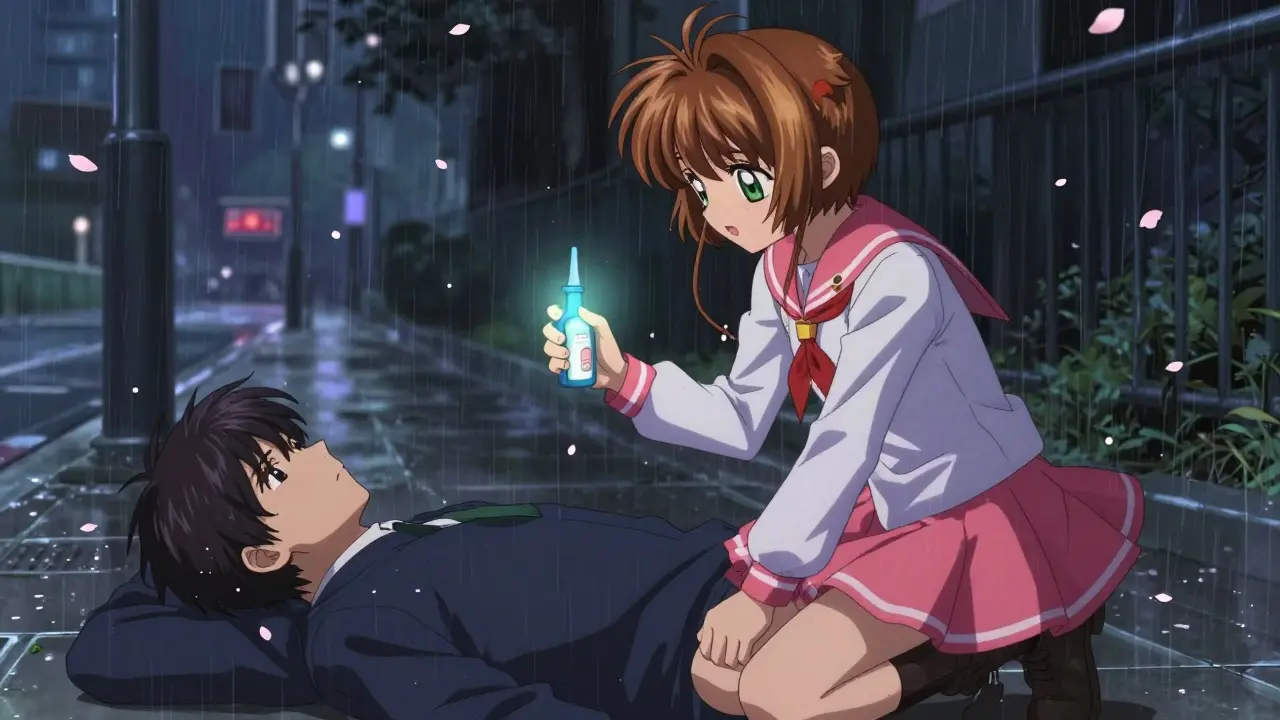
When someone overdoses, every second counts. You might be the only person who can save their life before emergency services arrive. Whether it’s a friend, a stranger, or someone you barely know, your actions in the first few minutes can mean the difference between life and death. This isn’t theoretical. In 2021, over 107,000 people in the U.S. died from drug overdoses - and many of those deaths could have been prevented if someone had known what to do. You don’t need to be a doctor. You don’t need special equipment. You just need to know what to do next.
Step 1: Check for responsiveness
Don’t shake them or yell loudly. That’s a common mistake. The International Liaison Committee on Resuscitation found that shaking someone delays life-saving actions by an average of 22 seconds. Instead, tap their shoulder firmly and shout, "Are you okay?" If they don’t respond, check their breathing right away. Look for chest movement. Listen for breath sounds. Feel for air on your cheek. If they’re not breathing, or if their breathing is shallow, irregular, or sounds like gasping or snoring - that’s not normal sleep. That’s a sign of overdose.
Step 2: Call for help immediately
Even if you have naloxone, call 911 first. Many people panic and try to use naloxone before calling. But emergency responders reduce death risk by 35% compared to waiting for someone to wake up on their own. Say clearly: "Someone is unresponsive and not breathing normally. I think they’ve overdosed." Give your exact location. If you’re unsure, use a map app on your phone to share your location. Don’t hang up until the dispatcher says they have all the info. Every second matters.
Step 3: Give rescue breathing
If they’re not breathing or breathing badly, start rescue breathing. Tilt their head back gently and lift their chin. Pinch their nose shut. Give one breath every 5 to 6 seconds - that’s about 10 to 12 breaths per minute. Each breath should last about 1 second and make their chest rise. Don’t over-inflate. If you see their stomach puff up, you’re breathing too hard. Stop and reposition. Keep going. Even if you’re tired, don’t stop until help arrives or they start breathing on their own. Studies show that continuous rescue breathing alone can keep someone alive for 15 to 30 minutes before their heart stops.
Step 4: Use naloxone if available
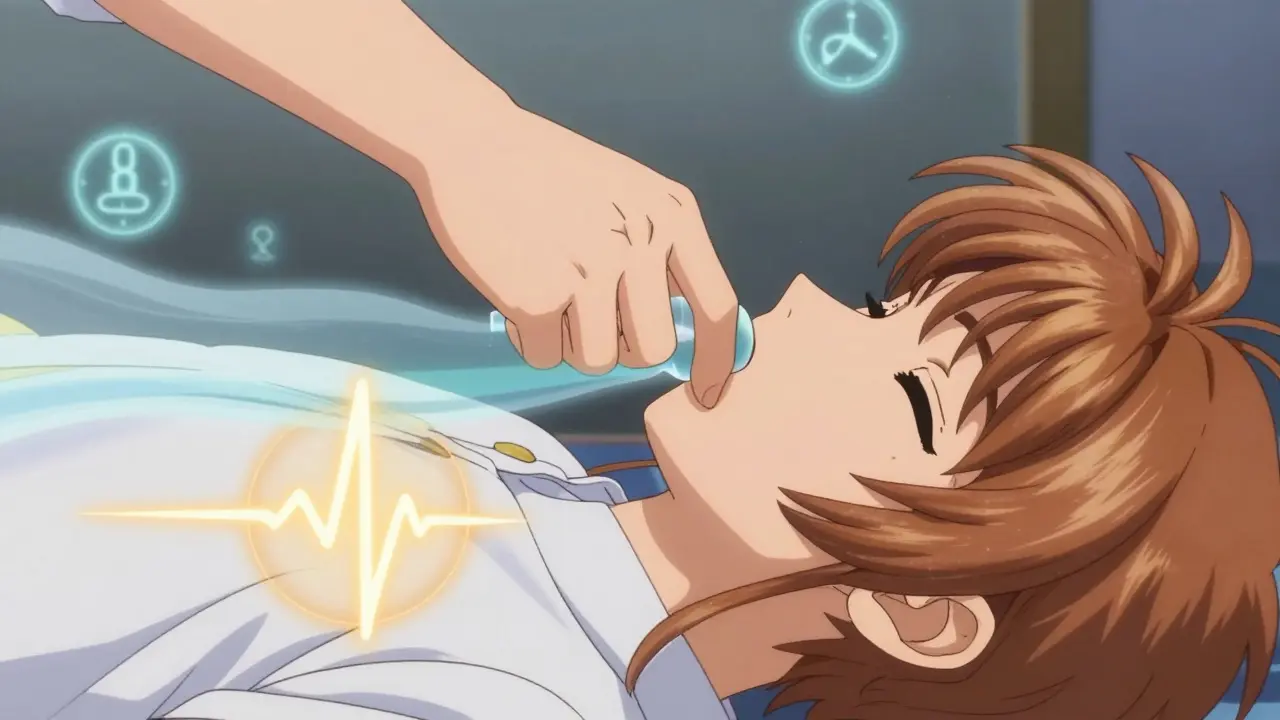
Naloxone reverses opioid overdoses - but only if it’s an opioid. It won’t work for alcohol, cocaine, or benzodiazepines. If you suspect opioids (fentanyl, heroin, oxycodone, etc.), give naloxone as soon as possible. Most nasal sprays require one spray into one nostril while the person is lying flat. Press the plunger firmly for 2 to 3 seconds. Wait 2 to 3 minutes. If they don’t respond, give a second dose in the other nostril. Don’t wait to see if they "get better." Keep giving rescue breathing while you wait. Naloxone wears off after 30 to 90 minutes. The overdose can come back. That’s why calling 911 is non-negotiable.
Step 5: Put them in the recovery position
If they start breathing on their own, roll them onto their left side. This is called the recovery position. Why left? It keeps the airway open and prevents choking if they vomit. Bend their top leg at a 90-degree angle for stability. Tilt their head back slightly so the tongue doesn’t block the throat. Don’t leave them alone. Watch them closely. Check their breathing every 2 to 3 minutes. If they stop breathing again, go right back to rescue breathing.
What NOT to do
Don’t put them in a cold shower or ice bath. This is a myth. The American Heart Association warns that extreme cold can trigger dangerous heart rhythms, especially with stimulant overdoses. Don’t try to make them walk or "sweat it out." Don’t give them coffee, salt, or water unless they’re fully awake and alert. For stimulant overdoses (like meth or MDMA), cooling the skin with damp cloths is okay - but only if they’re overheating. Don’t inject anything. Don’t try to make them vomit. These actions can hurt more than help.
Recognizing different types of overdoses
Not all overdoses look the same. Opioids (heroin, fentanyl, painkillers) cause slow, shallow breathing. Pupils may be very small, but fentanyl overdoses often have normal-sized pupils - so don’t rely on that. Stimulants (cocaine, meth, MDMA) cause fast heartbeat, high body temperature, and agitation. They might be sweating, twitching, or having seizures. Alcohol overdoses can look like someone passed out from drinking too much - but if they’re unresponsive, their skin is cold and clammy, or they’re turning blue, it’s an emergency. Polysubstance overdoses (mixing opioids with stimulants or alcohol) are now the most common type. If you’re unsure, treat it like an opioid overdose and give naloxone. It won’t hurt if it’s not opioids - but it could save a life.
What happens after help arrives
Emergency responders will give oxygen, monitor vital signs, and may give more naloxone. They’ll check for heart rhythm issues, low blood sugar, or brain swelling. Most people recover fully if they get help fast. But overdose survivors often need follow-up care - counseling, addiction treatment, or mental health support. Don’t assume they’re "out of the woods" just because they woke up. Many people overdose again within weeks if they don’t get support.
Preparation saves lives
Since March 2024, naloxone nasal spray has been available over-the-counter in the U.S. without a prescription. Many pharmacies now stock it. Keep one in your car, your bag, or your home. Train yourself and others. The CDC found that communities with widespread training reversed over 12,000 overdoses between 2021 and 2023 - with nearly all survivors discharged from the hospital. You don’t need to be perfect. You just need to act. One person who knows these steps can change everything.
Can I use naloxone if I’m not sure it’s an opioid overdose?
Yes. Naloxone is safe to use even if opioids aren’t involved. It only works on opioid receptors, so if there are no opioids in the system, it does nothing. It won’t harm someone who overdosed on alcohol, cocaine, or other drugs. If you’re unsure, give it. The risk of not giving it when it’s needed is far greater.
How long does it take to learn how to respond to an overdose?
You can learn the basics in under 30 minutes. Many free online courses - including those from SAMHSA and the American Red Cross - walk you through each step with videos. The hardest part isn’t learning the steps - it’s remembering them when you’re scared. Practice with a friend. Go over the recovery position. Practice giving rescue breathing on a pillow. Muscle memory saves lives.
What if I’m afraid of getting in trouble for calling 911?
All 50 U.S. states and many countries have Good Samaritan laws that protect people who call for help during an overdose. These laws shield you from arrest or prosecution for drug possession if you’re seeking help. The priority is saving a life. Emergency responders aren’t there to investigate - they’re there to treat. If you call, you’re doing the right thing.
Can I give naloxone to a child or teenager?
Yes. Naloxone is safe for people of all ages, including children. There’s no lower age limit. If a teenager overdoses on opioids, give naloxone immediately. The dosage is the same as for adults - one spray in one nostril. If they don’t respond after 3 minutes, give a second dose. Time is more important than age.
Why is rescue breathing more important than chest compressions in overdoses?
In opioid overdoses, the heart usually keeps beating - but breathing stops. That’s different from a heart attack. The main problem is lack of oxygen. Rescue breathing delivers oxygen directly to the lungs. Chest compressions aren’t needed unless the heart stops. If you’re unsure, focus on breathing. If they go into cardiac arrest later, then start compressions. But in most overdose cases, breathing support alone is enough to keep them alive until help comes.
William Minks
March 7, 2026 AT 01:05Susan Purney Mark
March 8, 2026 AT 05:42amber carrillo
March 8, 2026 AT 11:10Joey Pearson
March 8, 2026 AT 19:55Roland Silber
March 8, 2026 AT 22:34Patrick Jackson
March 9, 2026 AT 17:48Weston Potgieter
March 11, 2026 AT 06:23Amina Aminkhuslen
March 13, 2026 AT 05:02Tim Hnatko
March 14, 2026 AT 07:06Aaron Pace
March 15, 2026 AT 04:51Vikas Verma
March 15, 2026 AT 05:42Ian Kiplagat
March 16, 2026 AT 12:49Adebayo Muhammad
March 17, 2026 AT 11:11