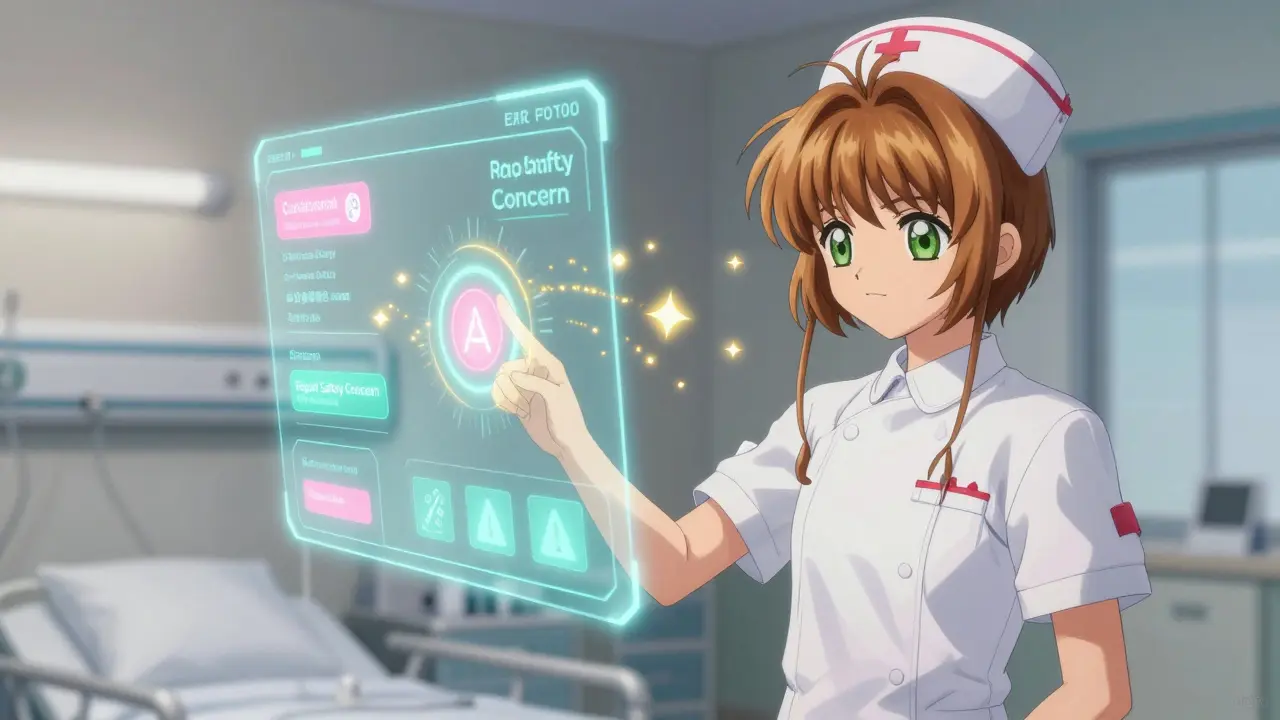
Every year, thousands of patients are harmed by drugs that weren’t flagged as dangerous until it was too late. Traditional methods of reporting adverse reactions-paper forms, delayed phone calls, manual data entry-just don’t cut it anymore. Today, clinician portals and apps are changing how drug safety is monitored, turning scattered clinical data into real-time alerts that can save lives. But using them right? That’s where most teams stumble.
What Exactly Are Clinician Portals for Drug Safety?
These aren’t just fancy dashboards. Clinician portals are secure, web-based platforms built into or connected to electronic health records (EHRs) and clinical trial systems. They let doctors, nurses, pharmacists, and safety officers spot, document, and report adverse drug reactions (ADRs) as they happen-no waiting for monthly reports or chasing down paper charts. Think of it like a smoke alarm for drugs. If a patient develops a rare liver injury after starting a new medication, the system doesn’t just log it. It flags the pattern: three other patients on the same drug had similar symptoms last month. That’s a signal. And now, the safety team gets notified before the next patient takes it. Platforms like Cloudbyz, IQVIA’s AI tools, and the open-source clinDataReview work by pulling data from EHRs, lab systems, and clinical trial databases. They use rules and machine learning to find unusual patterns-like a spike in kidney failure among patients on Drug X after a dosage change. The key? Real-time. Data flows in, gets analyzed, and appears on the safety dashboard in under 15 minutes.How Do You Actually Use These Tools?
It’s not magic. It’s workflow. Here’s how it works in practice:- Log in through your EHR. Most platforms integrate directly into systems like Epic or Cerner. You don’t need a separate login. If you’re reviewing a patient’s chart and notice a new rash after starting a statin, click the ‘Report Safety Concern’ button embedded in the EHR.
- Fill out the form-fast. The portal auto-fills patient ID, drug name, dosage, and timeline from the EHR. You just pick the reaction from a pre-coded list (MedDRA terminology), add a note if needed, and hit submit. No typing long narratives.
- Check the safety dashboard daily. Your team’s portal shows live signals: ‘5 cases of pancreatitis linked to Drug Y in past 30 days.’ Click into it. See the patient profiles. Compare lab values. Is this a coincidence or a trend?
- Respond or escalate. If it’s a single case, document it. If it’s a pattern, flag it for your pharmacovigilance team. Some portals let you send automated alerts to regulatory bodies or internal safety committees.
Which Platform Should You Use?
Not all tools are built the same. Your choice depends on your setting:| Platform | Best For | Key Strength | Biggest Limitation | Cost (Annual) |
|---|---|---|---|---|
| Cloudbyz | Clinical trials, pharma companies | Real-time integration with EDC/CTMS; cuts signal detection time by 40% | 6-8 week setup; needs CDISC expertise | $185,000 |
| Wolters Kluwer Medi-Span | Hospitals, clinics | Drug interaction alerts; 43% market share in US hospitals | Too many false alerts; alert fatigue | $22,500-$78,000 |
| IQVIA AI Tools | Large pharma, global safety teams | 85% fewer false positives; AI co-pilot for signal review | Needs 50,000+ patient records; regulatory scrutiny | Custom pricing |
| clinDataReview | Regulatory teams, academic research | 100% FDA/EMA compliance; reproducible reports | Requires R programming skills | Free (open-source) |
| PViMS | Low-resource clinics, LMICs | Simple, works offline; 95% adoption in 28 countries | No advanced analytics; internet-dependent | Free (donor-funded) |
What Skills Do You Actually Need?
You don’t need to be a data scientist. But you do need to understand a few things:- Clinical pharmacology - Know how drugs work, how they interact, and what side effects are common vs. rare.
- Data literacy - Can you read a trend in a chart? Can you tell if a spike is noise or a signal? Most safety officers say this is the hardest skill to find.
- Regulatory awareness - You’re not just reporting. You’re complying with FDA 21 CFR Part 11, EU Clinical Trial Regulation, and EMA guidelines. Every report must be traceable, auditable, and tamper-proof.
Common Pitfalls (And How to Avoid Them)
Here’s what goes wrong-and how to fix it:- Alert fatigue - Too many false positives. If your system flags 20 alerts a day and 18 are wrong, clinicians stop looking. Fix: Tune thresholds. Use AI that learns from your team’s past decisions.
- Bad data in, bad signal out - If your EHR has messy notes like “Pt felt weird,” the system can’t extract the real issue. Fix: Standardize documentation. Use templates. Train staff to write: “Patient developed bilateral ankle edema 48h after starting lisinopril.”
- Integration gaps - The portal works fine, but it’s not talking to your lab system. So you miss key lab abnormalities. Fix: Demand HL7/FHIR integration. Ask vendors for proof of connection to your specific EHR.
- Over-relying on AI - An algorithm flagged “possible serotonin syndrome” in a patient on fluoxetine and tramadol. But the patient had the flu. AI doesn’t know context. Fix: Always pair AI alerts with human review. The FDA found 22% of AI-generated signals in 2023 were false because they ignored clinical context.

What’s Changing in 2026?
The next wave is here. Cloudbyz’s new version uses machine learning to predict safety signals before they’re even reported-by linking lab trends, vitals, and medication changes in real time. IQVIA’s AI co-pilot now suggests evidence from published studies during signal review, cutting validation time by a third. But here’s the catch: the FDA’s new 2026 guidance requires all AI tools to be explainable. That means if the system says “Drug X may cause liver damage,” it must show you exactly which data points led to that conclusion. No black boxes. Gartner predicts that by 2027, 80% of safety teams will use AI-augmented tools. But human oversight? Still mandatory. Because drugs don’t just affect biology-they affect lives. And no algorithm understands grief, poverty, or a patient’s fear of side effects like a clinician does.Where Do You Start?
If you’re in a hospital: Talk to your EHR vendor. Ask if they offer integrated drug safety tools like Medi-Span. Start with drug interaction alerts-they’re the easiest win. If you’re in a clinical trial: Choose a platform that integrates with your EDC system. Cloudbyz or similar tools will save you weeks on safety reporting. But budget for training and data mapping-it takes time. If you’re in a low-resource clinic: PViMS is your best bet. It’s free, simple, and designed for places with spotty internet. Download it. Train your staff on the pre-coded MedDRA terms. Start reporting. The goal isn’t to replace people. It’s to give them better tools. The right portal doesn’t just make reporting easier. It makes safety faster. And in drug safety, time isn’t just money-it’s life.Can clinicians report adverse drug reactions directly through their EHR?
Yes. Modern EHR-integrated platforms like Wolters Kluwer’s Medi-Span and Cloudbyz allow clinicians to report adverse drug reactions directly from the patient chart with one click. The system auto-fills patient details, drug name, and timeline from the EHR, reducing reporting time by up to 70% compared to paper or standalone portals.
Do these systems work in low-resource settings?
Yes. The PharmacoVigilance Monitoring System (PViMS), developed by MSH and funded by USAID, is specifically designed for low- and middle-income countries. It runs on basic web browsers, requires no special hardware, and supports offline data entry with sync capability when internet returns. It’s used in 28 countries across Africa and Southeast Asia with 95% adoption rates in sentinel clinics.
What’s the biggest mistake teams make when adopting these tools?
Skipping training. Many teams assume the tool is intuitive and jump straight into use. But without understanding how to interpret signals, classify reactions using MedDRA, or distinguish noise from true safety trends, users either miss critical events or get overwhelmed by false alerts. Organizations that invest 80-120 hours in hands-on training see 3x higher reporting rates and 50% fewer false positives.
Are AI-powered safety tools reliable?
AI improves signal detection but isn’t foolproof. IQVIA’s AI tools reduce false positives by 85% compared to rule-based systems, but they still require human review. The FDA found that 22% of AI-generated signals in 2023 lacked clinical context-like ignoring a patient’s pre-existing condition. AI is a powerful assistant, not a replacement. Always pair algorithmic alerts with clinician judgment.
How long does it take to implement a drug safety portal?
Implementation time varies by platform and setting. Hospital systems like Medi-Span take 4-6 weeks, mostly for EHR integration and staff training. Clinical trial platforms like Cloudbyz require 8-12 weeks due to complex data mapping to CDISC standards. Open-source tools like clinDataReview can be installed in days but need R programming expertise to customize. PViMS deployments in LMICs average 3-5 weeks but face delays from unreliable power and internet.
Is there a free option for small clinics or research teams?
Yes. The open-source clinDataReview software is free and fully compliant with FDA 21 CFR Part 11 and EMA guidelines. It generates reproducible safety reports using R scripts and is used by academic labs and small biotechs. For clinics in low-income countries, PViMS is also free and designed for minimal infrastructure. Neither requires licensing fees, though technical support may need to be sourced separately.
Tatiana Bandurina
January 21, 2026 AT 17:02These systems are great in theory, but in practice, they’re just another layer of bureaucracy. I’ve seen nurses spend 20 minutes filling out safety reports only to have the pharmacovigilance team ignore them for weeks. The real issue isn’t the tech-it’s the culture. No one gets rewarded for reporting. Everyone gets punished for flagging something that turns out to be nothing.
And don’t get me started on MedDRA codes. Half the time, the options don’t even match what the patient actually experienced. You’re forced to pick ‘nervous system disorder’ because ‘sudden panic attack after statin’ isn’t an option. That’s not monitoring-that’s data distortion.
Philip House
January 22, 2026 AT 00:32Let’s be real-this whole AI-driven safety thing is just corporate theater. The FDA doesn’t care about your ‘explainable AI.’ They care about lawsuits. Every time a drug kills someone, the first thing the lawyers do is check the portal logs. If you didn’t report it in the exact right way, you’re liable. That’s why hospitals use these tools-not to save lives, but to cover their asses.
And don’t tell me about ‘real-time alerts.’ I work in a hospital that’s still using fax machines for discharge summaries. You think our EHR talks to some fancy AI dashboard? It barely talks to itself.
Jasmine Bryant
January 23, 2026 AT 09:07Just wanted to add-when I started using Medi-Span last year, I was skeptical. But after we tuned the alert thresholds based on our own patient population, false positives dropped from 18/day to 3/day. The key is local customization. One size doesn’t fit all. Our ICU has a ton of elderly patients on polypharmacy, so we weighted drug interactions higher than GI symptoms. Also, make sure your pharmacy team is involved in setting up the rules-they know the drugs better than the IT folks.
Oh and if you’re using Epic, check if your org has the ‘Safety Alert’ module enabled. It’s buried under ‘Clinical Decision Support’ and not everyone knows it’s there.
shivani acharya
January 24, 2026 AT 22:52Oh wow, so now Big Pharma is handing us AI to monitor the very drugs they’re pushing? Genius. You really think these platforms aren’t coded to downplay signals from their own products? IQVIA? Cloudbyz? They’re all funded by the same pharma giants. The ‘85% fewer false positives’? That’s because the AI was trained to ignore anything that looks like a pattern from their top-selling meds.
And PViMS being free? Sure, until the donor pulls funding and your clinic’s entire safety system goes dark. This isn’t innovation-it’s a controlled experiment on the global south. We’re the lab rats.
Also, ‘explainable AI’? Please. The FDA doesn’t want transparency-they want paperwork. The moment you ask for the data trail behind a signal, your EHR vendor says ‘proprietary algorithm.’ Translation: we don’t know either.
Rob Sims
January 25, 2026 AT 12:03Let me guess-someone wrote this after a 3-hour webinar from a vendor. ‘Real-time alerts save lives’? Cute. I’ve seen more lives lost to alert fatigue than to unreported ADRs. You want to save lives? Stop flooding clinicians with 50 false alarms a day. Turn off the noise. Train people to think, not click.
And open-source tools? clinDataReview? Good luck getting a nurse in a rural ER to install R. That’s like handing a chainsaw to a toddler and calling it ‘democratized forestry.’
Also, ‘human oversight is mandatory’? Then why is the industry pushing AI as the future? Hypocrisy. Pure and simple.
Neil Ellis
January 27, 2026 AT 07:11Man, this is one of those rare posts that actually gives me hope. I’ve been in this game 18 years and I’ve seen everything from paper cards in shoeboxes to now-where a nurse in Ohio can flag a reaction and by lunchtime, a team in Germany sees it too. That’s not just tech, that’s connection.
And yeah, AI’s not perfect. But when it caught a weird spike in QT prolongation from a generic antifungal we’d never heard of? That was the moment I realized: this isn’t about replacing humans. It’s about amplifying them. We’re not just reporting side effects anymore-we’re building a global nervous system for drug safety.
Also, shoutout to PViMS. My cousin works in a clinic in Uganda. She uses it every day. No Wi-Fi? No problem. She syncs when the generator runs. That’s resilience. That’s humanity.
arun mehta
January 29, 2026 AT 03:38Respectfully, I must emphasize that the adoption of clinician portals must be accompanied by structured, competency-based training programs. The technical infrastructure is only one component; the human factor remains paramount. In our institution, we implemented a biweekly microlearning module focused on MedDRA coding accuracy and signal interpretation, which resulted in a 42% increase in clinically relevant reports within six months.
Additionally, I would like to highlight that interoperability with HL7/FHIR standards is not optional-it is foundational. Without it, even the most sophisticated AI cannot compensate for fragmented data streams. We conducted a vendor assessment matrix with 17 criteria, and only three platforms met our technical and compliance thresholds.
Lastly, I extend my gratitude to the open-source community for clinDataReview. Its reproducibility ensures academic integrity and regulatory alignment, which is indispensable in research environments.
Oren Prettyman
January 29, 2026 AT 05:55While the article presents a superficially compelling case for AI-driven drug safety monitoring, it conspicuously omits the systemic incentives that drive adoption-not patient safety, but liability mitigation and regulatory compliance. The notion that these tools ‘save lives’ is a marketing narrative, not an evidence-based conclusion. There is no longitudinal, randomized trial demonstrating that portal usage reduces mortality.
Furthermore, the assumption that clinicians can reliably interpret algorithmic signals without specialized training is dangerously naive. The average physician receives less than 2 hours of pharmacovigilance education in medical school. To then expect them to distinguish signal from noise in a high-stress, time-constrained environment is not innovation-it is negligence dressed as progress.
And the open-source options? ‘Free’ only if you have a data scientist on staff who works for free. The hidden cost of implementation is rarely accounted for. This is not a tool-it’s a trap for under-resourced institutions.
Sarvesh CK
January 30, 2026 AT 21:10There’s a deeper philosophical layer here that’s often missed. These portals don’t just collect data-they change the relationship between clinician and patient. When a doctor clicks ‘Report Safety Concern,’ they’re no longer just treating an individual. They’re contributing to a collective intelligence. That’s a profound shift-from solitary practice to shared responsibility.
But with that comes a moral weight. Every report is a whisper from a patient who might not have been heard. We must not reduce these entries to checkboxes or algorithm inputs. Behind every MedDRA code is a person who felt strange, who trusted their doctor, who didn’t know their drug might be dangerous.
So yes, tune the alerts. Train the staff. Demand interoperability. But never forget: this isn’t about efficiency. It’s about dignity. The algorithm doesn’t feel guilt when it misses a signal. We do.
Brenda King
January 31, 2026 AT 07:54