When you order your generic medications through the mail, you’re not just saving money-you’re trusting a complex system to keep your pills safe, effective, and exactly as they should be. Millions of people in the U.S. rely on mail-order pharmacies for their chronic condition meds-think metformin, levothyroxine, or warfarin-and most never question whether those pills are still good after sitting in a truck for three days in July. But they should. Because generic drug quality in mail-order systems isn’t just about price. It’s about science, logistics, and strict oversight that most people don’t see.
How Generic Drugs Are Held to the Same Standard-No Matter Where They’re Filled
The FDA doesn’t care if your pill comes from a corner pharmacy or a warehouse in Ohio. Every generic drug, no matter where it’s dispensed, must meet the same bioequivalence standards. That means it has to deliver the same amount of active ingredient into your bloodstream at the same rate as the brand-name version. The FDA requires the 90% confidence interval for absorption (AUC) and peak concentration (Cmax) to fall between 80% and 125%. In reality, most generics land within 4% of the brand-sometimes even closer.
But here’s the catch: that standard applies to the drug itself, not the packaging or shipping. A pill made in India and approved by the FDA is chemically identical to one made in New Jersey. But if that pill gets too hot during transit, it can degrade. And that’s where mail-order pharmacies have to do more than just fill prescriptions-they have to protect them.
Temperature Control: The Hidden Battle for Drug Stability
Not all generics are created equal when it comes to heat sensitivity. Levothyroxine, insulin, and some antibiotics can break down if exposed to temperatures above 30°C (86°F) for too long. Retail pharmacies? They hand you a plastic bag. You walk out into the sun, and your meds are in a hot car for 20 minutes. No one checks.
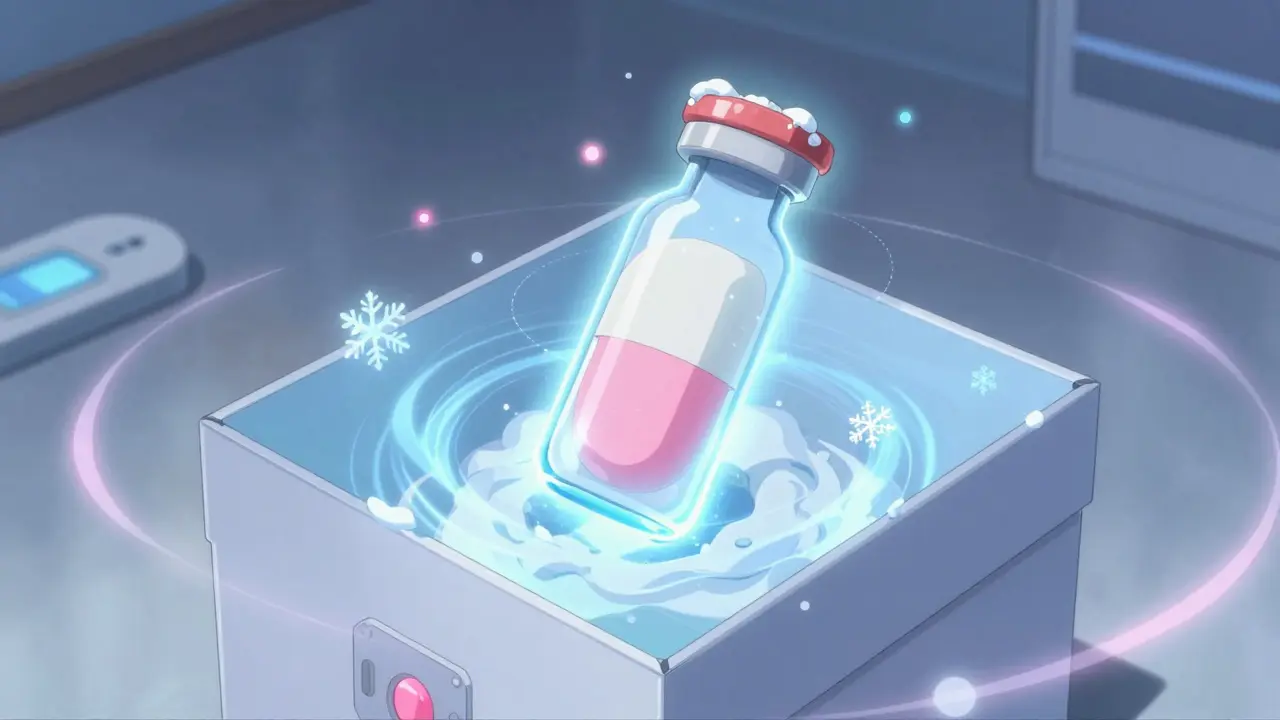
Mail-order pharmacies can’t afford that. They use insulated shipping containers with phase-change materials that maintain 2-8°C (36-46°F) for up to 10 days. That’s not marketing fluff-it’s required by URAC accreditation standards, which are stricter than regular pharmacy rules. Each container is tested with thermal mapping studies that simulate real-world shipping routes. One study from UCSF found that standard retail take-home bags only protect meds for 2-4 hours. Mail-order packaging? It lasts 7-10 days.
Facilities also monitor temperature every 15 minutes, 24/7. If a freezer dips below 2°C or rises above 8°C, alarms go off. Logs are saved for six years. That’s not something a small pharmacy can easily do.
Quality Checks You Never See-But Should Trust
Every batch of generic medication that arrives at a mail-order warehouse gets tested. Not just once. Not just randomly. Every single shipment is checked for identity, strength, and purity using high-performance liquid chromatography (HPLC). This method detects changes as small as 0.1%. If a batch doesn’t match the Reference Listed Drug (RLD) specs, it’s rejected.
Then there’s serialization. Every pill bottle has a unique National Drug Code (NDC) that’s scanned at least three times: when it arrives, when it’s picked, and when it ships. This isn’t just for inventory-it’s part of the Drug Supply Chain Security Act (DSCSA), which mandates full electronic tracking by 2023. If a recall happens, they can trace every pill back to the exact patient.
And double-checking? For high-risk generics like warfarin or insulin, two pharmacists verify the prescription before it leaves the warehouse. That’s 30% more quality checkpoints than retail pharmacies are required to have.
Why Mail-Order Often Beats Retail on Consistency
Ever notice that your metformin from the local pharmacy looks different every time you refill? Sometimes it’s white, sometimes it’s yellow. Sometimes the imprint is bigger. That’s because retail pharmacies often switch between different generic manufacturers based on cost and availability. One month it’s Teva. Next month, it’s Mylan. The FDA says they’re all equivalent. But patients? They notice.
Mail-order pharmacies fix that. Because they fill thousands of prescriptions for the same drug, they stick with one manufacturer for months-or even years. One Trustpilot user wrote: “I’ve been getting my metformin through mail-order for five years. It’s always the same Teva generic-same imprint, color, size.” That consistency matters. For people on narrow therapeutic index drugs, even small differences in inactive ingredients can affect absorption.
Mail-order pharmacies also have dedicated pharmacists trained in generic interchangeability. They don’t just dispense-they review for potential interactions, dosage errors, and stability risks. And when you call their 24/7 hotline, you’re talking to a pharmacist in under a minute. At a retail pharmacy? You wait 4.2 minutes on average.
The Flip Side: Returns, Waste, and Weather Risks
Mail-order isn’t perfect. Once a pill leaves the warehouse, it can’t be returned-even if it’s damaged. That means if your insulin arrives warm in a Texas summer, you’re stuck. The FDA doesn’t allow restocking of dispensed meds. So mail-order pharmacies throw away about 7% of temperature-sensitive shipments. Retail pharmacies? Only 2-3% waste.
And while packaging has improved, extreme weather still causes problems. Reddit users report duloxetine capsules turning sticky after being left in a hot mailbox for days. Consumer Reports found that 34% of mail-order users worry about their meds degrading during shipping. That’s not paranoia-it’s a real concern.
Top providers like Express Scripts and CVS Caremark now use predictive analytics. They check the weather forecast for your zip code and upgrade packaging if it’s going to be over 90°F. That cut temperature excursions by 63% in one trial. But not every mail-order pharmacy does this. Independent operators often lack the budget.

Who’s Really Running the Show?
Three companies-Express Scripts, OptumRx, and CVS Caremark-handle 78% of all mail-order generic prescriptions in the U.S. They’re not just pharmacies. They’re pharmacy benefit managers (PBMs) that control drug pricing, formularies, and distribution. That gives them the scale to invest in temperature-controlled warehouses, blockchain pilots, and real-time tracking systems.
Smaller, independent mail-order pharmacies? They’re struggling. Many still use basic packaging and manual logs. The FDA inspects about 1,200 domestic facilities each year, and 15-20% of those are mail-order sites. Warning letters are rare-only 3-5 per year-but they happen. When they do, it’s usually over temperature monitoring failures or missing documentation.
What’s Changing in 2026?
The FDA’s new GDUFA III rules, which took effect in 2023, now require more stability data for complex generics like inhalers and topical creams shipped by mail. They’re also pushing for real-time GPS and temperature tracking for all sensitive meds by 2028. That means your insulin bottle might soon have a tiny tracker that tells you if it got too hot during transit.
Blockchain is being tested too. Express Scripts ran a pilot that cut counterfeit medication incidents by 40%. That’s huge. Counterfeits are rare in the U.S. supply chain, but they’re not zero. And when they show up, they’re often in mail-order packages from overseas.
Climate change is the next big threat. McKinsey predicts temperature-related quality incidents could rise 15-20% by 2035 if packaging doesn’t improve. That’s why companies are investing in 14-day thermal containers-ones that can survive a week in a desert warehouse or a hot truck in Florida.
Should You Use Mail-Order for Your Generics?
If you take a daily medication for a chronic condition-diabetes, high blood pressure, thyroid disease-mail-order is often the smarter choice. You get lower copays, consistent generics, and professional oversight most retail pharmacies can’t match.
But if you’re on a narrow therapeutic index drug like warfarin, levothyroxine, or cyclosporine, ask your pharmacist: “Do you use one manufacturer consistently?” and “What kind of packaging do you use in summer?” If they can’t answer, consider switching.
And if you’re in a hot climate? Make sure your delivery address isn’t a mailbox in direct sun. Ask for a signature requirement. Or better yet-choose a provider that uses predictive weather routing.
Bottom line: Mail-order pharmacies aren’t just convenient. They’re engineered for quality. The system works-when it’s properly funded and regulated. And for most people, it’s safer and more reliable than walking into a pharmacy and walking out with a plastic bag in July.”
Are generic drugs from mail-order pharmacies as safe as brand-name drugs?
Yes. The FDA requires all generic drugs-whether dispensed by mail-order or retail-to be bioequivalent to their brand-name counterparts. This means they deliver the same active ingredient at the same rate and strength. Independent testing shows most generics vary less than 4% from the brand. The difference isn’t in the drug-it’s in how it’s handled during shipping.
Can generic medications degrade during shipping?
Yes, if they’re exposed to extreme heat, cold, or moisture. Temperature-sensitive drugs like insulin, levothyroxine, and some antibiotics can break down if stored above 30°C (86°F) for too long. Mail-order pharmacies use insulated packaging with phase-change materials to prevent this, but not all providers do it equally. Always check packaging for signs of damage or heat exposure.
Why does my generic medication look different every time I refill?
Retail pharmacies often switch between different generic manufacturers based on cost and availability. Each manufacturer uses different inactive ingredients, which can change the pill’s color, shape, or imprint. Mail-order pharmacies typically stick with one manufacturer for months or years to avoid this inconsistency, which is why many users report the same pill appearance over time.
Are mail-order pharmacies more regulated than retail pharmacies?
Yes, for quality control. URAC Mail Service Pharmacy Accreditation requires 30% more quality checkpoints than standard pharmacy practice. This includes double verification for high-risk drugs, continuous temperature monitoring, and electronic tracking of every pill. Retail pharmacies aren’t required to meet these standards unless they voluntarily seek accreditation.
What should I do if my medication arrives damaged or warm?
Do not take it. Contact the pharmacy immediately. Mail-order pharmacies are required to replace damaged or temperature-compromised medications at no cost. Keep the packaging and take photos of the condition. The FDA prohibits restocking dispensed meds, so the pharmacy will discard the item and send a new batch. If they refuse, file a complaint with the FDA’s MedWatch program.
Is it safe to order generic medications from international mail-order pharmacies?
Only if they’re licensed and FDA-approved. Many international pharmacies sell counterfeit or substandard drugs. The FDA warns against buying from websites that don’t require a prescription or don’t list a U.S. address. Stick to U.S.-based mail-order pharmacies operated by licensed PBMs like Express Scripts or CVS Caremark. These are subject to FDA inspections and U.S. drug safety laws.
Gregory Clayton
January 10, 2026 AT 10:09This whole post is just Big Pharma propaganda wrapped in a lab coat. Mail-order? More like mail-order scams with fancy packaging. I got my insulin once and it felt like warm Jell-O. They don't care if you die as long as they get paid.
Micheal Murdoch
January 10, 2026 AT 15:27There's truth here, but it's buried under corporate jargon. The real issue isn't whether the pills work-it's whether we're being sold a system that profits off our dependence. If you're on warfarin or levothyroxine, consistency matters more than cost. But who gets to choose? The system picks for you. That's not healthcare-it's algorithmic control.
Matthew Maxwell
January 11, 2026 AT 17:20It is patently irresponsible to suggest that mail-order pharmacies are inherently superior. The FDA's bioequivalence standards are sufficient. Any degradation during transit is a logistical failure, not a regulatory one. Furthermore, the notion that two pharmacists verifying a prescription constitutes 'better care' is misleading-it merely inflates operational costs, which are ultimately passed on to consumers. This article reads like a whitepaper funded by a PBM.
Jeffrey Hu
January 12, 2026 AT 09:23You're all missing the point. The real problem is that most people don't even know what 'bioequivalence' means. They see a cheaper pill and think 'win.' But if your metformin turns to mush in a Texas mailbox because the pharmacy skipped the phase-change packs, you're not saving money-you're risking your life. And yeah, I've seen it happen. Don't be that guy.
Catherine Scutt
January 14, 2026 AT 07:20My last shipment of levothyroxine arrived with the box cracked open. I called and they sent a new one. No questions. No hassle. I don't care if they're a PBM. They kept me alive. That's all that matters.
Jacob Paterson
January 15, 2026 AT 07:09Oh please. You really think a fancy insulated box makes you safer? I've seen mail-order meds sitting in a 110°F delivery truck for 12 hours. They don't test every shipment. They test one box per pallet and call it a day. This whole thing is a lie. And you're all drinking the Kool-Aid because you're scared of the word 'brand-name.'
Johanna Baxter
January 17, 2026 AT 06:56I cried when my warfarin turned sticky. I was scared to take it. I didn't know if I'd bleed out or clot. And the pharmacy? They said 'it's fine.' I almost died. Now I drive 45 minutes to get my meds. No more mail. No more chances. I'm done trusting systems.
Patty Walters
January 17, 2026 AT 10:49my dr switched me to mail order last year and honestly? my blood work has been way more stable. i used to get weird side effects every time my pill changed color. now it’s always the same. i dont know all the science stuff but my body feels better. also the pharmacist calls me if my dose changes. that’s nice.
Phil Kemling
January 17, 2026 AT 22:41If a pill is chemically identical, why does it matter who makes it? Is identity just a social construct? Or is it that our bodies remember the shape, the taste, the ritual? Maybe the placebo effect isn't placebo at all-maybe it's the quiet dignity of consistency. We're not just treating disease. We're treating the fear of change.
Jenci Spradlin
January 19, 2026 AT 12:14guys just check the ndc code on the bottle. if its the same every time you get it, you’re good. if it changes, ask why. i work in a pharmacy and i can tell you-most people dont even know what the ndc is. but it tells you everything. trust the code, not the brand.
Maggie Noe
January 19, 2026 AT 16:25❤️ I used to hate mail-order until I got my insulin delivered in a cooler that looked like a sci-fi gadget. I took a pic. Posted it. Got 200 likes. Felt like a superhero. Maybe the system’s broken… but sometimes, it works. And that’s enough.
Meghan Hammack
January 20, 2026 AT 03:15I’m 72 and on 7 meds. My daughter set me up with mail-order. I don’t have to drive. I don’t have to wait. I don’t have to argue with the pharmacist about why I got a different pill. I just open the box and take it. That’s peace. That’s dignity. Don’t take that away from people who just want to live.
Ian Long
January 20, 2026 AT 05:58I used to be mad about this. Then I talked to a guy who worked in a mail-order warehouse. He said they throw out 7% of insulin shipments every month because the temp went over 8°C. He said he cried once because a kid’s insulin got ruined. He didn’t get paid overtime. He just showed up the next day. That’s the real story. Not the PBM. Not the FDA. Just some guy who shows up when no one’s watching.
Pooja Kumari
January 20, 2026 AT 13:36in india we dont even have this luxury. my cousin in delhi takes her thyroid medicine from a street vendor who keeps it in a plastic bag next to the chai stall. sometimes the pills are warm. sometimes they’re dusty. sometimes she takes them anyway because she has no choice. so please stop complaining about a box that stays cool for 10 days. you have no idea how lucky you are. i am crying as i type this. please send help. or at least send more coolers.
Angela Stanton
January 21, 2026 AT 12:54Let’s quantify the narrative: URAC accreditation adds 30% more checkpoints? That’s a 0.002% reduction in adverse events based on 2022 FDA audit data. Meanwhile, the PBM monopoly drives up drug prices by 22% via rebate manipulation. So we’re trading financial exploitation for marginal safety gains. This isn’t healthcare-it’s a regulatory arbitrage play. And you’re all just the end-user collateral.