
Nosebleed Risk & Prevention Guide
Select the type of medication you are taking to understand how it affects your nasal membranes and learn the best ways to prevent bleeding.
Recommended Prevention:
The Usual Suspects: Which Medications Cause Bleeding?
Not all drugs cause nosebleeds in the same way. Some attack the "glue" that holds your blood together, while others simply dry out the lining of your nose until it cracks. First, there are the blood thinners. Anticoagulants like warfarin (Coumadin) interfere with the vitamin K your body needs to clot. Then you have antiplatelet agents, such as clopidogrel (Plavix) or even a low-dose 81mg daily aspirin. These don't necessarily "thin" the blood in a liquid sense, but they stop platelets from sticking together. If a tiny vessel in your nose pops, your blood can't form a plug quickly, leading to a longer, heavier bleed. Then there are the common over-the-counter options. NSAIDs (Nonsteroidal Anti-inflammatory Drugs) like ibuprofen, naproxen, and ketoprofen are frequent offenders. If you regularly reach for Advil or Aleve for joint pain or headaches, you're subtly inhibiting the enzymes that help your blood clot. Finally, we have the "dryers." Overusing nasal decongestants-specifically those containing oxymetazoline (like Afrin)-can lead to a vicious cycle. While they shrink swollen membranes initially, using them for more than three days often causes rebound congestion and extreme dryness, making the nasal wall brittle and prone to tearing.| Medication Class | Examples | Primary Mechanism | Risk Level |
|---|---|---|---|
| Anticoagulants | Warfarin, Heparin | Blocks clotting factors | High |
| Antiplatelets | Aspirin, Clopidogrel | Prevents platelet clumping | Moderate to High |
| NSAIDs | Ibuprofen, Naproxen | Reduces thromboxane A2 | Moderate |
| Decongestants | Oxymetazoline | Mucosal drying/brittleness | Low to Moderate |
Why Your Nose is the Target
Ever wonder why the nose bleeds before, say, your elbow? It's all about the geography. Your nose contains a massive network of tiny, fragile capillaries called Kiesselbach's plexus. These vessels are very close to the surface of the skin. When you take an NSAID or a blood thinner, you aren't making your blood "watery," but you are slowing down the repair process. Normally, if a vessel in the plexus leaks, platelets rush in to seal the gap. If you're on aspirin or warfarin, that seal takes longer to form. On the flip side, medications that dry out the mucosa remove the protective layer of mucus. Think of it like a dry riverbed that cracks in the sun. Once the lining cracks, those shallow blood vessels are exposed and can rupture from something as simple as a sneeze or a light rub of the nose.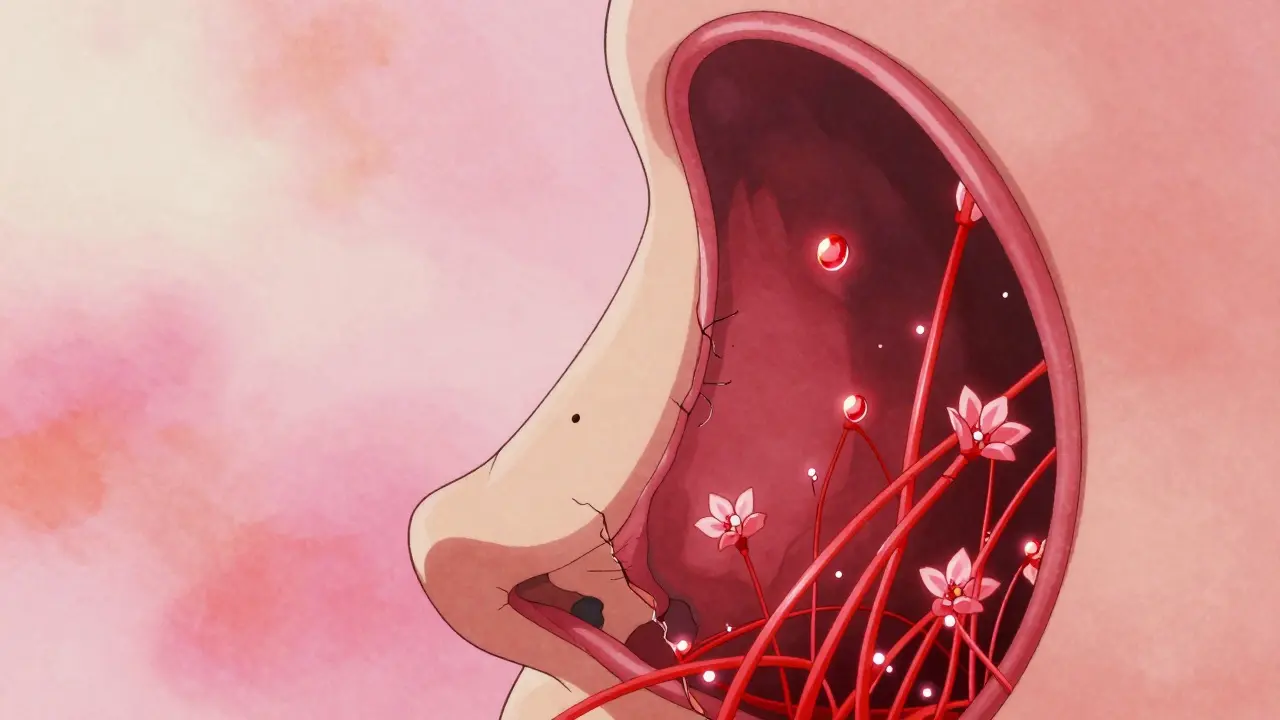
How to Prevent Medication-Related Bleeds
If you're on a necessary medication, you shouldn't just stop taking it. Instead, focus on protecting the physical environment of your nose.One of the simplest swaps is changing your painkiller. If you aren't required to take an NSAID, try switching to acetaminophen (Tylenol). Unlike ibuprofen, it doesn't mess with your blood's ability to clot, making it a much safer bet for people prone to epistaxis.
Next, fight the dryness. A great rule of thumb is to apply a thin layer of petroleum jelly inside your nostrils three times a day, especially right before bed. If you prefer a spray, use a saline gel or spray twice daily. This keeps the tissue supple and less likely to crack. Environmental control is also huge. During winter, indoor heaters strip moisture from the air, often dropping humidity below 30%. Using a cool-mist humidifier in your bedroom can prevent your nasal membranes from drying out while you sleep. And the most important rule? Keep your fingers out of your nose. Digital manipulation (picking or rubbing) is the fastest way to rupture a vessel that is already compromised by medication.What to Do When a Bleed Starts
When the bleeding starts, the instinct for many is to tilt their head back. Stop! Doing this sends blood down your throat, which can irritate your stomach and make you vomit. Follow these steps for a faster stop:- Sit up straight and lean your head slightly forward.
- Pinch the soft part of your nose firmly closed using a towel or washcloth.
- Hold the pressure for a full 10 to 15 minutes. Don't let go to "check" if it's stopped every two minutes; that can break the clot that's trying to form.
- If you have an ice pack, placing it on the bridge of your nose can help constrict the blood vessels.

Who is Most at Risk?
While anyone can experience this, a few groups are more vulnerable. Children are a primary example because they are more likely to pick their noses and have thinner nasal linings. Adults between 45 and 80 often face higher risks because they are more likely to be taking blood pressure medications or anticoagulants for heart health. Pregnant individuals also have a unique challenge. Pregnancy causes blood vessels in the nose to expand to accommodate increased blood volume, making them even easier to rupture when combined with certain medications. Similarly, people with chronic hypertension (high blood pressure) have vessels under more pressure, which increases the likelihood of a leak if their clotting ability is reduced by a drug.When to Call the Doctor
Most nosebleeds are annoying but harmless. However, when you're on medication, the stakes are higher. You should seek medical help immediately if:- The bleeding doesn't stop after 30 minutes of continuous, direct pressure.
- You start feeling lightheaded, faint, or dizzy.
- You notice other unexplained bleeding, like easy bruising or blood in your stool.
- The bleed happened after a significant facial injury or a fall.
- You are experiencing more than three or four nosebleeds in a single week.
Can I stop taking my blood thinner if I keep getting nosebleeds?
No, you should never stop a prescribed anticoagulant or antiplatelet medication without consulting your doctor. The risk of a blood clot or stroke usually far outweighs the inconvenience of a nosebleed. Instead, talk to your physician about optimizing your dose or using nasal moisturizers to prevent the bleeds.
Why does ibuprofen cause nosebleeds more than Tylenol?
Ibuprofen is an NSAID that inhibits the production of thromboxane A2, a substance that helps platelets stick together to form a clot. Acetaminophen (Tylenol) does not affect this clotting mechanism, which is why it is recommended for people who struggle with frequent bleeding.
How long can I safely use a nasal decongestant spray?
Most doctors and the FDA recommend limiting decongestant sprays (like those containing oxymetazoline) to no more than three consecutive days. Using them longer can cause "rebound congestion" and dry out the nasal mucosa, which actually makes you more likely to have a nosebleed.
Is petroleum jelly safe to put inside the nose?
Yes, applying a thin layer of petroleum jelly to the inside of the nostrils is a widely recommended way to keep the nasal membranes moist and prevent cracking. It acts as a protective barrier against dry air.
What is the best position to sit in during a nosebleed?
You should sit upright and lean slightly forward. Avoid tilting your head back, as this causes blood to run down your throat and into your stomach, which can lead to nausea or vomiting.
dwight koyner
April 9, 2026 AT 11:45It is imperative to note that while saline sprays are helpful, the consistency of the moisturizing agent matters. For those on high-dose anticoagulants, I often suggest a water-based lubricant if petroleum jelly feels too heavy, as maintaining the mucosal barrier is the most effective way to prevent these ruptures.
Darius Prorok
April 10, 2026 AT 06:09Everyone knows that humidity is the real key here. If your room is dry, your nose is dry. Just get a humidifier and stop the bleeding. It is basic science.
Daniel Trezub
April 11, 2026 AT 01:13Humidifiers are kind of a joke honestly. I've had one for years and my nose still bleeds. Probably just depends on the person, not some magic machine in the corner of the room.
Jamar Taylor
April 11, 2026 AT 10:41You can do it! Just keep that nose hydrated and stay positive! Every small step towards better habits makes a huge difference in your health journey! Keep pushing for those better habits!
Grace Lottering
April 11, 2026 AT 12:43Big Pharma pushes these 'dryers' on purpose. They want us addicted to the sprays. It is a cycle of profit and pain. Wake up.
Jitesh Mohun
April 12, 2026 AT 07:40stop picking your nose man its simple as that why do people make it complicated just leave it alone and it wont bleed stop overthinking the meds
Del Bourne
April 12, 2026 AT 12:02I would like to add that for those using Tylenol as an alternative, you must be mindful of the daily dosage to protect your liver. While it doesn't affect clotting, exceeding the recommended limit can be dangerous. Additionally, if you are using a humidifier, please ensure you clean it daily to prevent mold and bacteria from entering your respiratory system, as this could exacerbate nasal inflammation.
Jay Vernon
April 12, 2026 AT 13:00The tip about leaning forward is so helpful! 🌟 I used to tilt my head back and it was just a mess 😭 Thanks for the advice! ❤️
GOPESH KUMAR
April 13, 2026 AT 18:29The physical body is merely a vessel for the mind, yet we obsess over a few drops of blood. It is a classic example of human fragility. Of course, the medical explanation is correct, but we must realize that our anxiety over these symptoms often outweighs the actual biological risk. People just love to panic over the smallest things because it makes them feel like they are doing something about their health.
Stephen Luce
April 14, 2026 AT 10:47I totally get how scary it is when you see blood, especially when you're already dealing with health issues. It's a lot to handle.
Michael Flückiger
April 15, 2026 AT 18:52Switch to Tylenol immediately!!! It is the only way to be sure!!! Trust the process and your nose will be fine!!!
shelley wales
April 15, 2026 AT 22:58It's okay to feel overwhelmed by new medication side effects. We are all learning together. Just remember to be patient with your body as it adjusts, and don't be afraid to reach out to your doctor for a little extra guidance. You've got this, and taking care of yourself one step at a time is the best way to go. Just keep those nostrils moist and stay hopeful!