Pediatric Medication Unit Converter
This tool helps you understand the critical difference between teaspoons and milliliters. Remember: 1 teaspoon = 5 milliliters. Confusing these units can cause 500% overdoses in children.
Why This Matters
Every year, 50,000 children under 5 end up in emergency rooms because they got into medicine they weren't supposed to. Most of these cases are preventable.
1 teaspoon equals 5 milliliters. If a parent gives 1 teaspoon thinking it's the same as 1 milliliter, they've just given their child a 500% overdose.
Never use kitchen spoons for medication. Always use the measuring device that comes with the medicine.
Enter a value above to see the conversion
Every year, 50,000 children under age 5 end up in emergency rooms because they got into medicine they weren’t supposed to. Most of these cases aren’t accidents in the traditional sense-they’re preventable mistakes. Parents think they’re being careful. Doctors assume dosing is clear. Pharmacists follow standard protocols. But children aren’t small adults. Their bodies process medicine differently, their ability to communicate is limited, and their curiosity is relentless. When medication safety practices designed for adults are used for kids, the results can be deadly.
Why Children Are at Higher Risk
Children’s bodies are still growing. Their kidneys and liver-organs that break down and flush out drugs-are not fully developed. A dose that’s safe for a 150-pound teen could be lethal for a 12-pound infant. Weight-based dosing isn’t just a suggestion; it’s a necessity. But here’s the problem: kids range from under 2 kilograms at birth to over 60 kilograms by adolescence. That’s a 60-fold difference in body weight. One wrong decimal point, one misread unit, and you’re giving 5 times the intended dose. The most common error? Confusing teaspoons with milliliters. One teaspoon equals 5 milliliters. If a parent gives 1 teaspoon thinking it’s the same as 1 milliliter, they’ve just given their child a 500% overdose. That’s not a typo. That’s a life-threatening mistake. And it happens more often than you think. Another hidden danger: kids can open child-resistant caps in under 30 seconds if they’re not fully closed. A 2013 study showed that even when adults think they’ve locked the cap properly, children still get in. And if you’ve removed pills from their original packaging to put them in a pill organizer? You’ve just made it easier for a toddler to find and swallow a whole day’s dose of blood pressure medicine.What Happens in Hospitals
In pediatric units, safety protocols are stricter. But in general hospitals where kids are rare, errors spike. Facilities with fewer than 100 pediatric patients per year have more than three times the error rate of dedicated children’s hospitals. Why? Because staff aren’t trained for it. A nurse who handles adult doses all day might not know that a 2-year-old with a fever needs a different calculation than a 10-year-old with the same symptoms. The American Academy of Pediatrics laid out 15 key safety steps in 2018, and hospitals that follow them see big drops in errors. These include:- Using only kilograms for weight measurements-no pounds allowed
- Programming electronic systems with upper dosing limits so you can’t accidentally order 10 times the right amount
- Standardizing concentrations of high-risk drugs like insulin or morphine so there’s no confusion between 1 mg/mL and 10 mg/mL
- Creating distraction-free zones for preparing meds-no phones, no talking, no interruptions
- Requiring two independent checks before giving high-alert medications to a child
Home Medication Safety Is Just as Critical
Most pediatric poisonings happen at home. Not in hospitals. Not in clinics. In the kitchen cabinet, on the bathroom counter, in the purse left on the couch. The CDC’s PROTECT Initiative says it plainly: “Store all medicine up and away and out of children’s reach and sight.” That means not on the nightstand. Not in the diaper bag. Not in the drawer next to the baby wipes. Even vitamins, eye drops, and diaper rash cream can be fatal in tiny amounts. One study found that 20% of poisonings came from products people didn’t even think of as medicine. And here’s a shocking truth: over-the-counter cough and cold medicines are not recommended for children under 6-and should never be used in kids under 2. Yet many parents still give them, thinking “it’s just medicine, it’s safe.” The FDA and AAP have been clear: these drugs don’t work well in young kids, and the risks far outweigh any benefit.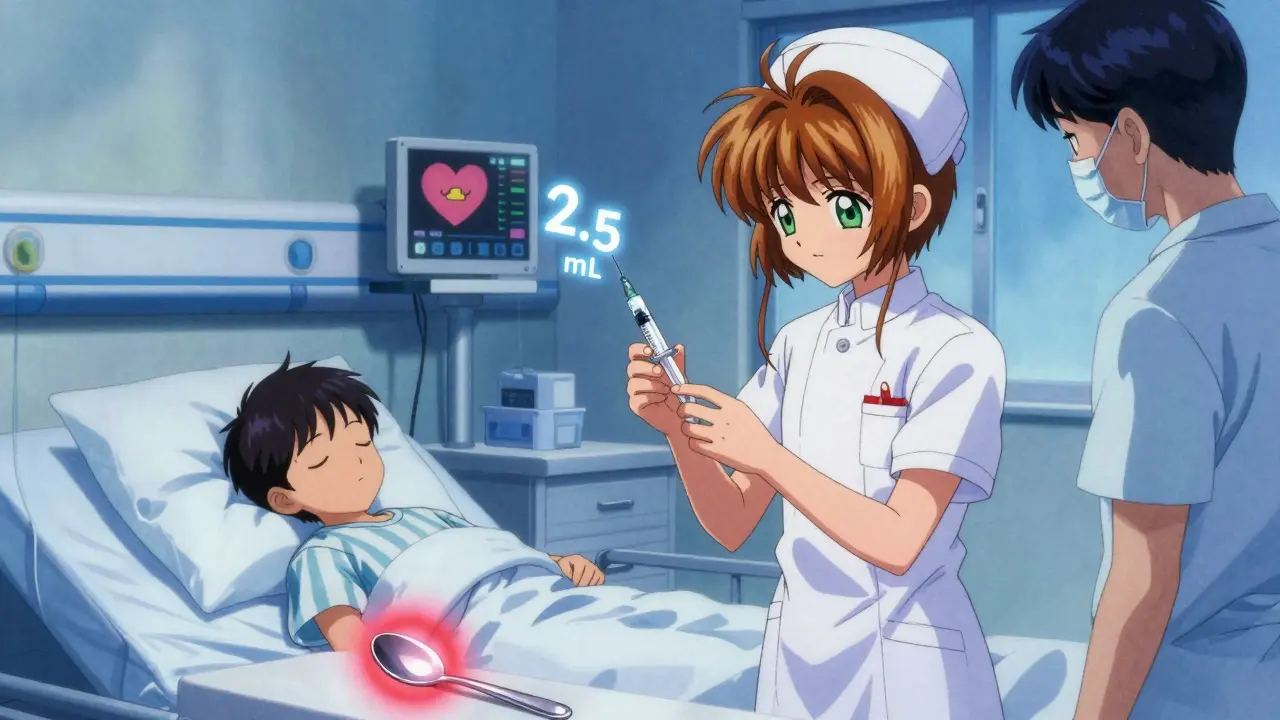
Labeling and Dosing Tools That Save Lives
If you’re giving liquid medicine at home, never use a kitchen spoon. They vary wildly in size. Instead, use the syringe or cup that came with the medicine. If it didn’t come with one? Ask for one. Pharmacies are required to provide accurate dosing tools for pediatric liquids. The American Academy of Pediatrics recommends that all liquid medications for home use be dispensed in milliliters only. No teaspoons. No tablespoons. No “a capful.” Just mL. And the dose should be written clearly: “Give 2.5 mL every 6 hours,” not “Give half a teaspoon.” Studies show that using pictograms-simple pictures showing when to give medicine, how much, and how-improves correct dosing by 47% in families with low health literacy. A picture of a child sleeping with a pill next to it means “give at bedtime.” A picture of a clock with 8, 12, and 4 means “give every 8 hours.”What Parents Must Never Do
There are a few things you should never, ever do:- Never call medicine candy. Saying “this tastes like candy” or “it’s sweet like juice” teaches kids to associate pills with treats. One in seven accidental ingestions comes from this practice.
- Never leave pills in open containers. Even if you think the cap is on tight, kids can get in. Keep them in the original bottle, locked up.
- Never guess a dose. If you don’t know how much to give, call your doctor or pharmacist. Don’t rely on memory or old prescriptions.
- Never share adult medicine with a child. A painkiller that works for you could be toxic to your 4-year-old.
Teach-Back: The Secret Weapon Against Errors
One of the most effective tools in both hospitals and homes is called “teach-back.” It’s simple: after the doctor or pharmacist explains how to give the medicine, ask the parent to explain it back in their own words. A 2023 study from the Agency for Healthcare Research and Quality found that using teach-back reduced home dosing errors by 35%. Why? Because it catches misunderstandings before they lead to harm. If a parent says, “So I give this once a day at night,” but the medicine is supposed to be every 8 hours, you catch it right then. You can do this at home too. After getting a new prescription, ask your child’s doctor: “Can you show me how to give this? Then let me show you how I’ll do it.”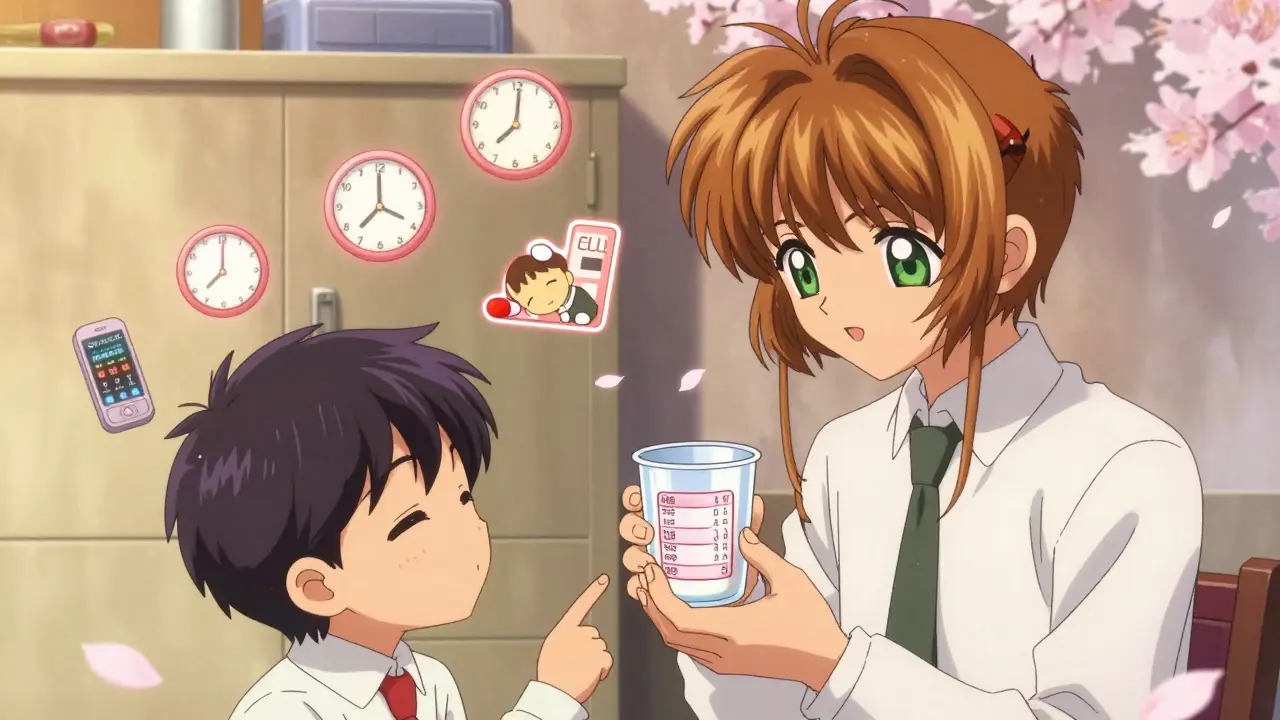
What to Do If a Child Gets Into Medicine
If you suspect your child swallowed medicine they shouldn’t have, don’t wait. Don’t call your pediatrician first. Don’t Google symptoms. Call Poison Control immediately: 800-222-1222. That number should be saved in your phone, on your fridge, and programmed into your home landline. It’s free, it’s available 24/7, and they’ll tell you exactly what to do. Don’t induce vomiting unless they tell you to. Don’t give milk or charcoal unless instructed. Time matters. The faster you act, the better the outcome.It’s Not Just About Medicine-It’s About Culture
Pediatric medication safety isn’t just about better labels or new rules. It’s about changing how we think. We treat medicine like it’s harmless because we’ve been doing it the same way for decades. But children aren’t miniature adults. Their bodies are fragile. Their curiosity is unstoppable. And their ability to tell us what’s wrong? It’s limited. The good news? We know what works. We’ve seen hospitals cut errors by 80%. We’ve seen families reduce poisonings by using pictograms and teach-back. We’ve seen poison control centers save lives with a single phone call. It’s not about being perfect. It’s about being intentional. Check the cap. Measure in mL. Store up high. Never say “candy.” Call Poison Control without hesitation. These aren’t just tips. They’re lifelines.Future Improvements on the Horizon
The FDA is now requiring drug makers to standardize concentrations for new pediatric medications. That means in the next few years, you’ll see fewer variations in how strong liquid medicines are. That alone could reduce dosing errors by up to 60%. Pediatric hospitals are also pushing for mandatory training for all staff who handle medications-even if they don’t work primarily with kids. That’s a big shift. And it’s working. But real change starts at home. You don’t need a hospital to make a difference. You just need to know the risks-and act on them.Why can’t I use a kitchen spoon to give my child liquid medicine?
Kitchen spoons vary in size and aren’t accurate. A teaspoon from your kitchen might hold 4 mL or 6 mL, while the correct dose might be 5 mL. That small difference can lead to under- or overdosing. Always use the syringe, dropper, or cup that comes with the medicine-it’s calibrated in milliliters (mL) and designed for safety.
Are over-the-counter cough medicines safe for toddlers?
No. The FDA and American Academy of Pediatrics strongly advise against using over-the-counter cough and cold medicines in children under 6, and never in children under 2. These drugs don’t work well in young kids and carry serious risks like rapid heart rate, seizures, and even death. Always check with your doctor before giving any OTC medicine to a child under 6.
What should I do if my child swallows medicine they weren’t supposed to?
Call Poison Control immediately at 800-222-1222. Don’t wait for symptoms. Don’t try to make them vomit. Don’t give them food or drink unless instructed. Poison Control experts will guide you step by step based on what was taken, how much, and your child’s age and weight. Keep that number saved in your phone and posted where you can find it fast.
Is it safe to store medicine in the bathroom?
No. The bathroom is one of the worst places to store medicine. Humidity can damage pills, and it’s easily accessible to children. Store all medicines up and away, in a locked cabinet or high shelf in a bedroom or kitchen-anywhere kids can’t reach or see. Even vitamins, eye drops, and diaper rash cream should be stored like medicine.
Why do hospitals require two people to check pediatric doses?
Because one person can make a mistake. Two people catching each other’s errors reduces the risk of fatal dosing mistakes. This is especially important for high-alert medications like insulin, morphine, or seizure drugs. Even experienced nurses miss things when they’re tired or rushed. A second set of eyes is a proven safety net.
Lance Nickie
January 13, 2026 AT 17:56lol why are we acting like this is news? kids eat everything. my cousin swallowed a whole bottle of gummy vitamins and just slept it off. chill out.
Clay .Haeber
January 14, 2026 AT 03:40Oh wow. Another sanctimonious pamphlet from the medical-industrial complex. Let me guess-next you’ll tell us to lock up water and air? Kids are resilient. You’re just neurotic about germs and dosage decimals. I gave my kid Tylenol with a dinner spoon since ’09. He’s now a PhD candidate. Coincidence? I think not.
Nelly Oruko
January 14, 2026 AT 04:37While I appreciate the intent, I find it deeply concerning that we’re reducing child safety to a checklist of bureaucratic measures. The real issue is cultural: we’ve normalized the commodification of health, treating medicine like a household item rather than a profound biological intervention. Perhaps we need to teach reverence, not just regulation.
Angel Tiestos lopez
January 16, 2026 AT 03:14my niece took a whole bottle of melatonin last year 😅 turned into a 14-hour nap and woke up asking for pancakes. no hospital. no panic. just vibes. maybe we’re over-medicalizing childhood? 🤷♂️💊
Scottie Baker
January 17, 2026 AT 08:27STOP WITH THE PICTOGRAMS. This is America. We don’t need fucking cartoons to tell us how to give our kids medicine. If you can’t read ‘2.5 mL’, maybe you shouldn’t be parenting. I’ve been giving my kid ibuprofen since he was 3 months old with a damn measuring cup. He’s 8 and doesn’t need a fucking emoji to tell him when to sleep.
Anny Kaettano
January 17, 2026 AT 16:53Let’s reframe this: pediatric medication safety isn’t about fear-it’s about empowerment. When parents are equipped with clear tools-like mL-only labeling, teach-back protocols, and poison control access-they become the most effective frontline defenders of their child’s health. This isn’t bureaucracy. It’s bio-empowerment. And it’s working. Every family that uses a syringe instead of a spoon? They’re not just being careful-they’re leading a quiet revolution.
Kimberly Mitchell
January 18, 2026 AT 20:12So we’re blaming parents now? Funny how the same people who scream about corporate greed are fine with hospitals charging $200 for a syringe. The real problem? Access. If you can’t afford a child-safe medicine cabinet, or your landlord won’t let you install one, your ‘safety tips’ are just performative virtue signaling. Real change requires housing policy, not pictograms.
Diana Campos Ortiz
January 20, 2026 AT 03:49i’ve been using the syringe that came with the medicine since my daughter was born. i also write the dose on a sticky note and put it on the bottle. i know it seems small but it’s saved me twice when i was half-asleep at 3am. tiny habits, big safety net.
Jesse Ibarra
January 21, 2026 AT 01:12Oh so now it’s ‘culture’? Let me guess-you also think we should ban pacifiers and breastfeeding in public because ‘we’ve normalized infant dependency’? This article is a masterpiece of fearmongering wrapped in medical jargon. You want to fix this? Stop making parents feel guilty for existing. Let them breathe. Let them trust their instincts. The system is the problem, not the moms.
laura Drever
January 21, 2026 AT 22:59teachback is a joke. no one has time for that. also why are we using ml? imperial system is fine. just use a teaspoon. everyone knows what that is. stop overcomplicating.
Rosalee Vanness
January 22, 2026 AT 22:34I want to say thank you-for writing this with such care. I’m a single mom of twins, and I remember the panic when my 18-month-old got into my blood pressure pills last winter. I didn’t know what to do. I called my mom, who said ‘give him milk’-which is exactly what you’re warning against. I didn’t know about Poison Control. I didn’t know about mL vs tsp. I didn’t know that vitamins could kill. I cried for three days after. This article? It’s not just information. It’s a lifeline. I’m printing it out. I’m putting it on the fridge. I’m showing my sister, my neighbor, my kid’s daycare provider. Because if one parent reads this and avoids a nightmare? That’s worth more than all the hospital protocols in the world. You didn’t just write a post. You saved lives. Thank you.