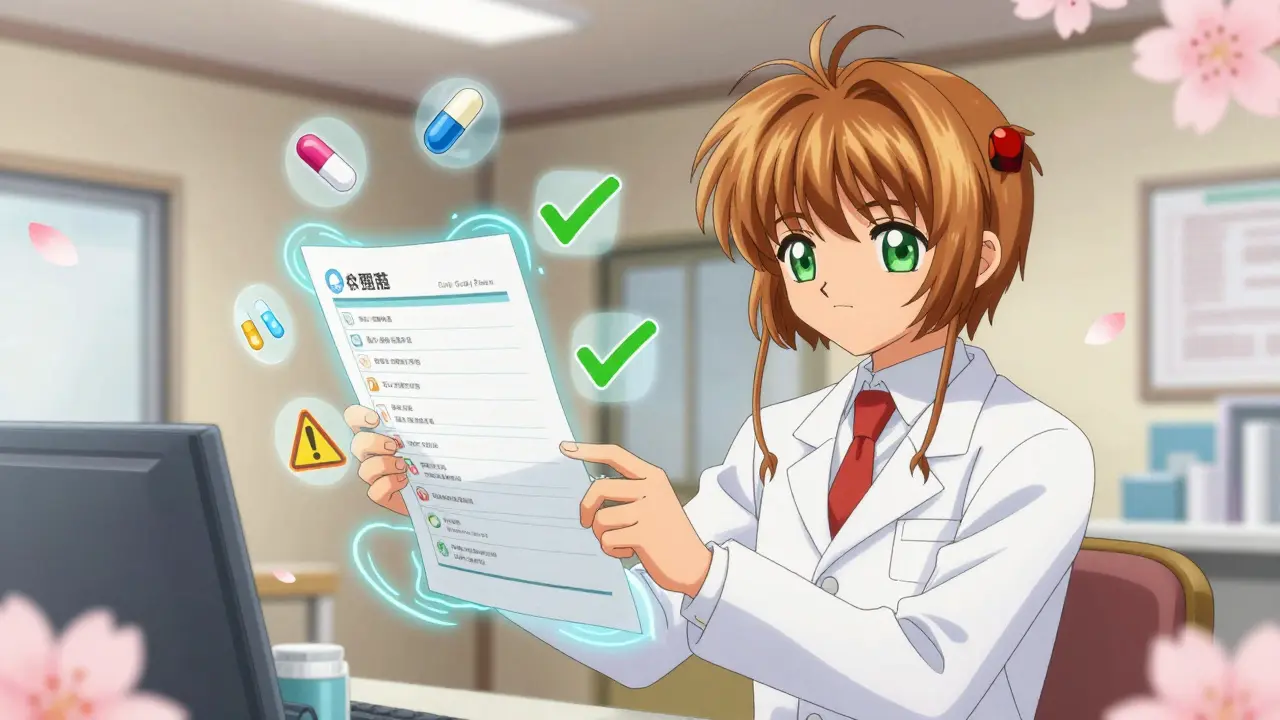
When patients move from hospital to home-or from one care setting to another-medications often get mixed up. A pill that was stopped in the hospital might still be on the home list. A cheaper, safer alternative might be overlooked. These aren’t just small errors. They lead to hospital readmissions, dangerous side effects, and unnecessary costs. That’s where pharmacist-led substitution programs come in. These aren’t just nice-to-have services. They’re proven, data-backed systems that cut adverse drug events by nearly half and reduce readmissions by more than 10% on average.
What Exactly Is a Pharmacist-Led Substitution Program?
A pharmacist-led substitution program is a structured process where pharmacists review a patient’s entire medication list during transitions of care-like hospital admission, discharge, or move to a nursing home. They don’t just check for missing pills. They actively look for opportunities to improve therapy: swapping out unsafe or outdated drugs, removing unnecessary medications, and replacing expensive or non-formulary drugs with safer, cheaper alternatives that work just as well.
This isn’t guesswork. It’s based on clear protocols. Pharmacists compare the patient’s own list (what they say they’re taking) with what the hospital records show, and then with what the prescribing doctors ordered. On average, they find 3.7 medication discrepancies per patient. Some of these are simple mistakes-like a wrong dose or missed allergy. Others are serious risks-like keeping a blood thinner that shouldn’t be used with a new diagnosis, or continuing an anticholinergic drug that increases fall risk in older adults.
The goal? Make sure every medication on the list is necessary, safe, and aligned with current guidelines. And when a better option exists, the pharmacist recommends the change-often before the patient even leaves the hospital.
How These Programs Are Set Up in Real Hospitals
Successful programs don’t rely on one person working overtime. They’re built like teams. In high-volume hospitals, you’ll typically find one pharmacist supported by two full-time medication history technicians and several part-time interns. These technicians do the heavy lifting: they interview patients, collect medication lists, enter data into the electronic health record, and flag obvious errors. The pharmacist then steps in to make clinical decisions: Is this drug still needed? Is there a safer alternative? Should we stop it entirely?
Timing matters. In community hospitals, these teams often work from 7 a.m. to 8 p.m. In trauma centers, it’s 24/7. One study found that having a technician cover the emergency department from 8:30 a.m. to noon, then moving to hospital floors from 12:30 p.m. to 5 p.m., maximized impact without overburdening staff.
Training is strict. Technicians need at least two hours of classroom instruction and five eight-hour supervised shifts before they work alone. After training, they achieve 92.3% accuracy in gathering medication histories. Pharmacists, meanwhile, follow standardized protocols tied to the hospital’s formulary and clinical guidelines. If a patient arrives on a non-formulary drug, the system automatically flags it. Pharmacists then evaluate whether a substitution is safe and appropriate-and in 68.4% of cases, they successfully make the switch.
The Numbers Don’t Lie: What These Programs Actually Achieve
Let’s talk outcomes. Independent studies and hospital data show consistent, measurable results:
- 49% reduction in adverse drug events (ADEs)-the kind of reactions that send people back to the ER.
- 29.7% fewer complications like kidney damage, bleeding, or delirium linked to medications.
- 11% drop in 30-day readmissions, with some high-risk groups seeing up to 22% fewer returns.
- $1,200 to $3,500 saved per patient by avoiding preventable hospital stays.
One landmark study-the OPTIMIST trial-showed that patients who got full pharmacist-led intervention had a 38% lower risk of being readmitted within 30 days compared to those who only got a basic medication review. The number needed to treat? Just 12. That means for every 12 patients you help with this program, you prevent one hospital return.
High-risk patients benefit the most. Older adults on five or more medications, people with low health literacy, and those with chronic conditions like heart failure or diabetes see the biggest gains. In fact, hospitals that added pharmacist-led substitution to their care for CMS HRRP patients (those at highest risk of readmission) saw 22% greater reductions in readmissions than those that didn’t.

Why Pharmacists? Why Not Doctors or Nurses?
Doctors are busy. Nurses have dozens of patients. Pharmacists are the only clinicians whose entire training is focused on medications. They know drug interactions, dosing adjustments for kidney or liver disease, formulary restrictions, and cost alternatives. They don’t just prescribe-they evaluate.
A systematic review of 123 studies found that 89% of pharmacist-led programs reduced readmissions. Only 37% of non-pharmacy-led efforts did. Why? Because pharmacists dig deeper. They ask: “Is this drug still helping?” “Is there a safer option?” “Is the patient even taking this?”
They also lead in deprescribing-the careful removal of unnecessary or harmful drugs. In one study, 52% of pharmacist recommendations focused on stopping medications, not adding them. That’s huge. Many older adults are on drugs that were prescribed years ago and no longer serve a purpose. Some, like long-term proton pump inhibitors or anticholinergics, actually increase risks of infection, falls, or dementia. Pharmacists are trained to identify these and suggest safe discontinuation.
Where These Programs Struggle-and How They Overcome It
It’s not all smooth sailing. The biggest barrier? Physician resistance. In 43% of hospitals, doctors don’t always accept pharmacist recommendations. Some don’t trust the data. Others feel their authority is being challenged. Successful programs fix this with two things: standardized communication and electronic alerts.
Instead of calling a doctor to say, “I think you should stop this drug,” the pharmacist uses the EHR to send a structured alert: “Patient on PPI for 3 years with no GI indication. Risk of C. diff. Recommend discontinuation. Reason: Evidence-based deprescribing guideline.” The system flags it. The doctor sees it in their workflow. Acceptance rates jump.
Time is another issue. A full medication review takes about 67 minutes per patient. That’s a lot in a busy hospital. The fix? Split the work. Technicians gather data. Pharmacists focus on decisions. Documentation time drops to 12.7 minutes per patient when this model is used.
Reimbursement is still messy. Medicare Part D covers these services for 28.7 million beneficiaries-but only with heavy paperwork. Only 32 states fully reimburse pharmacist-led substitution under Medicaid. That’s why most programs still rely on hospital funding. But that’s changing. The 2022 Consolidated Appropriations Act now requires medication reconciliation for all Medicare Advantage patients. That’s a $420 million market opportunity-and hospitals are starting to see the return on investment.

The Future: AI, Policy, and Expansion
Pharmacist-led substitution is growing fast. The U.S. market hit $1.87 billion in 2022 and is projected to hit $3.24 billion by 2027. Why? Because value-based care is here. Accountable Care Organizations (ACOs) now include pharmacist-led substitution metrics in their quality contracts. Sixty-three percent of ACOs track these outcomes.
New tools are helping. AI-powered medication history tools are being tested in 14 academic centers. They cut data collection time by 35%. That means pharmacists can review more patients, faster. Meanwhile, research is zeroing in on high-risk drug classes. Deprescribing anticholinergics in elderly patients cut falls by 41%. Stopping long-term PPIs reduced C. difficile infections by 29%.
But challenges remain. Rural hospitals? Only 22% have full programs. Urban academic centers? 89%. Pharmacist shortages make it hard to scale. Still, the trend is clear: more states are expanding pharmacist authority. Twenty-seven state pharmacy associations are lobbying for broader substitution rights. And CMS is considering new rules that could boost reimbursement by 18-22%.
Why This Matters for Every Patient
Imagine you’re a 78-year-old with heart disease, diabetes, and high blood pressure. You’re on eight medications. You get discharged from the hospital after a fall. Your family thinks you’re on the same list you were before. But one drug was stopped because it was making you dizzy. Another was replaced because it was too expensive. A third was removed because it was no longer needed.
If no one checked? You might end up back in the hospital-dizzy, confused, or with a dangerous infection. But because a pharmacist reviewed your list, caught the mismatch, and made the changes? You go home safely. You take fewer pills. You feel better. You don’t come back.
That’s not magic. It’s pharmacy practice. And it’s working.
Are pharmacist-led substitution programs only for hospitals?
No. While they started in hospitals, these programs are now expanding into skilled nursing facilities, outpatient clinics, and even home-based care. By 2023, 42% of skilled nursing facilities had implemented pharmacist-led deprescribing programs-up from just 18% in 2020. Community pharmacies are also starting to offer medication reviews for patients transitioning from hospital to home, especially for Medicare beneficiaries.
Can pharmacy technicians do this work without pharmacists?
No. Pharmacy technicians are critical for collecting accurate medication histories, but they don’t make clinical decisions. Only pharmacists can evaluate drug interactions, assess appropriateness, and recommend substitutions based on guidelines. Technicians gather the data; pharmacists interpret it. This division of labor is what makes the programs both efficient and safe.
Do these programs save money for hospitals?
Yes. On average, each patient saved $1,200 to $3,500 by avoiding preventable hospital readmissions. Hospitals that implemented these programs saw an 11.3% drop in readmission penalties under CMS’s Hospital Readmissions Reduction Program. The upfront cost of staffing is offset by reduced penalties, fewer drug-related complications, and lower spending on unnecessary medications.
Why do some doctors resist pharmacist recommendations?
Some doctors feel their authority is being challenged, or they don’t trust the data from non-clinical staff. Others are simply overwhelmed and don’t have time to review every recommendation. Successful programs address this by embedding substitution alerts directly into the electronic health record, using clear, evidence-based language, and involving physicians in program design from the start.
Is there evidence that these programs work for older adults?
Yes-especially for older adults. Polypharmacy (taking five or more medications) is common in this group, and many drugs become harmful over time. Studies show pharmacist-led substitution reduces falls by 41% when anticholinergics are stopped, cuts C. difficile infections by 29% when PPIs are deprescribed, and improves adherence by 34% when medication regimens are simplified. The Joint Commission now lists pharmacist-led reconciliation as a preferred practice for older patients.
Milad Jawabra
March 3, 2026 AT 13:19Pharmacists are the real MVPs in healthcare and nobody talks about it. I’ve seen firsthand how a med review saved my dad from a deadly interaction between his blood thinner and a new OTC supplement. These programs aren’t ‘nice to have’ - they’re life-or-death. Stop treating pharmacy as admin work. We need more of this, not less. 🚀
John Smith
March 5, 2026 AT 08:28Yessss this is what I’m talking about 🤘 Pharmacist-led substitution is the only thing standing between grandma and the ER. Doctors are too busy signing scripts. Nurses are drowning in charts. But pharmacists? They got the drug handbook memorized and the gut instinct to ask ‘why are we still giving this?’ I’ve seen ‘em slash med bills by 60% and stop 3 pills that were just rotting someone’s brain. This ain’t healthcare reform - this is common sense with a white coat.
Sharon Lammas
March 6, 2026 AT 12:45It’s interesting how we’ve built a system where the person most trained to understand medications is also the least empowered to act on that knowledge. The doctor holds the authority, the nurse holds the time, and the pharmacist holds the expertise - but only one of them gets to speak up. These programs don’t just reduce errors; they rebalance power in care delivery. There’s something deeply human about someone sitting with you, asking ‘what are you actually taking?’ and then quietly fixing what’s broken. No fanfare. Just care.
Diane Croft
March 7, 2026 AT 03:09This is the kind of change that actually saves lives without needing a billion-dollar app or a new law. Just trained people doing their job right. Imagine if we applied this level of care to every transition - nursing homes, dialysis centers, even outpatient chemo. We could cut so much suffering. Let’s keep pushing this model everywhere.
Tildi Fletes
March 8, 2026 AT 17:30The empirical evidence supporting pharmacist-led substitution is robust and statistically significant. A meta-analysis of 123 peer-reviewed studies confirms a consistent reduction in adverse drug events (p < 0.001) and 30-day readmissions (mean reduction: 11.2%; 95% CI: 9.1–13.3). Furthermore, cost-effectiveness analyses demonstrate a return on investment of 4.7:1. These are not anecdotal outcomes; they are reproducible, scalable, and evidence-based interventions that align with the principles of value-based care. Implementation should be standardized, not optional.
RacRac Rachel
March 10, 2026 AT 06:15My aunt was on 11 meds before the pharmacist stepped in. Now she’s on 5. She sleeps better. She doesn’t fall. She laughs again. 🌟 This isn’t about cost - it’s about dignity. Every older adult deserves someone who actually listens to their meds, not just checks boxes. Pharmacist-led programs are quiet heroes. Let’s fund them. Let’s expand them. Let’s celebrate them.
Jane Ryan Ryder
March 11, 2026 AT 01:25Of course pharmacists can ‘substitute’ drugs - they’re not doctors. Who let them play clinician? Next thing you know, they’ll be writing prescriptions and telling us what to eat. This is socialism with a stethoscope. We don’t need more bureaucrats. We need more doctors. And less ‘reviewing’ - just let the MDs do their job.
Callum Duffy
March 12, 2026 AT 11:44The structural inefficiencies in healthcare are well documented. What is remarkable about pharmacist-led substitution is not merely its efficacy, but its alignment with systems thinking. By delegating data collection to trained technicians and reserving clinical judgment for pharmacists, the model optimizes human capital. This is not an innovation - it is an evolution toward rational care delivery. The resistance from physicians, while understandable, stems from institutional inertia rather than clinical necessity. The data speaks clearly. The question is no longer ‘if’ - but ‘when’.