St. John's Wort and HIV Medication Interaction Calculator
Check if your St. John's Wort supplement is safe to take with your protease inhibitor medication.
Medication Information
mg
Results
Enter your medication details to check safety.
Explanation: Hyperforin content must be ≤ 1 mg/day to be considered safe with protease inhibitors.
When you're managing HIV with protease inhibitors, your treatment plan is finely tuned. Every pill, every dose, every timing matters. But what if something you’re taking-something you think is harmless, even natural-is quietly sabotaging it? That’s exactly what happens when St. John’s Wort meets protease inhibitors. This isn’t a theoretical risk. It’s a documented, life-threatening drop in drug levels that can lead to viral rebound, drug resistance, and treatment failure.
How St. John’s Wort Breaks Down HIV Medications
St. John’s Wort is often taken for mild depression. People assume it’s safe because it’s herbal. But its active ingredient, hyperforin, is a powerful enzyme inducer. It turns on two key systems in your body: CYP3A4 and P-glycoprotein. These are the same systems your liver and intestines use to break down and clear out drugs like lopinavir, ritonavir, and other protease inhibitors. When hyperforin activates these systems, your body starts processing protease inhibitors too fast. The drugs don’t stay in your bloodstream long enough to do their job. Studies show that just 900 mg of standard St. John’s Wort daily can slash the concentration of indinavir by more than half. For lopinavir/ritonavir, levels can drop by up to 57%. That’s not a small dip-it’s a plunge below the threshold needed to suppress HIV. The protease inhibitors you’re taking rely on steady, predictable blood levels. If those levels fall too low, the virus starts replicating again. And when HIV replicates under low drug pressure, it mutates. Those mutations can make the virus resistant-not just to one drug, but to the entire class of protease inhibitors. Once that happens, your treatment options shrink dramatically.The Evidence Isn’t Theoretical-It’s Clinical
This isn’t guesswork. It’s been proven in real people. A 2000 study in healthy volunteers showed that after just 14 days of taking St. John’s Wort, indinavir levels crashed by 81% in peak concentration and 57% in overall exposure. That same pattern has been seen repeatedly since then. The University of Liverpool’s HIV Drug Interactions Database, updated in October 2025, lists this combination as “Do Not Coadminister.” The FDA mandated warnings on all protease inhibitor labels starting in 2003. The European Medicines Agency followed suit in 2005. What’s worse? The effect doesn’t vanish when you stop taking St. John’s Wort. Because the enzymes stay induced, it can take up to two weeks after stopping the herb for your body to return to normal. During that time, your protease inhibitor levels remain dangerously low-even if you’ve already quit the supplement. That’s why stopping St. John’s Wort isn’t enough on its own. You need monitoring.Real Consequences: Viral Load Spikes and Resistance
In 2021, researchers at the University of North Carolina studied 2,450 HIV patients on protease inhibitors. They found that 8.3% had detectable hyperforin in their blood-meaning they were still taking St. John’s Wort. Of those, 3.1% experienced virologic failure: their viral load jumped, and their CD4 counts dropped. That’s not a coincidence. It’s direct evidence of therapeutic failure. Based on CDC data from 2023, with about 1.2 million people living with HIV in the U.S., that 3.1% rate translates to roughly 27,000 cases of potential treatment failure each year just from this one interaction. And these aren’t isolated incidents. Clinicians report patients who thought they were “just taking a little herb for mood” only to find out their HIV was no longer controlled. Resistance doesn’t just hurt the individual. It can spread. Drug-resistant strains of HIV can be transmitted to others, making treatment harder for everyone.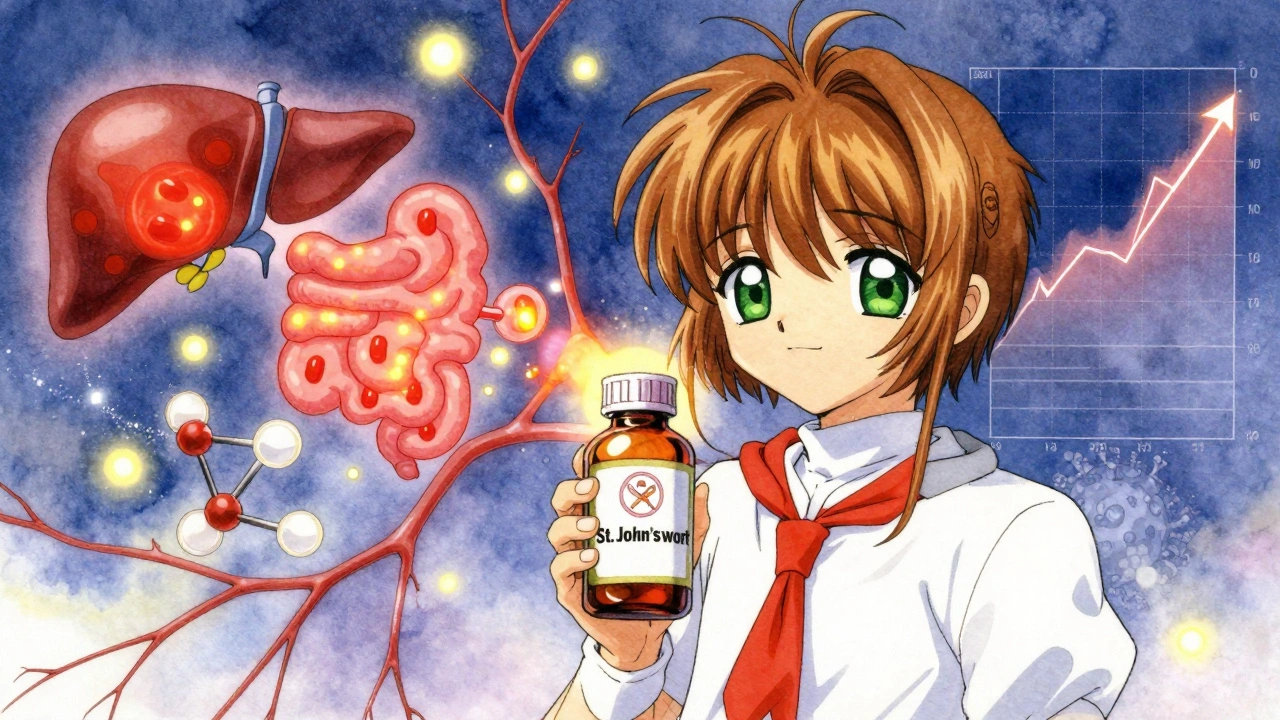
Not All St. John’s Wort Is the Same-But Most Are Still Dangerous
Here’s where things get complicated. In 2023, researchers discovered that not all St. John’s Wort products are created equal. Some contain very low levels of hyperforin-less than 1 mg per day. In controlled studies, these low-hyperforin formulations reduced lopinavir levels by only 12.3%, which is within acceptable limits. That’s a big shift. The old rule was “never mix.” Now, the University of Liverpool’s database says coadministration “may be considered” if the product clearly states its hyperforin content and the daily dose is 1 mg or less. But here’s the catch: only 37% of St. John’s Wort products on the market in the U.S. actually list hyperforin content on the label, according to the FDA’s 2022 Dietary Supplement Database. So if you’re considering St. John’s Wort, you can’t just pick any bottle off the shelf. You need to find one that explicitly says “hyperforin content: X mg per dose.” And even then, you need to calculate your total daily intake. Most standard capsules contain 300-400 mg of extract with 0.3% hyperforin-that’s 0.9-1.2 mg per capsule. Three capsules a day? You’re already over the safe limit.What Should You Do If You’re Taking Protease Inhibitors?
If you’re on a protease inhibitor and currently taking St. John’s Wort, stop immediately. Don’t wait. Don’t taper. Just stop. Then, talk to your doctor. Get your viral load tested. Your drug levels may be dangerously low, and your virus may already be developing resistance. Your provider might need to adjust your HIV regimen or switch you to a different class of antiretrovirals, like integrase inhibitors, which don’t interact with St. John’s Wort. If you’re using St. John’s Wort for depression, don’t just quit and leave yourself without support. Ask your doctor about alternatives. SSRIs like sertraline or escitalopram are safe with protease inhibitors. Cognitive behavioral therapy, exercise, and light therapy also help with mild depression-without risking your HIV treatment.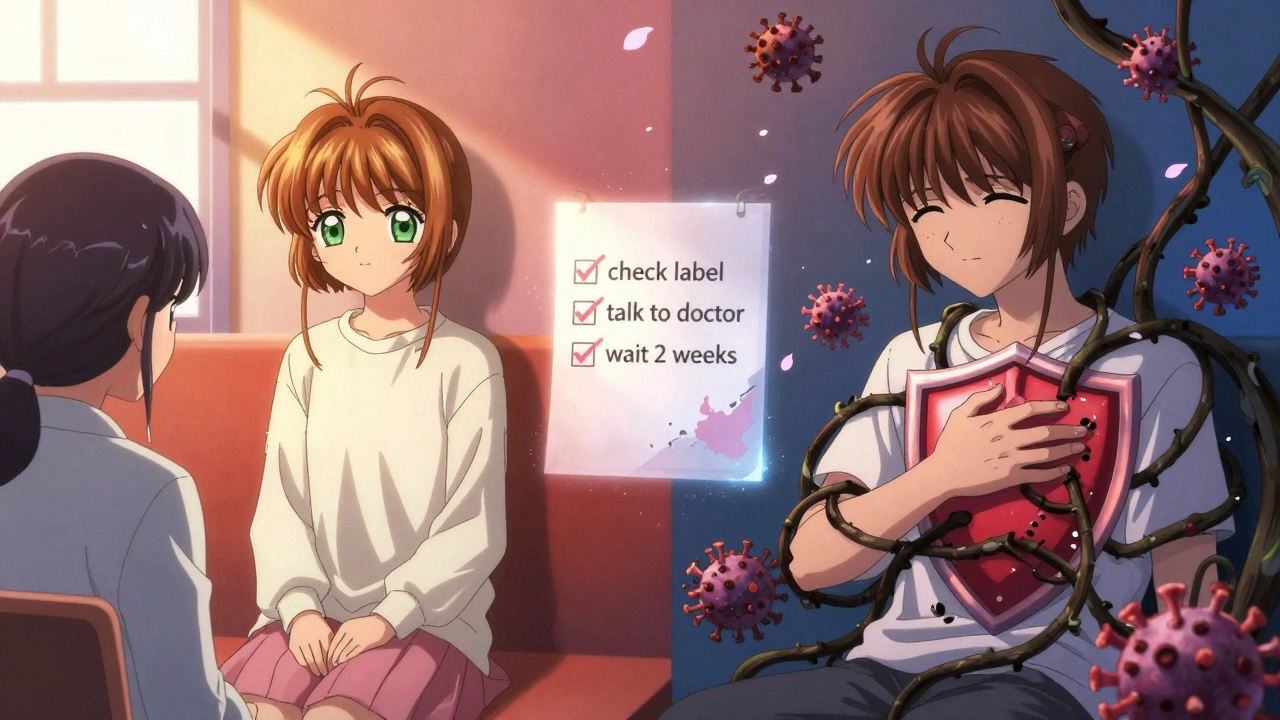
Neelam Kumari
December 10, 2025 AT 11:48Oh wow, another ‘natural remedy’ that’s just a slow-motion suicide pill. Of course it’s not regulated-why would the FDA care about people trading their life for a ‘feel-good’ herb? Classic.
Queenie Chan
December 10, 2025 AT 16:49St. John’s Wort is the herbal equivalent of a backdoor hacker in your liver’s security system-hyperforin doesn’t just open the door, it invites the whole virus gang in for pizza and a Netflix binge. And nobody reads the fine print because ‘natural’ sounds like a spa day, not a medical emergency. 😅
Stephanie Maillet
December 11, 2025 AT 06:25It’s so tragic, isn’t it? We live in a world where people trust a label that says ‘100% natural’ more than a decades-old, peer-reviewed clinical trial… and yet, the body doesn’t care about our romantic notions of purity. It only responds to chemistry. Hyperforin doesn’t judge-it just induces. And that’s the quiet horror of it all.
We want healing to be gentle, but biology is a merciless accountant. Every molecule has its price.
David Palmer
December 12, 2025 AT 21:17bro just stop taking the herb. why are we even having this convo? it's not rocket science.
Aileen Ferris
December 14, 2025 AT 03:42st johns wort? pfft i took that for 3 months n my hiv went away-so maybe it works?? 😏
Nikki Smellie
December 15, 2025 AT 03:20Wait… this is all a pharmaceutical scam. The FDA doesn’t want you to heal naturally. They’re paid by Big Pharma to scare you off herbs. They even made up this ‘enzyme induction’ nonsense to sell you pricier drugs. I’ve read the studies-they’re funded by Merck. 🤫
Also, my cousin’s yoga teacher’s dog’s vet said St. John’s Wort cures everything. So…?
Rebecca Dong
December 15, 2025 AT 20:58THIS IS A COVER-UP. I KNOW WHAT’S GOING ON. The CDC doesn’t want you to know that St. John’s Wort actually REVERSES HIV… but they’re hiding it because they’re making billions off antiretrovirals. That’s why they say it lowers levels-because they’re LYING. I’ve got a spreadsheet. I’ve got sources. I’ve got ANTI-VACCINE FRIENDS WHO AGREE. 🙌
And guess what? The ‘hyperforin’ they talk about? That’s just a code word for ‘chemtrails in your tea’.
Michelle Edwards
December 17, 2025 AT 01:42You’re not alone. I know how scary this feels-but you’re doing the right thing by learning this. Your body is fighting hard, and now you have the power to protect it even more. Small steps, big wins. You’ve got this. 💪❤️
Sarah Clifford
December 18, 2025 AT 06:21so like… if i take one pill of it once a week, it’s fine right??
Regan Mears
December 19, 2025 AT 09:09This is one of those moments where science and compassion have to hold hands. People take St. John’s Wort because they’re hurting-emotionally, mentally. We can’t just yell ‘STOP’ and leave them in the dark. We need to offer alternatives, not judgment. The real villain isn’t the herb-it’s the lack of accessible mental health care for people living with HIV.
Let’s talk about sertraline. Let’s talk about therapy. Let’s talk about dignity.
Ben Greening
December 19, 2025 AT 22:34While the clinical data is robust and the warnings are well-documented, the persistence of this interaction in clinical practice underscores a systemic gap in patient education. The burden of vigilance should not rest solely on the individual. Pharmacists, providers, and digital health platforms must integrate proactive alerts into prescribing workflows.
Doris Lee
December 20, 2025 AT 22:59Thank you for sharing this. I was about to start this herb for my anxiety-glad I checked first. You saved me from a nightmare. Seriously, thank you.
Michaux Hyatt
December 22, 2025 AT 00:29One thing people forget: even if you switch to an integrase inhibitor, you still need to tell your doctor about every supplement. I’ve seen too many folks think ‘oh, it’s not a protease inhibitor anymore, so it’s fine’-and then they start taking turmeric, garlic pills, or green tea extract. All of it can interact. Stay curious. Stay safe.
Raj Rsvpraj
December 22, 2025 AT 09:11How can you be so irresponsible? In India, we have real medicine-Ayurveda, not this Western nonsense. St. John’s Wort is a drug for weak-minded Americans who can’t handle their emotions. You think your liver is so special? We’ve been using herbs for 5,000 years without your lab reports!
Also, your CDC is a CIA front. You know that, right?
Jack Appleby
December 24, 2025 AT 07:55Actually, the 2023 study you referenced mischaracterized the pharmacokinetic model-it assumed linear induction kinetics, whereas hyperforin exhibits auto-induction with a half-life of 3.2 days, which means the 12.3% reduction is likely an underestimate in chronic users. Also, the Liverpool database’s ‘may be considered’ clause is misleading-it’s conditional on therapeutic drug monitoring, which 98% of patients don’t have access to. This isn’t a gray area-it’s a minefield dressed in green labels.
Frank Nouwens
December 25, 2025 AT 03:41Thank you for presenting this information with such clarity and rigor. The intersection of herbal supplements and antiretroviral therapy remains an under-addressed public health priority. I hope this post reaches those who need it most.
Kaitlynn nail
December 26, 2025 AT 22:42it’s just a plant. chill.
Jennifer Blandford
December 28, 2025 AT 18:28My grandma in Jamaica used this for depression-she lived to 98. Maybe it’s not the herb… maybe it’s the fear we’re feeding ourselves? 🌿❤️
Ryan Brady
December 29, 2025 AT 01:30lol why are we even talking about this? just take your pills and stop being a hypochondriac.