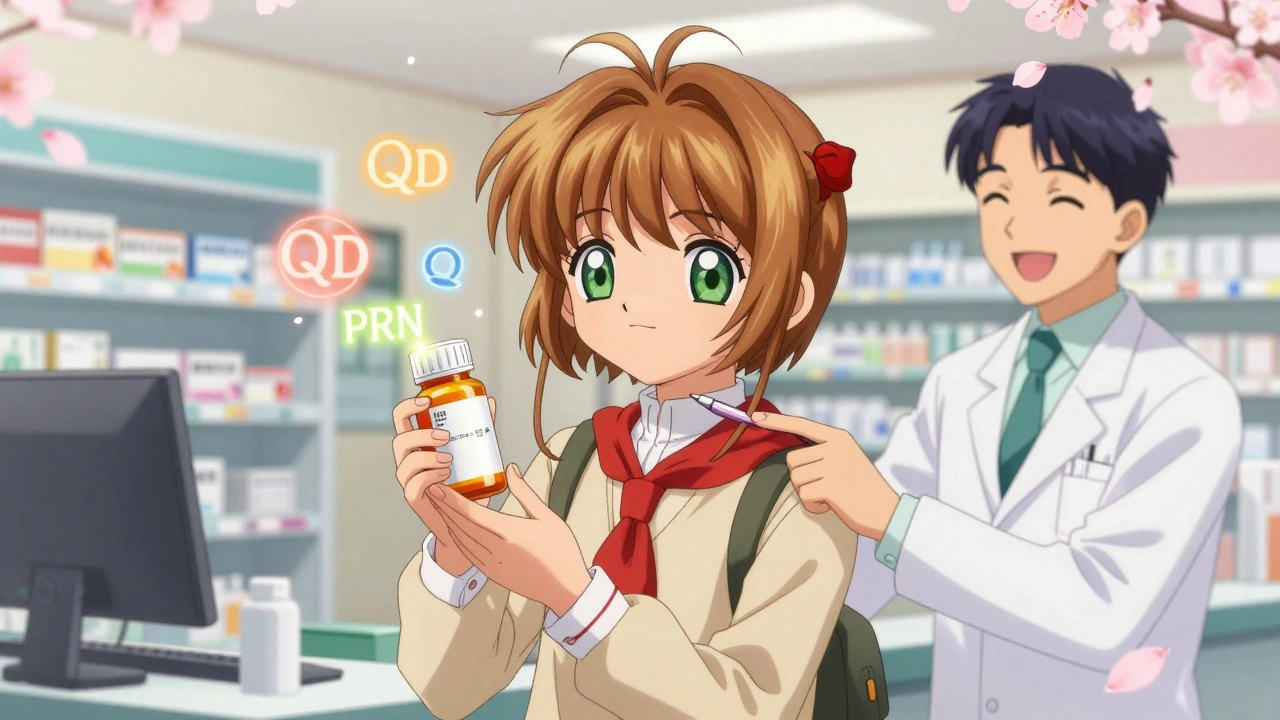
Every time you pick up a prescription, you’re holding a piece of your own safety. But most people walk out of the pharmacy without ever asking the right questions. And that’s dangerous. Prescription labels aren’t just small pieces of paper with writing on them-they’re your lifeline to taking medicine correctly. The FDA says 1.3 million medication errors happen every year in the U.S., and nearly a quarter of them come from misunderstanding the label. You don’t need to be a doctor to spot problems. You just need to know what to look for-and what to ask.
Is this really my medicine?
The first thing you should check is whether the name on the label matches what your doctor told you. That includes both the brand name and the generic name. If your doctor prescribed lipitor, but the label says atorvastatin, that’s not a mistake-it’s the same drug. But if you were told you’re getting a blood pressure pill and the label says metformin (a diabetes drug), that’s a red flag. Always confirm the drug name out loud with the pharmacist. Say it back to them. “So this is atorvastatin 20 mg, right?” Most errors happen because someone assumes the label is correct. Don’t assume. Verify.What’s the right dose and how often do I take it?
Directions like “take one by mouth daily” sound simple-but they’re often unclear. Is “daily” morning or night? Should you take it with food or on an empty stomach? Many medications interact with food, alcohol, or other drugs. For example, some antibiotics like doxycycline can’t be taken with dairy because calcium blocks absorption. Others, like statins, work better when taken at night. Ask: “Should I take this at the same time every day?” and “Is there anything I should avoid eating or drinking with this?”What does this symbol or abbreviation mean?
Prescription labels are full of shorthand. “QD” means once daily. “BID” means twice daily. “PRN” means as needed. “Sig” is short for “signa,” which is Latin for “write” or “direct.” If you see “TID” or “Q6H,” you might think they mean the same thing-but they don’t. TID is three times a day, usually spaced out. Q6H means every six hours, which could mean four times a day. A 2023 Reddit thread from pharmacists showed that 37% of patient confusion comes from these abbreviations. Don’t guess. Ask: “Can you spell this out in plain English?”When does this expire?
Expiration dates aren’t just marketing. The FDA requires medications to stay effective until that date-if stored properly. But most people don’t check. If your blood pressure pill expired six months ago, it might still look fine. But it could be losing potency. Some drugs, like insulin or certain antibiotics, become dangerous after expiration. Always note the expiration date. If it’s close, ask if you can get a newer batch. And if you’re unsure whether a pill is still good, don’t take it. Call the pharmacy.How should I store this?
Not all medicines go in the cabinet. About 15% of prescriptions need refrigeration-like insulin, some eye drops, and certain antibiotics. Others need to stay dry, away from sunlight, or not in the bathroom where humidity ruins them. A 2023 Consumer Reports survey found a patient kept a blood pressure medication at room temperature for two weeks because the storage instructions were hidden in tiny print on the back of the label. That’s not rare. Ask: “Does this need to be kept cold? Should I leave it in the box? Can I take it on a trip?” If you’re traveling, ask for a travel-sized container with clear storage notes.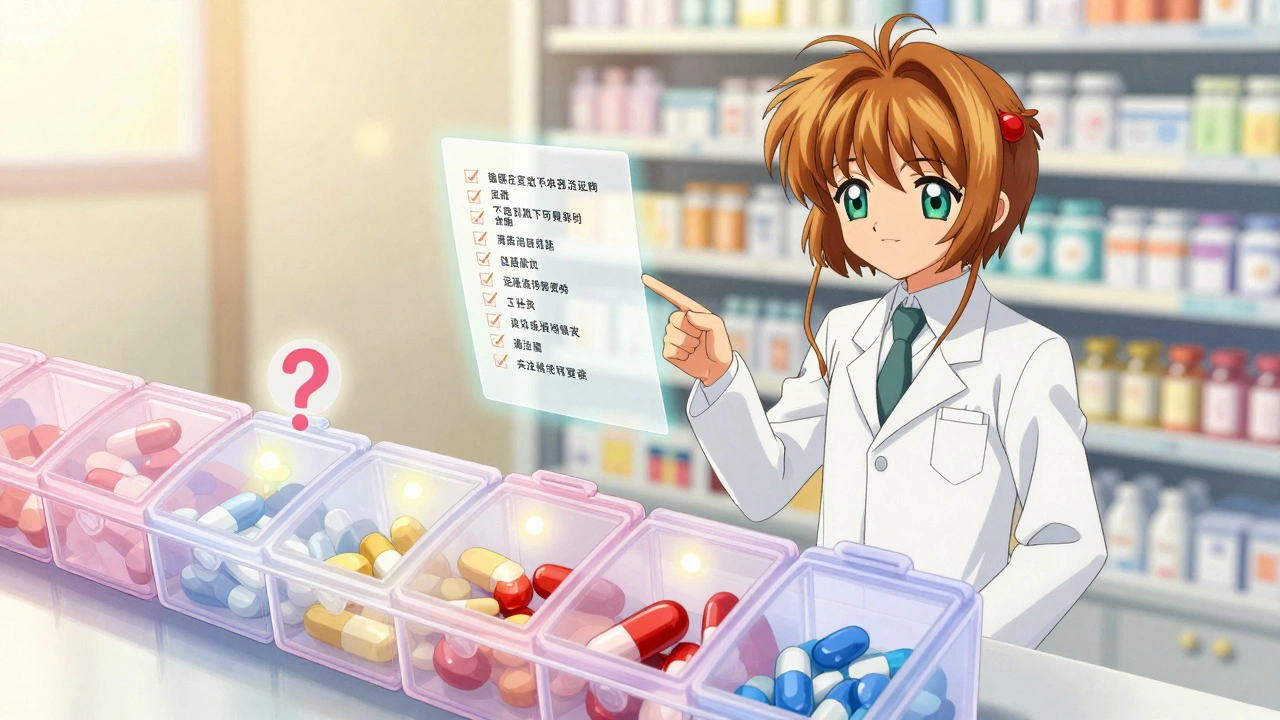
How many refills do I have left?
This seems obvious, but it’s one of the most common reasons people run out of medicine. You might think you have three refills-but the label says “Refills: 1.” That’s because your doctor changed the prescription and forgot to update the refill count. Or the pharmacy didn’t process the new order. If you’re out of pills and can’t refill, you might skip doses. That’s risky, especially for heart, thyroid, or mental health meds. Always confirm the number of refills and when you’ll need to call for a new one. Ask: “Do I need to schedule a follow-up with my doctor before I can refill?”Is there a Medication Guide I should read?
For high-risk drugs-like opioids, blood thinners, or isotretinoin (for acne)-the FDA requires pharmacies to give you a separate, detailed guide. These aren’t optional. They explain serious side effects, what to watch for, and when to call your doctor. You might get one and toss it without reading. Don’t. Ask: “Do I need to take this home and read it?” Then read it. If you don’t understand it, ask the pharmacist to explain it. These guides saved lives. One patient missed the warning about liver damage from isotretinoin and didn’t get blood tests. She ended up in the hospital. That guide was in her bag the whole time.Can you show me what the pill looks like?
Medications look different depending on the manufacturer. Your pill might be white and oval one month, then blue and round the next. That’s normal-different companies make generics. But if you’ve never seen this pill before and it’s a completely different shape or color, ask: “Is this the same medicine?” A 2022 study found that 22% of patients didn’t recognize their own medication because the appearance changed. Pharmacists can show you pictures or even hold up a sample bottle. It’s part of their job.What are the most common side effects?
The label lists side effects-but it’s written in medical jargon. “Nausea, dizziness, headache” sounds mild. But what if you’re on a blood thinner and you start bruising easily? Or if you’re on an antidepressant and feel worse instead of better? Ask: “What side effects should I call you about right away?” and “What’s normal vs. dangerous?” The American Association of Colleges of Pharmacy says patients who ask this reduce adverse events by 47%. Don’t wait for a problem to get serious. Know what to watch for.Can I get this in large print or another language?
If you have trouble reading small text, or if English isn’t your first language, you have rights. By law, pharmacies receiving federal funds must provide translation services. You can ask for a large-print label, a translated version, or even a video explanation. Some pharmacies now offer QR codes that link to short videos showing how to take the medicine. Ask: “Do you have a version I can read more easily?” or “Can someone explain this in [your language]?” Independent pharmacies are more likely to offer this than big chains. Don’t be shy. It’s not a burden-it’s your right.
What if I forget a dose?
This question gets asked all the time-and the answer changes depending on the drug. For antibiotics, missing a dose can lead to resistance. For blood pressure meds, skipping one might not cause immediate harm-but it adds up. For insulin, it’s life-threatening. Ask: “What should I do if I miss a dose?” Don’t rely on memory or guesswork. Write it down. Or ask the pharmacist to text you a reminder. Some pharmacies offer free text alerts for refills and dosing reminders.Can I get a pill organizer or dosing aid?
If you take multiple pills a day, a pill organizer can prevent mix-ups. Many pharmacies give them out for free-or sell them cheaply. Some even pre-fill them for you. Ask: “Do you have a weekly or monthly organizer I can use?” This is especially helpful for older adults or people with memory issues. A 2023 study showed that patients using pill organizers had 31% fewer dosing errors.Can you double-check this with my doctor?
If something feels off-if the dose seems too high, the drug doesn’t match your condition, or you’ve never taken anything like this before-ask the pharmacist to call your doctor. Pharmacists are trained to catch errors. They can spot a drug interaction you didn’t know about, or a dosage that’s unsafe for your age or kidney function. You’re not being difficult. You’re being smart. In fact, the Institute for Safe Medication Practices says this is the #1 patient safety tip. Don’t wait until you feel sick. Ask now.Why does this cost so much?
It’s not just about safety-it’s about affordability. If you can’t afford your medicine, you might skip doses or split pills. That’s dangerous. Ask: “Is there a generic version?” or “Can I get a 90-day supply to save money?” Some pharmacies offer discount programs. Others can connect you with patient assistance programs from drug makers. Medicare Part D patients often get confused about coverage gaps. If your pill costs $200 and your insurance says you’re in the “donut hole,” ask: “What’s my out-of-pocket cost now?” Don’t assume you have to pay full price.What’s next?
You’ve picked up your prescription. But your job isn’t done. Keep the label. Write down any questions you had. Talk to your doctor at your next visit. If you’re taking multiple meds, ask for a medication review. Many clinics offer free sessions where a pharmacist looks at everything you’re taking to catch interactions. And if you ever feel unsure-even weeks later-call the pharmacy. No question is too small. Your life depends on getting this right.What should I do if I notice a mistake on my prescription label?
Don’t take the medication. Call the pharmacy immediately. Even small errors-like the wrong dose or wrong name-can be dangerous. Pharmacies are required to fix mistakes at no cost. If they refuse or delay, ask to speak to the pharmacist-in-charge. You can also report the error to your state board of pharmacy. Keep a record of what happened, including dates and names.
Can I get my prescription label in a different format?
Yes. By law, pharmacies must provide labels in large print, Braille, audio format, or another language if you ask. Many also offer QR codes that link to video instructions. If you have vision problems or speak another language, request the format you need when you drop off your prescription. It’s not an extra service-it’s a right under the Affordable Care Act.
Why do different pharmacies have different labels?
Each pharmacy uses its own software and printing system, so layout and wording can vary. Some include extra warnings, others use different abbreviations. But the nine required elements (patient name, drug name, dosage, etc.) must be present everywhere. If you switch pharmacies, compare labels. If something looks missing or confusing, ask for clarification. Consistency isn’t perfect-but your understanding should be.
What if I can’t read the label at all?
Ask the pharmacist to read it to you aloud. Then repeat the instructions back to them to confirm. Many pharmacies have staff trained to help patients with low health literacy. You can also bring a family member or friend to help. If you’re often confused, ask about the FDA’s free Medication Check-Up program-it’s available at over 8,400 pharmacies nationwide.
How do I know if a new pill is safe to take with my other meds?
Always tell your pharmacist every medication you take-including vitamins, supplements, and over-the-counter drugs. They run checks for interactions. If you’re unsure, ask: “Does this interact with [name of another drug]?” Even common things like grapefruit juice or St. John’s wort can interfere with prescription meds. Don’t assume it’s safe just because it’s natural.
Mark Curry
December 4, 2025 AT 13:35Just took my statin this morning. Didn't even think to ask about food interactions until now. Guess I'll call the pharmacy later.
Thanks for the reminder. Simple stuff, but it matters.
Ali Bradshaw
December 6, 2025 AT 10:03Been working in community pharmacy for 12 years. The most common mistake? Patients don’t ask because they’re afraid they’ll sound stupid.
They’re not. We want you to ask. Seriously. We’ve seen too many people end up in ERs over a single misunderstood ‘QD’.
You’re not bothering us. You’re saving your own life.
Mellissa Landrum
December 6, 2025 AT 10:19They’re hiding stuff on those labels on purpose. Did you know the FDA lets them use tiny font so old people can’t read it? It’s a corporate ploy to make you take the wrong dose and come back for more.
My aunt died because she took her blood pressure med wrong. The label said ‘take at night’ but the print was so small she thought it said ‘take when needed’.
They don’t care. They just want your money.
Jennifer Patrician
December 7, 2025 AT 16:57They’re not just hiding font size-they’re using coded abbreviations to trick you. ‘PRN’? That’s not ‘as needed.’ That’s ‘we’re counting on you to forget so we can refill.’
And ‘Q6H’? That’s a trap. They want you to take it four times a day so you think you’re getting more medicine than you are. It’s all about profit.
Don’t trust any label. Ever.
Michael Dioso
December 8, 2025 AT 02:09Wow. So many questions. But honestly? You’re overcomplicating it. If you don’t know what your med is for, you shouldn’t be taking it.
Just follow the doctor’s instructions. If something feels off, go back to them-not the pharmacist.
Pharmacists aren’t doctors. They just hand out pills. Don’t turn them into your personal medical advisor.
Philip Kristy Wijaya
December 9, 2025 AT 08:10One must acknowledge the structural epistemological dissonance inherent in patient-pharmacist communication paradigms wherein linguistic simplification is weaponized as a mechanism of institutional control.
Consider the semiotic opacity of QD BID TID as ideological constructs masking pharmacoeconomic imperatives.
The patient’s epistemic agency is systematically eroded by typographic obfuscation and the commodification of health literacy.
One must interrogate the hegemony of the prescription label as a site of biopower.
And yet we persist in asking questions as if the system were designed for us.
It is not.
It is designed for compliance.
For profit.
For silence.
And so we must scream louder.
Not just ask.
Scream.
Manish Shankar
December 11, 2025 AT 01:38As a pharmacist in India, I can confirm that patients rarely ask questions. Many assume the label is always correct. In rural areas, people take pills based on color or shape alone.
It is heartbreaking. We do our best to explain, but language barriers and low literacy make it difficult.
Thank you for writing this. It is a vital reminder that knowledge is power-and that asking is not weakness, but courage.
Laura Saye
December 12, 2025 AT 22:43The psychosocial burden of medication non-adherence is often underestimated. Patients experiencing polypharmacy exhibit heightened anxiety regarding temporal dosing protocols and pharmacodynamic interactions.
Furthermore, the cognitive load associated with interpreting cryptic pharmaceutical nomenclature exacerbates executive dysfunction in aging populations.
Pharmacists, as frontline healthcare providers, serve as critical nodes in mitigating iatrogenic risk through patient-centered clarification.
It is not merely about compliance-it is about dignity.
Every question asked is an act of reclaiming autonomy.
Krishan Patel
December 13, 2025 AT 00:01You people are so naive. You think the government cares? The FDA is owned by Big Pharma. The labels are designed to confuse you. The ‘Medication Guide’? A legal shield. They don’t want you to understand-they want you to sign the waiver.
And those QR codes? They track you. Your phone logs every scan. Your data gets sold. You think you’re getting help? You’re being monitored.
Don’t trust the label. Don’t trust the pharmacist. Don’t trust the doctor.
Trust nothing.
luke newton
December 14, 2025 AT 22:02Someone actually took the time to write all this? Wow. You must have a lot of free time.
Meanwhile, I’m out here taking my pills without reading the tiny print, and I’m still alive.
Maybe stop worrying so much and just live.
Also, if you’re worried about side effects, maybe you shouldn’t be on meds in the first place.
Just saying.