Every winter, parents scramble to find relief for their little ones with runny noses, coughs, and fever. It’s natural to want to help them feel better fast. But when it comes to over-the-counter (OTC) cough and cold medicines for kids under 6, the safest choice is often no medicine at all.
The U.S. Food and Drug Administration (FDA) has been clear since 2007: OTC cough and cold products are not safe for children under 2, and their use in kids under 6 is strongly discouraged. Why? Because these medications don’t work well - and they can cause serious harm.
Why OTC Cough and Cold Medicines Are Risky for Young Kids
These products often contain a mix of active ingredients: antihistamines like chlorpheniramine, decongestants like pseudoephedrine, cough suppressants like dextromethorphan, and expectorants like guaifenesin. Each one is designed for adult bodies. A child’s liver and kidneys are still developing. By age 2, they only have about 23% of the enzyme activity needed to safely break down dextromethorphan. That means even a small dose can build up in their system and cause dangerous side effects.
Between 2004 and 2005, over 7,000 children under 11 were treated in U.S. emergency rooms for problems linked to these medicines. The highest number? Kids aged 2 to 3. Side effects include rapid heartbeat, trouble breathing, seizures, hallucinations, and even death. A 2015 study found that 67% of dosing errors in kids under 6 happened because parents used kitchen spoons instead of the measuring cup or syringe that came with the medicine. One teaspoon isn’t always a teaspoon - and a little extra can be deadly.
What the Experts Say
The American Academy of Pediatrics (AAP), the CDC, the Mayo Clinic, and the American Academy of Family Physicians all agree: don’t use OTC cough and cold medicines in children under 6. The AAP has held this position since 2008. The FDA’s own Pediatric Advisory Committee concluded in 2007 that there’s no proof these drugs work for young kids - but plenty of proof they can hurt them.
Even if a product says “for children,” it doesn’t mean it’s safe. Many products still lack proper warning labels. A 2021 FDA inspection found that 22% of children’s cold medicines didn’t clearly state “do not use under 4.” And some parents, desperate for relief, turn to adult versions. That’s a big mistake. Adult medicines contain higher doses. A single capful can overdose a toddler.
What You Can Do Instead
The good news? You don’t need medicine to help your child feel better. Here are proven, safe methods based on guidelines from the AAP, CDC, and leading children’s hospitals:
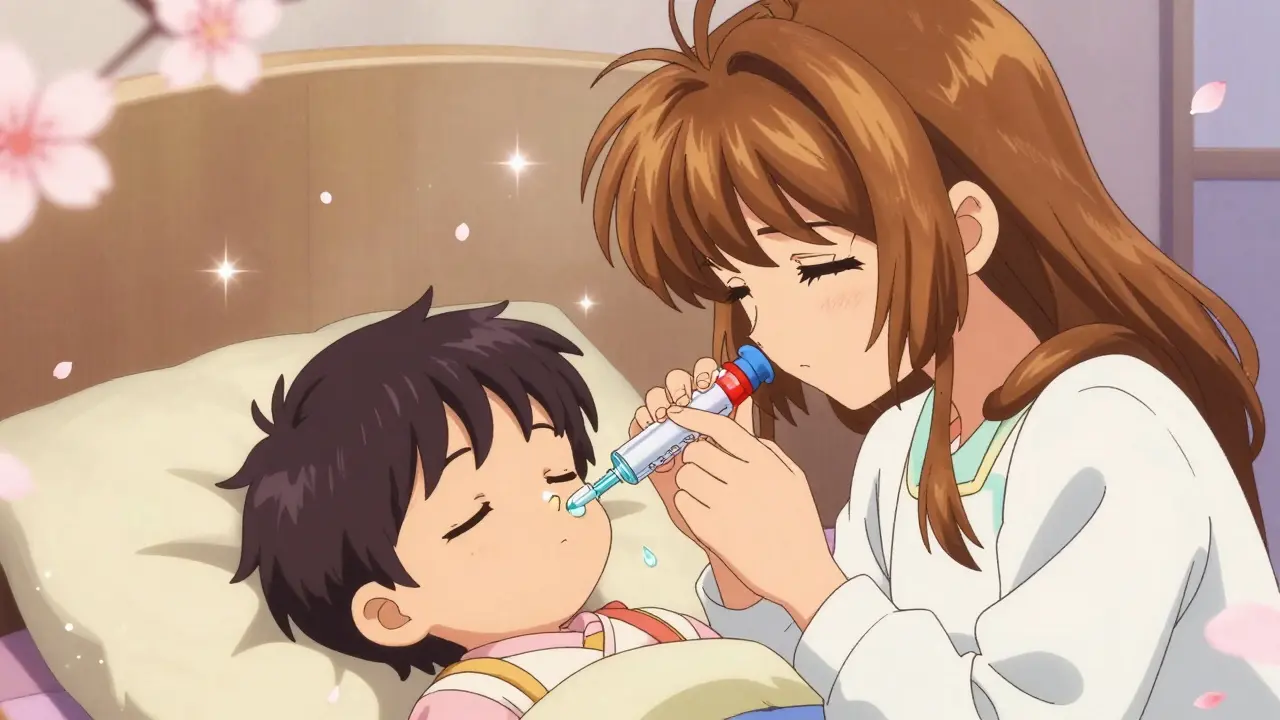
- For babies under 6 months: Use saline nasal drops and a bulb syringe to gently clear nasal congestion. Run a cool-mist humidifier in the room. Keep the baby hydrated with breast milk or formula. Avoid warm-mist humidifiers - they can worsen swelling in tiny airways.
- For infants 6 months to 2 years: If your child has a fever or pain, acetaminophen (Tylenol) is safe at 10-15 mg per kilogram of body weight every 4-6 hours. Never give more than 5 doses in 24 hours. Avoid ibuprofen (Advil, Motrin) under 6 months. Always check the weight-based dosing chart on the bottle.
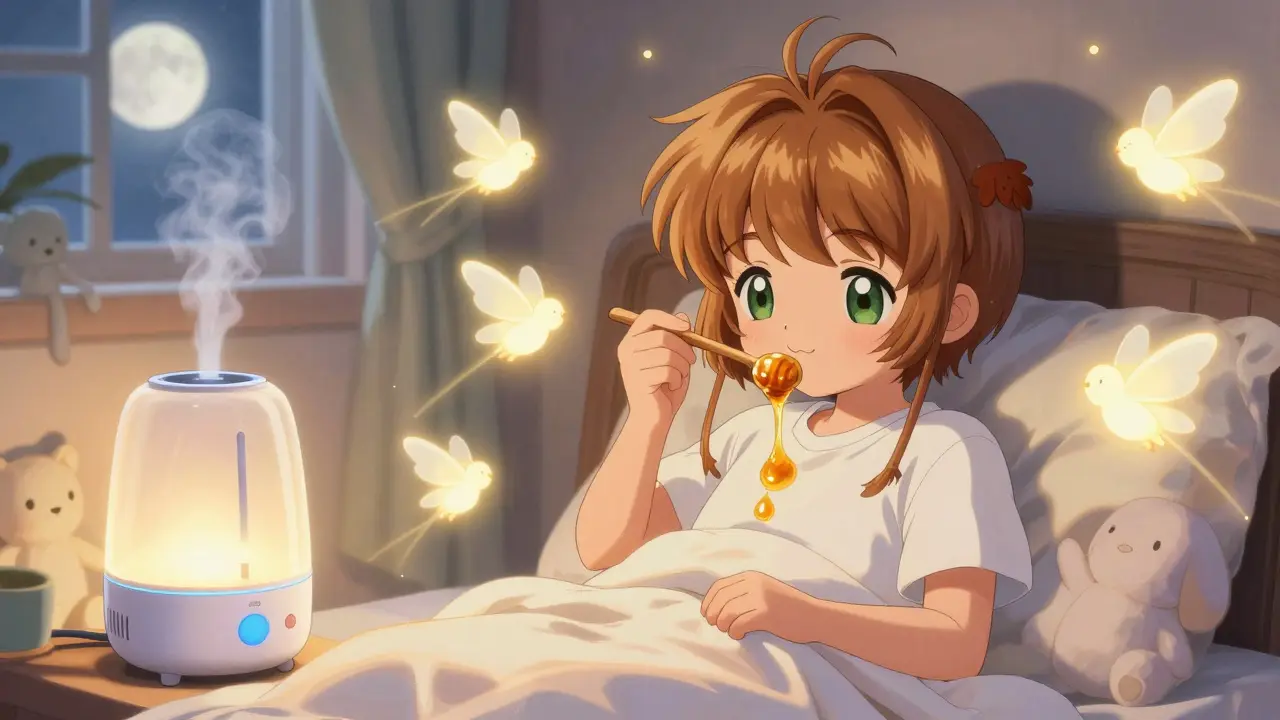
- For children 1 year and older: Honey is one of the most effective cough remedies available. Give ½ to 1 teaspoon at bedtime. Studies show it works better than some OTC cough syrups. It thins mucus and soothes the throat. Never give honey to babies under 1 year - it can cause infant botulism.
- For all ages: Keep the air moist, offer fluids often, and let them rest. Elevate the head of the crib slightly to help with breathing. A warm bath before bed can ease congestion and calm the child.
What to Avoid
Some remedies sound helpful but are dangerous for young kids:
- Don’t combine cold medicines. Many products contain the same ingredients. Giving a fever reducer and a cold medicine together can lead to accidental acetaminophen overdose - the leading cause of liver failure in children.
- Don’t use nasal sprays like oxymetazoline. These can cause rebound congestion and high blood pressure in kids under 6.
- Don’t use home remedies like menthol rubs or vapor rubs. Products like Vicks VapoRub can irritate the airways of young children and trigger breathing problems.
- Don’t rely on “natural” or “herbal” supplements. These aren’t regulated. Their safety and dosing for children are unknown.
When to Call the Doctor
Most coughs and colds are viral and will clear up in 7-10 days. But watch for signs that something more serious is happening:
- Fever over 102°F (39°C) lasting more than 2 days
- Difficulty breathing or fast breathing
- Cough lasting more than 2 weeks
- Refusing to drink or signs of dehydration (dry mouth, no tears, fewer wet diapers)
- Lethargy, irritability, or not responding normally
- Ear pain or pulling at ears
If you see any of these, call your pediatrician. Don’t wait for the cough to get worse. Early care can prevent complications like pneumonia or ear infections.
Why This Problem Still Exists
Despite clear guidelines, a 2022 survey found that 42% of parents of children under 6 still give OTC cold medicines. Why? Many believe the medicine will help their child recover faster. Others say they’ve used it before with no problem. But past use doesn’t mean it’s safe - especially as children grow and their bodies change.
Marketing plays a role too. Bright packaging, cartoon characters, and phrases like “fast relief” make these products look harmless. But the real danger is hidden in the fine print. The FDA and AAP have been clear: these drugs don’t shorten illness. They only mask symptoms - and sometimes make things worse.
The Bottom Line
For kids under 6, the safest cold remedy is time, fluids, rest, and comfort. Honey for coughs (if over 1 year), saline drops for stuffy noses, and acetaminophen for fever or pain are your best tools. Leave the OTC cough and cold medicines on the shelf.
Every year, hundreds of children end up in emergency rooms because of these products. You don’t need to take that risk. Your child’s body is still learning how to heal itself. Sometimes, the best thing you can do is let it.
Jesse Naidoo
February 5, 2026 AT 10:16I gave my 3-year-old some children's cough syrup last winter and he slept through the night for the first time in weeks. Don't tell me it doesn't work. I don't care what the FDA says - my kid felt better.
Now I'm scared to even look at the medicine cabinet.
Sherman Lee
February 7, 2026 AT 10:05They’ve been hiding the truth since the 80s. Big Pharma doesn’t want you to know that honey and steam work better - and cost pennies. They make billions off these toxic little bottles. The FDA? Controlled by lobbyists. Read the fine print on the label - it’s all in the ‘may cause’ section. 😒
Lorena Druetta
February 7, 2026 AT 10:31As a pediatric nurse of 22 years, I’ve seen too many children brought in with overdoses from well-meaning parents. I understand the desperation. But please - trust the science. Saline drops, humidifiers, and rest are not ‘old-fashioned.’ They’re evidence-based, gentle, and profoundly effective. Your child’s body is brilliant. Let it heal.
With love and care,
Lorena
Zachary French
February 8, 2026 AT 16:52Y’ALL are gonna lose your minds but I’m tellin’ you - I gave my 4-year-old a whole capful of adult Mucinex ‘cause the kids’ stuff didn’t work. He was a zombie for 8 hours. I thought I’d killed him. Turned out he just slept like a log. Now I use honey. And I cry every time I see those colorful bottles on the shelf. 🤕💔
Also, why is Vicks banned? My grandma used it on my chest since I was born. I’m fine. Coincidence? I think not.
Coy Huffman
February 9, 2026 AT 23:16It’s funny how we treat kids like tiny adults sometimes. We give them adult doses because ‘it’s just a little more.’ But their bodies aren’t scaled-down versions - they’re different operating systems. You wouldn’t put diesel in a hybrid car. Why do it with medicine?
Also, honey really works. I tested it on my niece. Cough stopped by morning. No side effects. Just quiet breathing. 🌿
Nathan King
February 11, 2026 AT 09:38While the empirical evidence presented herein is both robust and compelling, it remains lamentably underappreciated by the lay public. The persistent reliance on pharmacological interventions for self-limiting viral illnesses reflects a broader epistemological failure in public health literacy. One must question the societal commodification of parental anxiety.
- N. King, MD (Emeritus)
Harriot Rockey
February 13, 2026 AT 02:38My son had a cough for 10 days last winter. We did everything the post said - honey at bedtime, humidifier, warm baths, saline drops. He didn’t need medicine. He just needed cuddles and patience. 🫂
And guess what? He’s still alive. And now he calls honey ‘magic syrup.’ I’m not mad about it. 😊
rahulkumar maurya
February 14, 2026 AT 18:24Western medicine is a scam. In India, we use turmeric milk, ginger steam, and black pepper. No chemicals. No side effects. Your children are being poisoned by corporate marketing. The FDA is not your friend. They are paid by Pfizer. Wake up.
Also, honey is not enough. You need Ayurveda.
Demetria Morris
February 15, 2026 AT 08:59It’s not just about safety - it’s about responsibility. Giving your child medicine because you’re tired and want quiet? That’s not parenting. That’s convenience. And now you’re surprised when the ER calls? You knew better.
I’m not judging. I’m just saying - you could’ve chosen differently.
pradnya paramita
February 15, 2026 AT 17:38Pharmacokinetic parameters in pediatric populations are non-linear and age-dependent. CYP3A4 and CYP2D6 enzyme maturation reaches 30-40% of adult capacity by age 2, rendering CYP-mediated metabolism of dextromethorphan inefficient. Consequently, plasma concentrations exceed therapeutic thresholds at standard pediatric doses, increasing risk of QT prolongation and serotonin syndrome. Saline irrigation and hydration remain first-line due to absence of metabolic burden. Honey’s mucolytic and antitussive effects are mediated via TRPV1 receptor modulation - supported by Cochrane meta-analysis (2020).
- Dr. P. Paramita, Pediatric Pharmacologist
Jamillah Rodriguez
February 17, 2026 AT 00:05Ugh. I read this whole thing. I just wanted to know if I can give my kid Robitussin. The answer is no. Great. Now I feel guilty. 😭
Also, why does everyone sound like a doctor? Can we just… not?
Susheel Sharma
February 17, 2026 AT 21:47Let’s be real - this post is a propaganda piece disguised as medical advice. The FDA banned these drugs because they couldn’t patent them. Honey? It’s not regulated. Saline drops? No profit margin. But a $12 bottle of ‘Pediatric Cold & Cough’? That’s a goldmine. Wake up. The system is rigged. 🤡
Also, I gave my kid a teaspoon of NyQuil once. He slept. No harm. Coincidence? I think not.