
Statin Sleep Risk Assessment Tool
Simvastatin
Lipophilic (Fat-soluble)
High Sleep RiskLovastatin
Lipophilic (Fat-soluble)
Moderate-High RiskAtorvastatin
Moderately Lipophilic
Low-Moderate RiskPravastatin
Hydrophilic (Water-soluble)
Minimal RiskRosuvastatin
Hydrophilic (Water-soluble)
Mixed DataRecommended Action Plan
Key Mechanism
Imagine this: you start taking a new medication to protect your heart, only to find yourself staring at the ceiling at 3 AM, haunted by strangely intense dreams. You aren't alone. For years, patients have whispered about a mysterious link between statins, cholesterol-lowering drugs prescribed to millions worldwide for cardiovascular risk reduction and poor sleep. But is it the drug itself, or something else entirely?
The answer isn't as simple as "yes" or "no." The relationship between statin therapy and sleep quality is one of the most debated topics in modern cardiology. While some large-scale studies suggest these medications are harmless to your slumber, others point to specific types of statins that might disrupt your rest. If you're experiencing insomnia or vivid dreams after starting a statin, understanding the science behind these reports can help you take control of your health without compromising your heart safety.
The Science Behind Statins and Sleep Architecture
To understand why statins might affect your sleep, we first need to look at what they do inside your body. Statins work by blocking an enzyme called HMG-CoA reductase, which plays a key role in producing cholesterol in the liver. However, this same pathway also produces coenzyme Q10 (CoQ10), a nutrient essential for energy production in cells, including those in your brain and muscles.
Some researchers hypothesize that lower levels of CoQ10 could impact sleep regulation. Additionally, there's a theory involving melatonin, the hormone that controls your sleep-wake cycle. Since the biochemical pathways for cholesterol and melatonin share common precursors, interfering with one might theoretically disrupt the other. While this mechanism sounds plausible, clinical evidence remains mixed. A 2015 meta-analysis by Broncel et al., published in the Archives of Medical Science, reviewed five randomized controlled trials and found no statistically significant effect on total sleep duration or efficiency. This suggests that for many people, statins do not directly alter the fundamental architecture of sleep.
However, "no significant overall effect" doesn't mean "no effect for everyone." Individual responses vary widely. Some patients report feeling restless, while others sleep soundly. This variability is crucial because it means your experience might differ from your neighbor's, even if you're on the exact same dosage.
Lipophilic vs. Hydrophilic Statins: Does Type Matter?
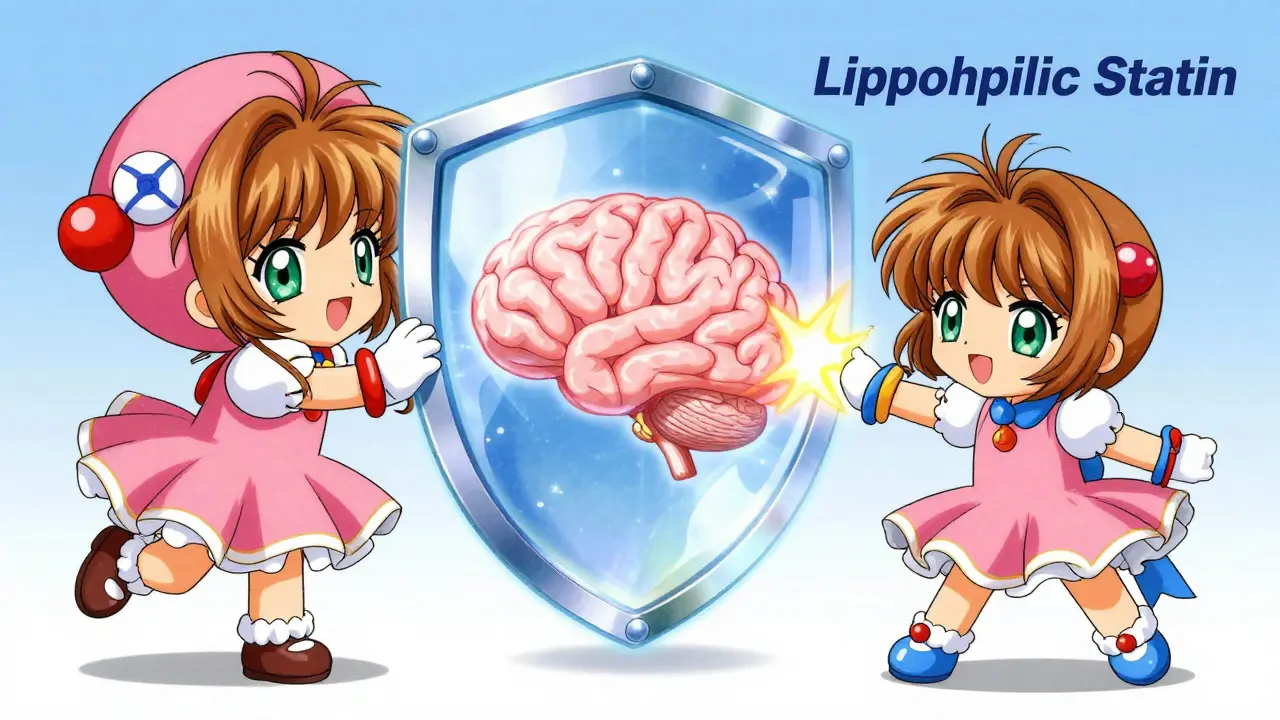
If statins do cause sleep issues, not all of them are created equal. The key difference lies in their chemical property known as lipophilicity-how well a substance dissolves in fats or oils. This property determines how easily a drug can cross the blood-brain barrier, the protective shield surrounding your brain.
| Statin Name | Type | Blood-Brain Barrier Penetration | Reported Sleep Risk |
|---|---|---|---|
| Simvastatin | Lipophilic | High | Higher association with sleep disturbances |
| Lovastatin | Lipophilic | High | Moderate to high association |
| Atorvastatin | Moderately Lipophilic | Moderate | Low to no significant association in large trials |
| Pravastatin | Hydrophilic | Low | Minimal association; similar to placebo |
| Rosuvastatin | Hydrophilic | Low | Mixed data; some reports of disturbance |
Dr. Beatrice Golomb’s 2007 study published in Circulation highlighted this distinction clearly. She found that patients taking simvastatin, a highly lipophilic statin, reported significantly worse sleep quality compared to those taking pravastatin, a hydrophilic statin that barely crosses into the brain. Simvastatin users experienced more trouble falling asleep and staying asleep. In contrast, pravastatin users showed no significant difference from the placebo group.
This "lipophilicity hypothesis" suggests that if you are prone to sleep disturbances, switching from a fat-soluble statin like simvastatin to a water-soluble one like pravastatin might resolve the issue. However, it’s not a universal rule. Some large databases, such as the FDA Adverse Event Reporting System (FAERS), show that rosuvastatin, despite being hydrophilic, still has some reported associations with sleep issues, though less than simvastatin.
The Nocebo Effect: Is Your Brain Playing Tricks?
Here’s where things get interesting. Professor Colin Baigent from the University of Oxford, who led massive reviews involving over 100,000 patients, argues that statins themselves rarely cause insomnia. Instead, he points to the "nocebo effect." This is the opposite of the placebo effect. If you believe a drug will cause side effects, your brain may actually create those symptoms.
In a 2018 Lancet study involving 10,000 patients, those taking atorvastatin actually reported *fewer* sleep disturbances than those taking a sugar pill (placebo). The statin group had a 3.2% rate of sleep issues, while the placebo group had 4.1%. This contradicts the idea that the drug chemically causes insomnia. It suggests that anxiety about side effects, or pre-existing conditions, might be the real culprits.
Consider this: if you read online forums filled with horror stories about statins causing vivid dreams before you even take your first pill, you might become hyper-aware of every night you wake up. This heightened awareness can turn normal sleep cycles into perceived insomnia. Recognizing the power of expectation is a critical step in managing your mental approach to medication.
Vivid Dreams and Muscle Symptoms: The Hidden Link
You mentioned vivid dreams specifically. Why would a cholesterol drug make your dreams so intense? Recent research offers a compelling clue: muscle pain. Many people experience Statin-Associated Muscle Symptoms (SAMS), which include aches, cramps, and weakness. These symptoms often worsen at night when you lie down and try to relax.
Dr. L Graves’ 2024 preliminary data presented at the Sleep conference revealed a strong connection. Patients with SAMS reported significantly poorer sleep quality. When they stopped taking the statin, their sleep improved dramatically. Their subjective pain scores dropped, and they woke up less frequently during the night. The vivid dreams might not be a direct neurological side effect of the statin crossing the brain barrier. Instead, they could be a result of micro-arousals caused by subtle muscle discomfort or inflammation that you don't fully feel while awake but disrupts your deep sleep stages.
This explains why some patients report "crazy dreams" or feeling unrested. It’s not necessarily the dream content itself that’s abnormal, but the fragmentation of sleep that allows you to remember fragments of REM sleep more clearly. If you have mild muscle stiffness alongside sleep issues, this link becomes even more probable.

What Should You Do If Statins Are Keeping You Awake?
If you suspect your statin is ruining your sleep, don’t just stop taking it. Cholesterol management is vital for preventing heart attacks and strokes. Instead, follow these practical steps:
- Track Your Sleep: Use a simple journal or app to record your sleep quality, dream intensity, and any muscle pain for two weeks. Note the time you take your medication.
- Check the Timing: Some doctors recommend taking short-acting statins like simvastatin or lovastatin in the morning instead of at night. Since cholesterol synthesis peaks at night, this timing works best for efficacy, but if it disrupts your sleep, moving it to the morning might help reduce nighttime brain exposure for some individuals. Always consult your doctor before changing timing.
- Consider a Switch: If you are on a lipophilic statin (simvastatin, lovastatin, atorvastatin) and struggling with sleep, ask your doctor about switching to a hydrophilic alternative like pravastatin or possibly rosuvastatin. Pravastatin has the strongest evidence for minimal sleep impact.
- Evaluate CoQ10 Supplementation: While evidence is mixed, some patients find relief from muscle-related sleep disruptions by supplementing with CoQ10. Discuss this with your healthcare provider to ensure it doesn't interact with other meds.
- Ruling Out Other Causes: Ensure your sleep issues aren't due to sleep apnea, stress, or caffeine intake. Statins are an easy scapegoat, but lifestyle factors often play a larger role.
Remember, the goal is to find a balance. The cardiovascular benefits of statins-reducing major vascular events by 22% per 1.0 mmol/L LDL reduction-are well-proven. Minor sleep adjustments are usually manageable compared to the risk of a heart attack.
Expert Consensus and Future Directions
The medical community remains divided but cautious. The European Atherosclerosis Society acknowledges inconsistent evidence and recommends individualized assessment. Meanwhile, the FDA continues to monitor reports but hasn't changed labeling since adding "sleep problems" as a potential side effect in 2012.
Future research is focusing on genetic factors. Some people metabolize statins differently due to their DNA makeup, which might explain why one person sleeps fine while another suffers. Genetic testing could eventually help predict who is at risk for sleep disturbances before they start treatment. Until then, open communication with your doctor is your best tool.
Do all statins cause insomnia?
No, not all statins cause insomnia. Evidence suggests that lipophilic statins like simvastatin and lovastatin are more likely to be associated with sleep disturbances than hydrophilic statins like pravastatin. Large-scale studies have shown that for many patients, statins do not significantly affect sleep quality compared to a placebo.
Why do statins cause vivid dreams?
The exact reason is unclear, but recent research links vivid dreams to Statin-Associated Muscle Symptoms (SAMS). Mild muscle pain or discomfort at night can cause micro-arousals, disrupting deep sleep and making you more aware of your dreams. It may also be related to changes in CoQ10 levels or the nocebo effect, where anxiety about side effects heightens awareness of sleep patterns.
Which statin is least likely to affect sleep?
Pravastatin is generally considered the least likely to affect sleep because it is hydrophilic (water-soluble) and does not easily cross the blood-brain barrier. Studies have shown that pravastatin users report sleep quality similar to those taking a placebo. Rosuvastatin is another hydrophilic option, though data on its sleep impact is slightly more mixed.
Should I stop taking my statin if I can't sleep?
You should never stop taking prescribed medication without consulting your doctor. Stopping abruptly can increase your risk of heart disease or stroke. Instead, talk to your healthcare provider about your symptoms. They may adjust your dosage, switch you to a different type of statin, or investigate other causes of insomnia.
Can taking statins in the morning help with sleep?
For short-acting statins like simvastatin, taking them in the evening is typically recommended for maximum effectiveness. However, if you experience sleep disturbances, some doctors may suggest trying morning administration to see if it reduces nighttime brain exposure. Long-acting statins like atorvastatin or rosuvastatin can be taken at any time of day, so switching to morning doses might help if you suspect timing is an issue.
Sumit gupta
June 25, 2026 AT 02:21hey guys, just wanted to drop by and say this is super helpful info. i was totally unaware that the type of statin mattered so much for sleep. switching from simvastatin to pravastatin sounds like a no-brainer if you are having trouble sleeping. thanks for sharing this breakdown.
Annemarie Kautz
June 26, 2026 AT 13:59i mean its obvious they dont want us to know the real side effects lol. but yeah my mom has been complaining about weird dreams since she started her meds last year. maybe it wasnt just in her head after all? :/
Charlotte Stuart
June 28, 2026 AT 05:49It is frankly astonishing how many people here seem incapable of distinguishing between anecdotal evidence and clinical data. The Lancet study cited in the article clearly demonstrates that the nocebo effect is the primary driver of these complaints. If one cannot grasp basic pharmacological principles regarding lipophilicity versus hydrophilicity, perhaps one should refrain from offering medical advice on social media platforms. It is truly disheartening to witness such a lack of intellectual rigor in public discourse.
Tucker Brown
June 28, 2026 AT 06:49they are hiding the truth about coq10 depletion. big pharma knows exactly what they are doing. they want you tired and dependent on more drugs. never trust the mainstream narrative on this.
alexander barrera
June 29, 2026 AT 01:12Look, I am an American taxpayer and I expect better healthcare than this 🇺🇸. These drugs are clearly flawed if half the population can't sleep. We need to stop relying on foreign studies and make our own medications that actually work without side effects. This is unacceptable for citizens who pay into the system. 😡💊
Jake Kitzmiller
June 30, 2026 AT 16:15I appreciate the detailed explanation of the blood-brain barrier penetration. As someone who works in patient education, I often see confusion around why some patients react differently. The distinction between lipophilic and hydrophilic statins is crucial. Simvastatin and lovastatin cross the barrier easily, which explains the higher incidence of neurological side effects like vivid dreams or insomnia. Pravastatin and rosuvastatin are water-soluble and stay mostly out of the brain tissue. It is important to note that individual metabolism plays a huge role too. Genetic variations in CYP enzymes can affect how quickly your body processes these drugs. If you are experiencing issues, tracking your symptoms for two weeks before seeing your doctor provides concrete data. Do not stop taking your medication abruptly as this can raise your cardiovascular risk significantly. Always consult with your healthcare provider before making any changes to your regimen. They can help you find a balance between heart health and quality of life.
Dale Simpson
July 2, 2026 AT 07:31This is such great news for anyone struggling! You got this! Switching to a water soluble one might be the key to getting your zzzs back. Dont give up on finding what works for you. Your heart deserves protection AND good sleep. Lets go team healthy living!! 💪😴
krystal Live
July 3, 2026 AT 13:29Yesss! So true! Tracking everything helps so much. My doc switched me to pravastatin and wow the difference is night and day. No more crazy dreams at 3am. Keep fighting the good fight everyone! You can do it! ✨
ankit agarwal
July 4, 2026 AT 03:58The ontological implications of pharmaceutical interference with circadian rhythms via HMG-CoA reductase inhibition are profound. One must consider the epistemological validity of self-reported sleep disturbances versus objective polysomnography data. The phenomenological experience of vivid dreaming may be correlated with micro-arousals induced by Statin-Associated Muscle Symptoms (SAMS), thereby fragmenting REM architecture. It is imperative to deconstruct the binary opposition between drug efficacy and adverse neurocognitive outcomes through a dialectical lens. The synthesis of lipid-lowering therapy and sleep hygiene protocols represents a holistic approach to cardiovascular wellness. We must interrogate the hegemonic narratives surrounding statin intolerance and recognize the multifactorial etiology of sleep disruption. Ultimately, the praxis of personalized medicine demands a rigorous analysis of individual pharmacogenomic profiles to optimize therapeutic indices while minimizing iatrogenic harm to the psyche.
Frank Polster
July 5, 2026 AT 05:24Oh wow, another person using words they probably looked up in a dictionary to sound smart. 'Phenomenological experience'? Really? Just tell us if the pill makes you twitch or not. Thanks for nothing.
Hema Khimasia
July 6, 2026 AT 16:22The interplay between biochemical pathways and subjective consciousness remains a complex field of inquiry. While the reductionist view focuses solely on enzyme inhibition, a broader philosophical perspective acknowledges the mind-body connection in symptom perception. The nocebo effect serves as a testament to the power of expectation in shaping physiological reality. Thus, the dialogue between scientific empiricism and existential experience is essential for comprehensive patient care.
Stephanie Cree
July 7, 2026 AT 06:21It is absolutely vital that we address the moral responsibility of pharmaceutical companies in this matter!!! Ignoring patient reports of severe sleep disturbances is ethically indefensible!!!! We must demand transparency and accountability from these corporations!!!! Do not let them silence your voice!!!! Speak up for your rights as a consumer and a human being!!!! #JusticeForPatients #StopTheLies 🛑⚖️