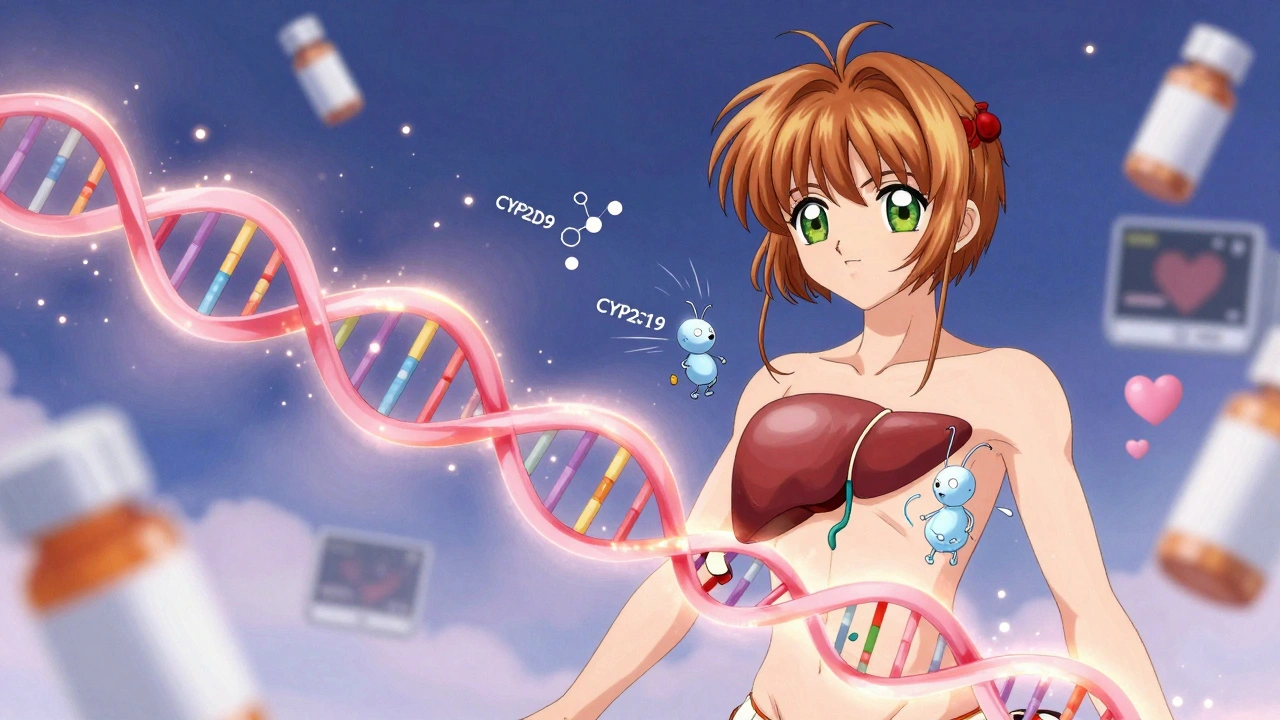
Genetic Variation in Medication: How Your DNA Affects Drug Response
When you take a pill, your body doesn’t treat it the same way everyone else does. That’s because of genetic variation in medication, differences in your DNA that change how your body processes drugs. Also known as pharmacogenomics, this field explains why one person gets relief from a drug while another suffers side effects—even if they take the same dose. It’s not about being strong or weak, compliant or careless. It’s biology.
Your liver uses enzymes—especially the CYP450 enzymes, a family of proteins that break down most medications—to metabolize drugs. But your genes decide whether those enzymes work fast, slow, or not at all. For example, if you’re a poor metabolizer of CYP2D6, common antidepressants like SSRIs might build up to toxic levels. If you’re an ultra-rapid metabolizer, your painkiller might vanish before it even starts working. This isn’t rare. About 95% of people have at least one gene variant that affects how a drug behaves in their body.
That’s why some people react badly to warfarin, while others need double the dose to stay stable. Why tamoxifen fails for some breast cancer patients but works wonders for others. Why a simple antibiotic like azithromycin can trigger heart rhythm problems in one person but not their sibling. These aren’t accidents. They’re coded in your DNA.
The good news? Doctors can test for these variations. Blood or saliva tests can show your metabolic profile before you even start a new medication. This isn’t science fiction—it’s happening in clinics right now. But awareness is still low. Many prescriptions are still handed out like they’re one-size-fits-all, even though we’ve known for years that they’re not.
What you’ll find below are real stories and science-backed guides on how genetic variation shapes drug safety, effectiveness, and side effects. From how antidepressants interact with your genes to why certain antibiotics risk your heart, each post breaks down the connection between your biology and your medicine. No jargon. No fluff. Just what you need to know to ask the right questions and get better care.